Cancer Epigenetics Laboratory, The Harry Perkins Institute of Medical Research, Nedlands, Western Australia 6009, Australia.
School of Human Sciences, The University of Western Australia, Crawley, Perth, Western Australia 6009, Australia.
Nucleic Acids Res. 2020 Dec 16;48(22):12453-12482. doi: 10.1093/nar/gkaa1000.
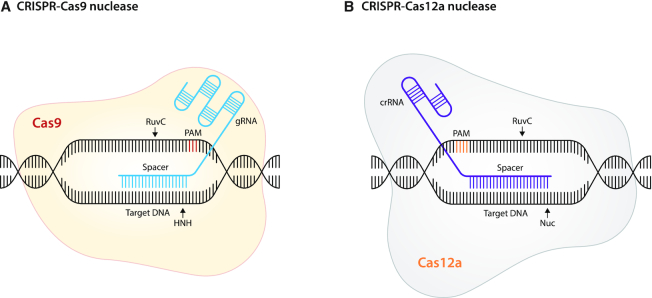
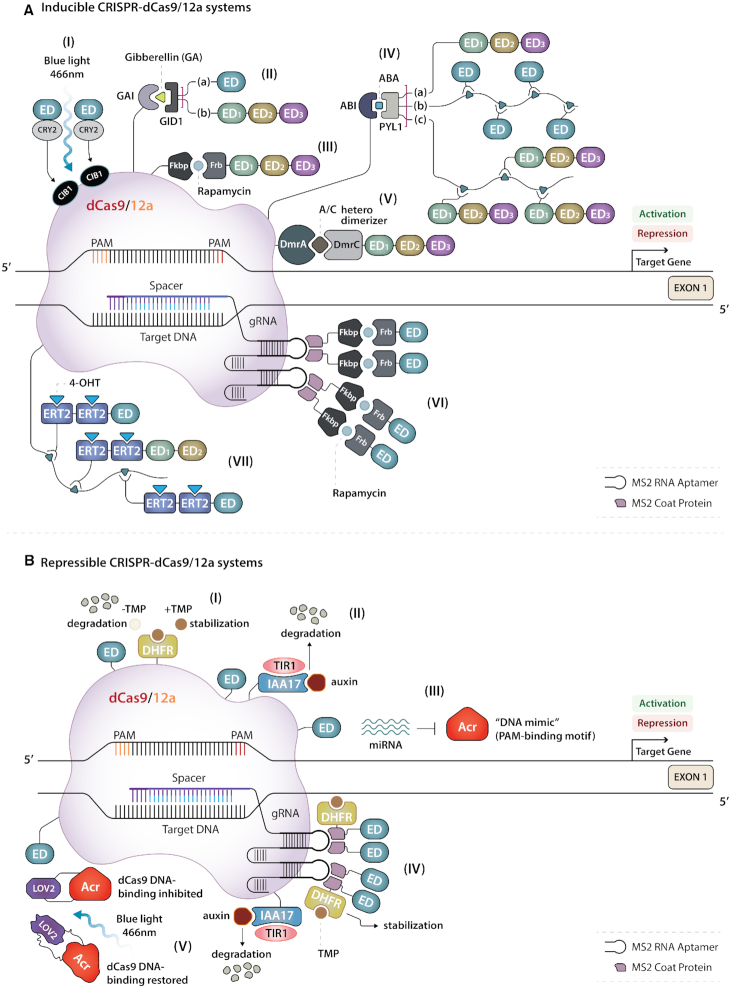
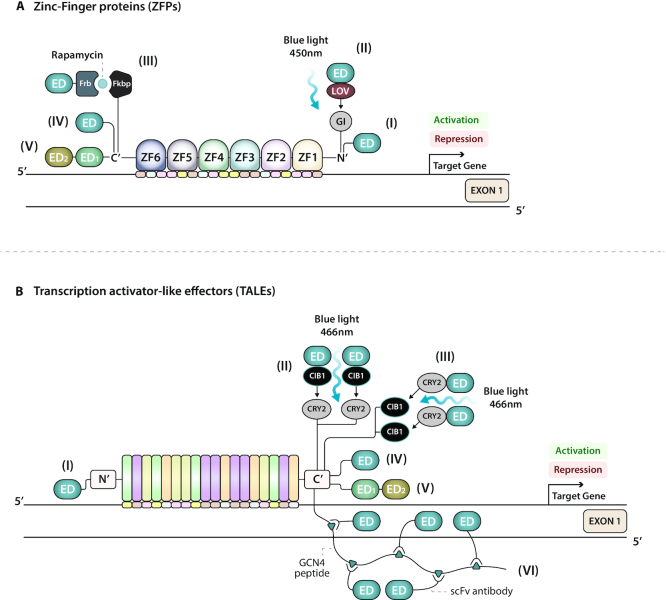
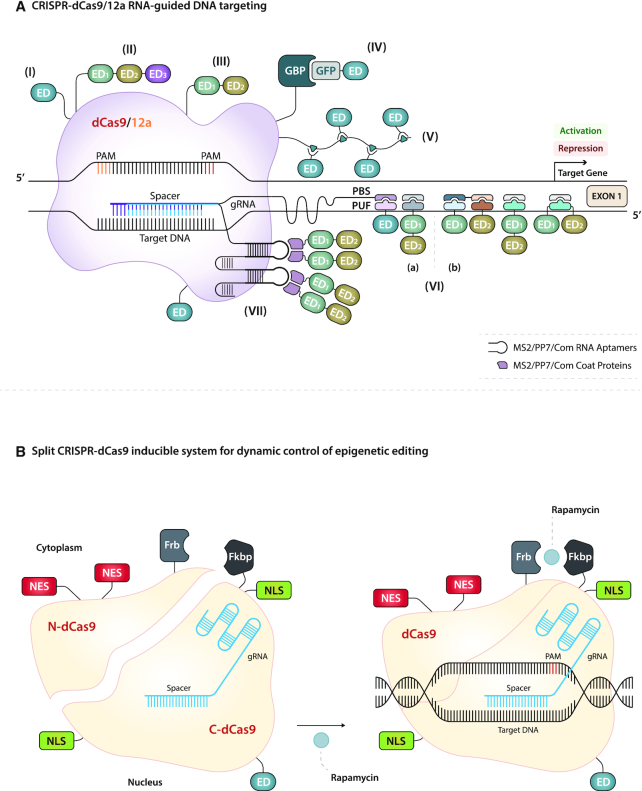
Chromatin adopts different configurations that are regulated by reversible covalent modifications, referred to as epigenetic marks. Epigenetic inhibitors have been approved for clinical use to restore epigenetic aberrations that result in silencing of tumor-suppressor genes, oncogene addictions, and enhancement of immune responses. However, these drugs suffer from major limitations, such as a lack of locus selectivity and potential toxicities. Technological advances have opened a new era of precision molecular medicine to reprogram cellular physiology. The locus-specificity of CRISPR/dCas9/12a to manipulate the epigenome is rapidly becoming a highly promising strategy for personalized medicine. This review focuses on new state-of-the-art epigenome editing approaches to modify the epigenome of neoplasms and other disease models towards a more 'normal-like state', having characteristics of normal tissue counterparts. We highlight biomolecular engineering methodologies to assemble, regulate, and deliver multiple epigenetic effectors that maximize the longevity of the therapeutic effect, and we discuss limitations of the platforms such as targeting efficiency and intracellular delivery for future clinical applications.
染色质采用不同的构象,这些构象受可逆的共价修饰调控,被称为表观遗传标记。表观遗传抑制剂已被批准用于临床,以恢复导致肿瘤抑制基因沉默、致癌基因成瘾和增强免疫反应的表观遗传异常。然而,这些药物存在主要的局限性,如缺乏基因座选择性和潜在的毒性。技术进步为重新编程细胞生理学开辟了精准分子医学的新时代。CRISPR/dCas9/12a 的基因座特异性可用于操纵表观基因组,这迅速成为个性化医疗的极具前景的策略。本文综述了最新的表观基因组编辑方法,以修改肿瘤和其他疾病模型的表观基因组,使其向更“正常样状态”转变,具有正常组织对应物的特征。我们强调了生物分子工程方法,用于组装、调节和传递多种表观遗传效应因子,从而使治疗效果的持久性最大化,并讨论了这些平台的局限性,如靶向效率和细胞内递送,以用于未来的临床应用。