National Clinical Research Center for Geriatric Disorders, Department of Geriatrics, Xiangya Hospital, Central South University, Changsha, Hunan 410008, China.
Department of Rheumatology and Immunology, Xiangya Hospital, Central South University, Changsha, Hunan 410008, China.
Theranostics. 2020 Feb 10;10(7):3118-3137. doi: 10.7150/thno.43298. eCollection 2020.
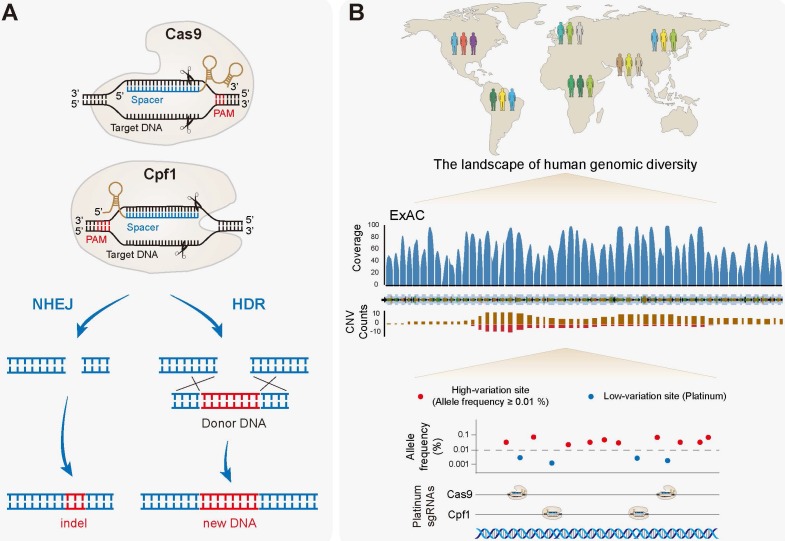
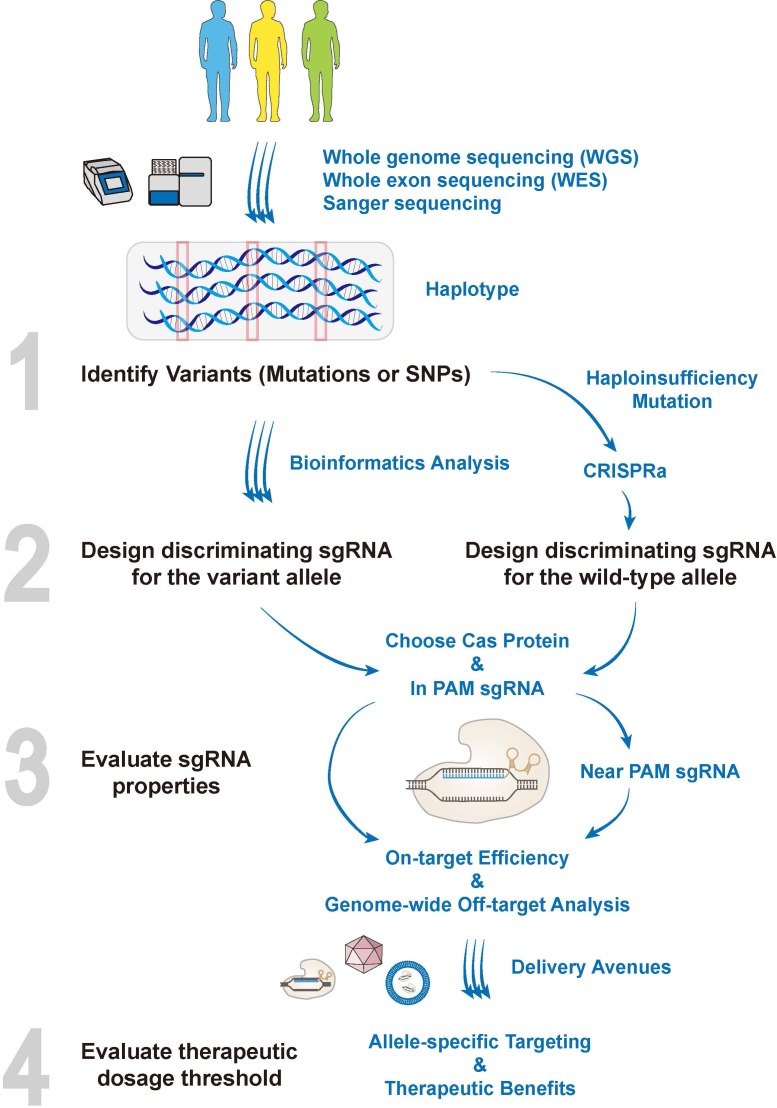
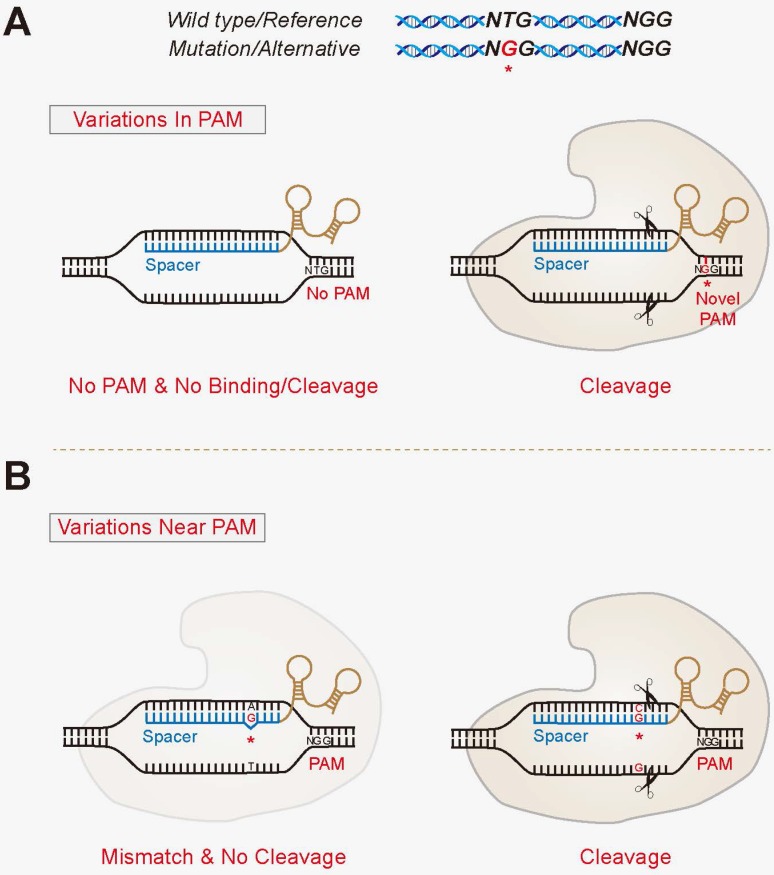
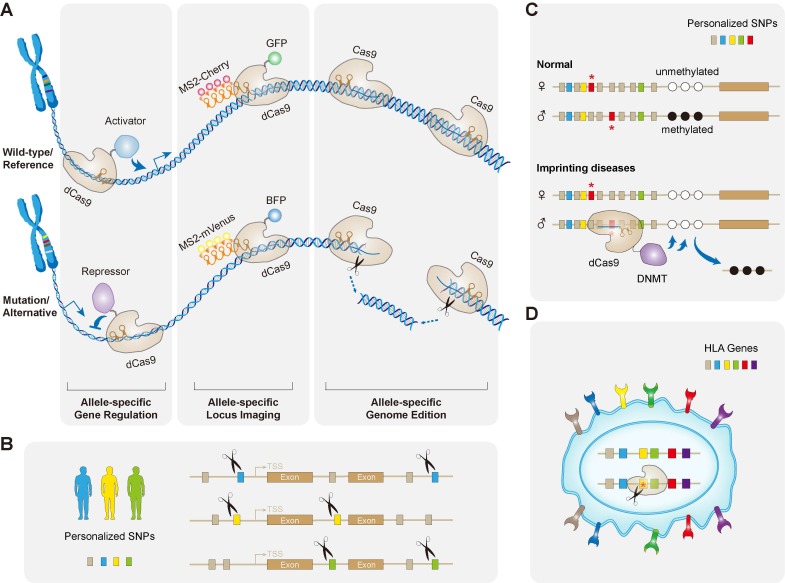
The CRISPR-based genome editing holds immense potential to fix disease-causing mutations, however, must also handle substantial natural genetic variations between individuals. Previous studies have shown that mismatches between the single guide RNA (sgRNA) and genomic DNA may negatively impact sgRNA efficiencies and lead to imprecise specificity prediction. Hence, the genetic variations bring about a great challenge for designing platinum sgRNAs in large human populations. However, they also provide a promising entry for designing allele-specific sgRNAs for the treatment of each individual. The CRISPR system is rather specific, with the potential ability to discriminate between similar alleles, even based on a single nucleotide difference. Genetic variants contribute to the discrimination capabilities, once they generate a novel protospacer adjacent motif (PAM) site or locate in the seed region near an available PAM. Therefore, it can be leveraged to establish allele-specific targeting in numerous dominant human disorders, by selectively ablating the deleterious alleles. So far, allele-specific CRISPR has been increasingly implemented not only in treating dominantly inherited diseases, but also in research areas such as genome imprinting, haploinsufficiency, spatiotemporal loci imaging and immunocompatible manipulations. In this review, we will describe the working principles of allele-specific genome manipulations by virtue of expanding engineering tools of CRISPR. And then we will review new advances in the versatile applications of allele-specific CRISPR targeting in treating human genetic diseases, as well as in a series of other interesting research areas. Lastly, we will discuss their potential therapeutic utilities and considerations in the era of precision medicine.
基于 CRISPR 的基因组编辑技术具有修复致病突变的巨大潜力,但也必须处理个体之间大量的自然遗传变异。以前的研究表明,单指导 RNA(sgRNA)与基因组 DNA 之间的不匹配可能会对 sgRNA 效率产生负面影响,并导致特异性预测不准确。因此,遗传变异给在大型人群中设计白金 sgRNA 带来了巨大挑战。然而,它们也为设计针对每个个体的等位基因特异性 sgRNA 提供了一个有前途的切入点。CRISPR 系统非常特异,具有区分相似等位基因的潜力,即使基于单个核苷酸差异。遗传变异有助于区分能力,一旦它们产生新的间隔基序相邻基序(PAM)位点或位于可用 PAM 附近的种子区域。因此,它可以用于通过选择性地消除有害等位基因,在许多显性人类疾病中建立等位基因特异性靶向。到目前为止,等位基因特异性 CRISPR 不仅在治疗显性遗传疾病方面得到了越来越多的应用,而且在基因组印记、单倍不足、时空基因座成像和免疫相容操作等研究领域也得到了越来越多的应用。在这篇综述中,我们将描述通过扩展 CRISPR 的工程工具来实现等位基因特异性基因组操作的工作原理。然后,我们将回顾等位基因特异性 CRISPR 靶向在治疗人类遗传疾病以及一系列其他有趣的研究领域中的多种应用的新进展。最后,我们将讨论它们在精准医学时代的潜在治疗用途和考虑因素。