Dai Kaiqun, Qu Chunyun, Feng Jun, Lan Yang, Fu Hongxin, Wang Jufang
School of Biology and Biological Engineering, South China University of Technology, Guangzhou, 510006, China.
College of Light Industry and Food Science, Guangdong Provincial Key Laboratory of Science and Technology of Lingnan Special Food Science and Technology, Zhongkai University of Agriculture and Engineering, Guangzhou, 510225, China.
Biotechnol Biofuels Bioprod. 2023 Oct 21;16(1):155. doi: 10.1186/s13068-023-02402-3.
Sucrose-rich sugarcane trash surpasses 28 million tons globally per year. Effective biorefinery systems could convert these biomasses to bioproducts, such as bioethanol from sugarcane sucrose in Brazil. Thermophilic microbes for biofuels have attracted great attention due to their higher fermentation temperature and wide substrate spectrum. However, few thermophiles using sucrose or molasses for biofuels production was reported. Thermoanaerobacterium aotearoense SCUT27 has been considered as an efficient ethanol producer, but it cannot directly utilize sucrose. In this study, various sucrose metabolic pathways were introduced and analyzed in Thermoanaerobaterium.
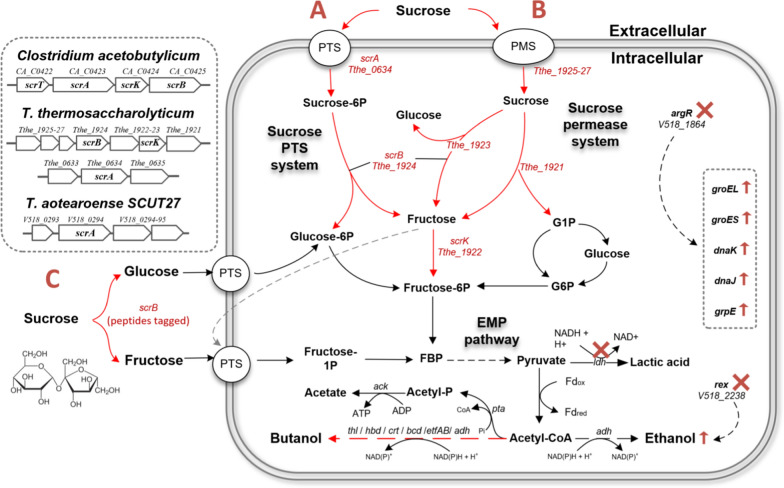
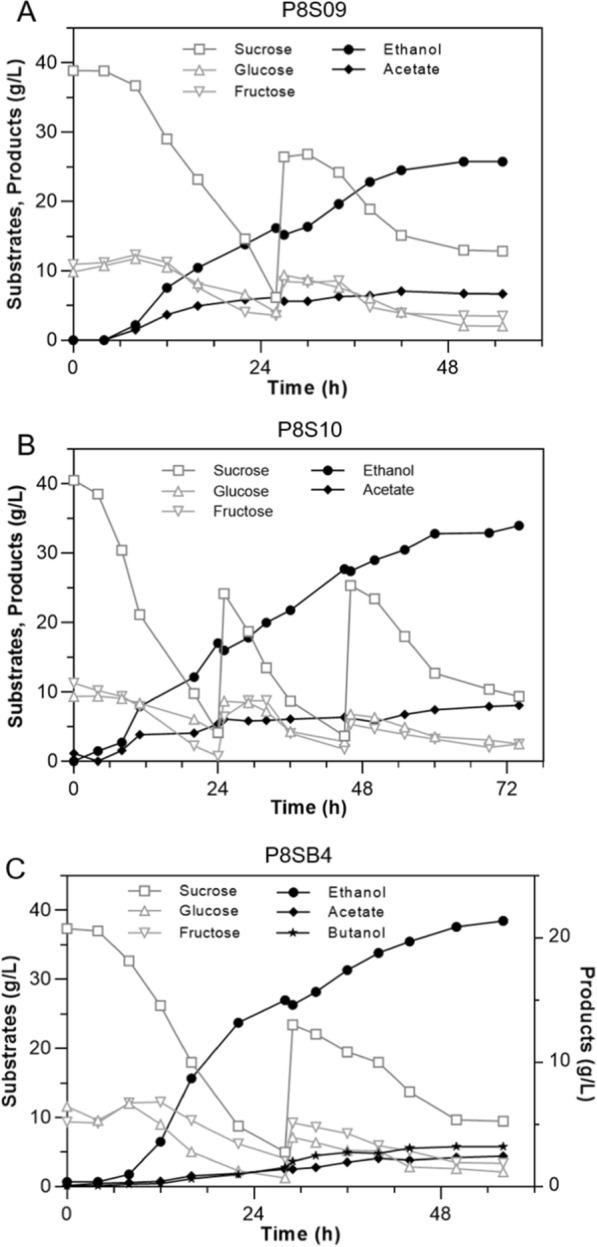
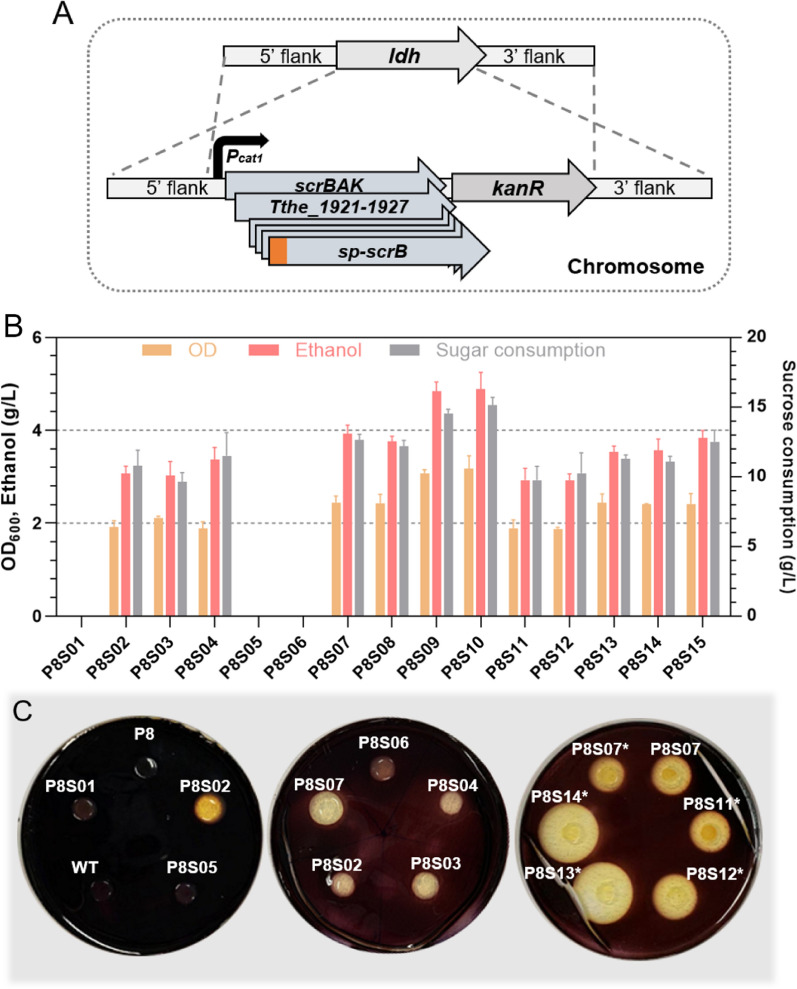
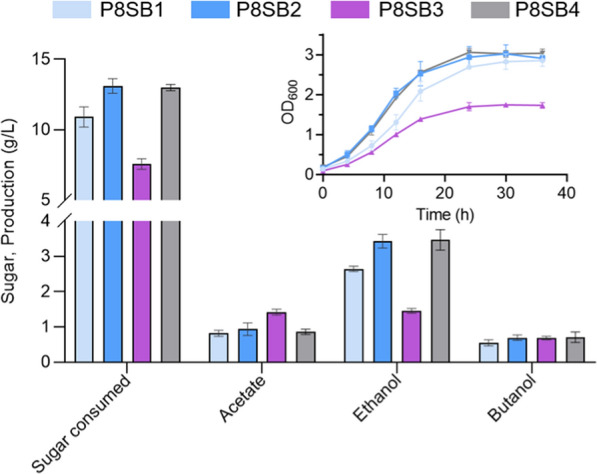
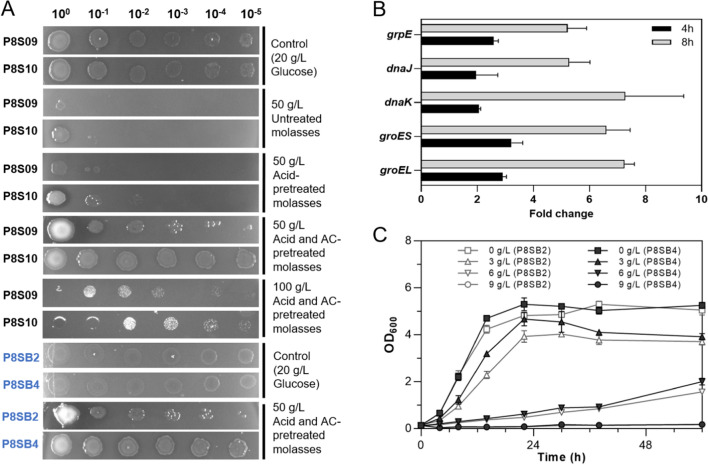
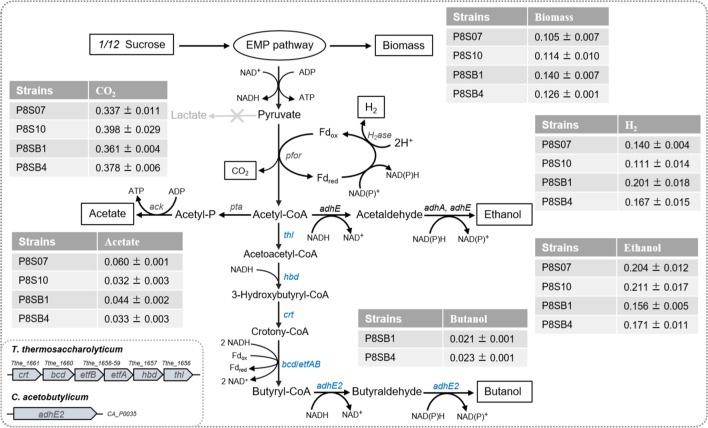
The sucrose-6-phosphate hydrolase (scrB), which was from a screened strain Thermoanaerobacterium thermosaccharolyticum G3-1 was overexpressed in T. aotearoense SCUT27 and endowed this strain with the ability to utilize sucrose. In addition, overexpression of the sucrose-specific PTS system (scrA) from Clostridium acetobutylicum accelerated the sucrose transport. To strengthen the alcohols production and substrates metabolism, the redox-sensing transcriptional repressor (rex) in T. aotearoense was further knocked out. Moreover, with the gene arginine repressor (argR) deleted, the ethanologenic mutant P8S10 showed great inhibitors-tolerance and finally accumulated ~ 34 g/L ethanol (a yield of 0.39 g/g sugars) from pretreated cane molasses in 5 L tank by fed-batch fermentation. When introducing butanol synthetic pathway, 3.22 g/L butanol was produced by P8SB4 with a yield of 0.44 g alcohols/g sugars at 50℃. This study demonstrated the potential application of T. aotearoense SCUT27 for ethanol and butanol production from low cost cane molasses.
Our work provided strategies for sucrose utilization in thermophiles and improved biofuels production as well as stress tolerances of T. aotearoense SCUT27, demonstrating the potential application of the strain for cost-effective biofuels production from sucrose-based feedstocks.
全球每年富含蔗糖的甘蔗渣超过2800万吨。有效的生物精炼系统可将这些生物质转化为生物产品,比如巴西利用甘蔗蔗糖生产生物乙醇。用于生物燃料生产的嗜热微生物因其较高的发酵温度和广泛的底物谱而备受关注。然而,鲜有关于利用蔗糖或糖蜜生产生物燃料的嗜热菌的报道。嗜热栖热厌氧杆菌SCUT27被认为是一种高效的乙醇生产菌,但它不能直接利用蔗糖。在本研究中,在嗜热栖热厌氧杆菌中引入并分析了多种蔗糖代谢途径。
来自筛选菌株嗜热解糖嗜热厌氧杆菌G3-1的蔗糖-6-磷酸水解酶(scrB)在嗜热栖热厌氧杆菌SCUT27中过表达,赋予了该菌株利用蔗糖的能力。此外,丙酮丁醇梭菌的蔗糖特异性磷酸转移酶系统(scrA)的过表达加速了蔗糖转运。为了增强醇类生产和底物代谢,嗜热栖热厌氧杆菌中的氧化还原感应转录阻遏物(rex)被进一步敲除。此外,通过缺失精氨酸阻遏基因(argR),产乙醇突变体P8S10表现出很强的抑制剂耐受性,最终通过分批补料发酵在5升发酵罐中从预处理的甘蔗糖蜜中积累了约34克/升乙醇(产率为0.39克乙醇/克糖)。当引入丁醇合成途径时,P8SB4在50℃下产生了3.22克/升丁醇,产率为0.44克醇/克糖。本研究证明了嗜热栖热厌氧杆菌SCUT27在利用低成本甘蔗糖蜜生产乙醇和丁醇方面的潜在应用。
我们的工作为嗜热菌利用蔗糖提供了策略,提高了生物燃料产量以及嗜热栖热厌氧杆菌SCUT27的胁迫耐受性,证明了该菌株在利用蔗糖基原料生产经济高效生物燃料方面的潜在应用。