ICAR-Indian Institute of Wheat and Barley Research, Agarsain Marg, P.B. No. 158, Karnal, Haryana, 132 001, India.
CCS HAU, RRS, Bawal, Haryana, 123 501, India.
Sci Rep. 2023 Oct 23;13(1):18073. doi: 10.1038/s41598-023-44879-w.
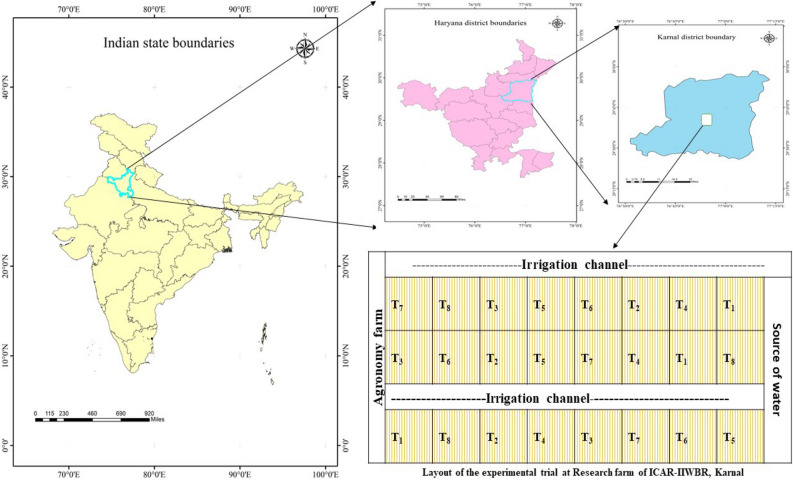
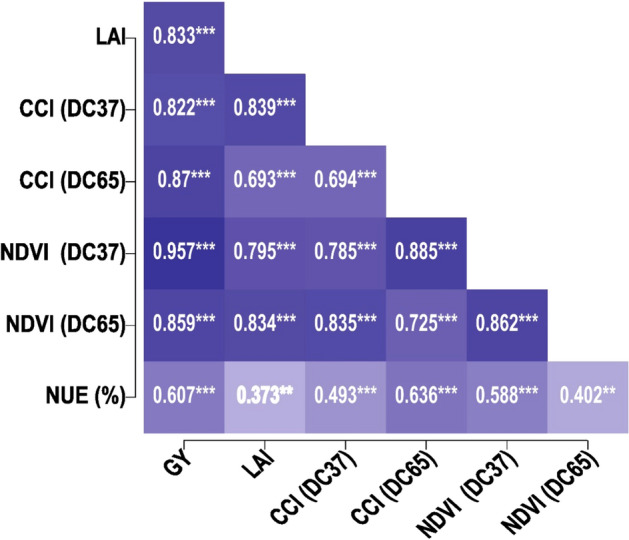
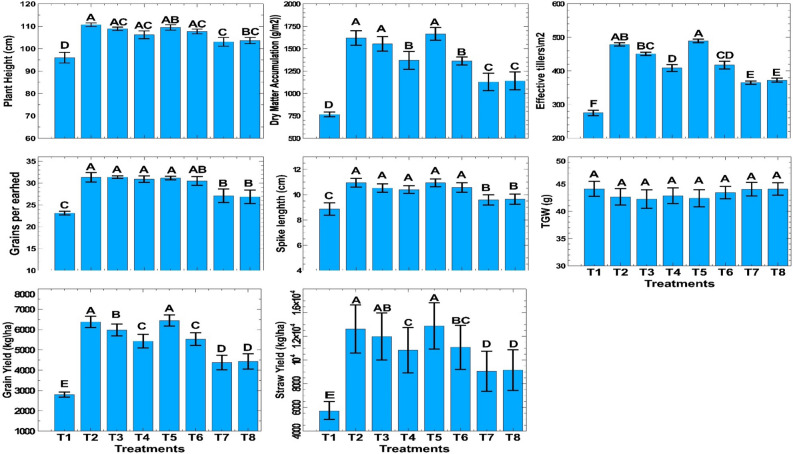
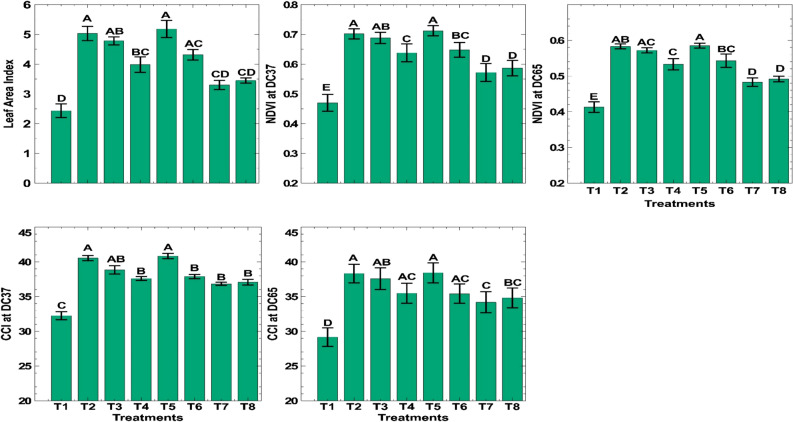
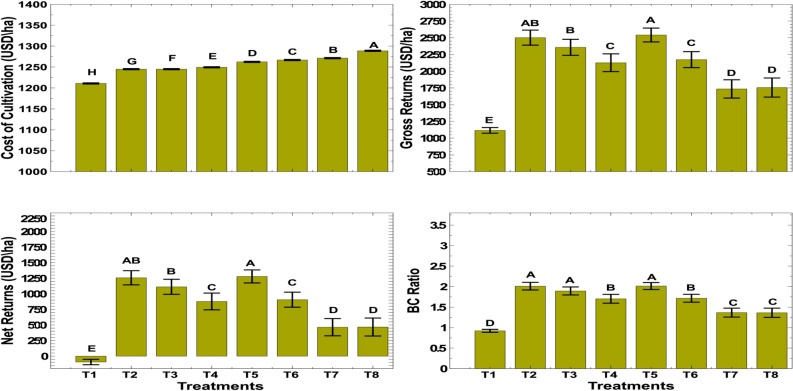
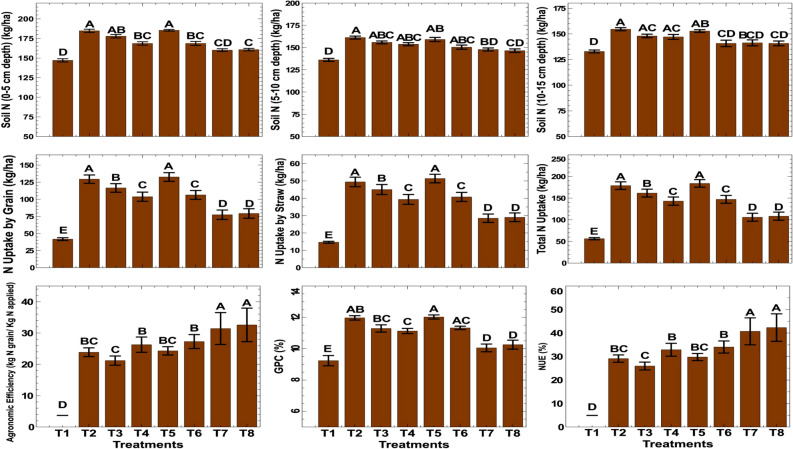
Rice-wheat production in the Indo-gangetic plains (IGPs) of India faces major concerns such as depleting resources, rice residue burning, excessive fertilizer use, and decreasing nitrogen use efficiency. These issues threaten sustainable crop production in the future. Therefore, a field study was conducted during the winter seasons of 2020-21 and 2021-22 to evaluate the effect of combined conventional and nano fertilizers on nitrogen application just before or after irrigation to improve wheat productivity, profitability and NUE under conservation tillage. The study evaluated eight treatment combinations of nitrogen application through conventionally applied urea (46% N) and foliar applied nano urea (4% N) under zero tillage with rice residue retention. Results revealed that growth, physiological indices, yield, and quality parameters were enhanced with the application of 150 kg N/ha in three equal splits as basal and just before 1st and 2nd irrigation alone (T2) or along with a spray of nano urea (T5) compared to other treatments. T5 recorded 7.2%, 8.5%, and 7.8% more plant dry matter, number of tillers, and grain yield, respectively, over the conventional practice of applying 150 kg N/ha in three equal splits as basal and 7-10 days after 1st and 2nd irrigation (T3, farmers practice). Although, T2 showed similar results to T5, T5 recorded significantly higher gross ($2542/ha) and net returns ($1279/ha) than the other treatments. However, the benefit-cost ratio of T2 and T5 was same (2.01). A significant and positive correlation coefficient between grain yield and physiological parameters such as CCI and NDVI confirmed that increasing the nitrogen dose enhanced the chlorophyll content, greenness, and plant vigor. Based on the results, it can be concluded that applying 150 kg N/ha in three equal splits as basal and just before 1st and 2nd irrigation under conservation agriculture, along with a single spray of nano urea (4% N) at 60-65 days after sowing, can improve growth, yield attributes, wheat yield, and NUE compared to farmers practice (T3) in India.
印度印度河-恒河平原(IGPs)的稻麦生产面临着资源枯竭、稻茬焚烧、过度施肥和氮利用效率降低等主要问题。这些问题威胁着未来的可持续作物生产。因此,在 2020-21 年和 2021-22 年冬季进行了田间研究,以评估在保墒耕种下,在灌溉前或后立即施用常规和纳米肥料对提高小麦生产力、盈利性和氮素利用效率的影响。该研究评估了在保留稻茬的零耕条件下,通过常规施用尿素(46% N)和叶面喷施纳米尿素(4% N),将氮分 3 次等量施用于 8 种处理组合。结果表明,与其他处理相比,在分 3 次等量施用 150 公斤/公顷氮素作为基肥,并在第 1 次和第 2 次灌溉前单独施用(T2)或与纳米尿素喷雾一起施用(T5)时,生长、生理指标、产量和品质参数均得到提高。与常规的 150 公斤/公顷氮素分 3 次等量作为基肥,以及在第 1 次和第 2 次灌溉后 7-10 天(T3,农民做法)相比,T5 的植株干物质、分蘖数和籽粒产量分别增加了 7.2%、8.5%和 7.8%。虽然 T2 与 T5 的结果相似,但 T5 的总收益(2542 美元/公顷)和净收益(1279 美元/公顷)明显高于其他处理。然而,T2 和 T5 的成本效益比相同(2.01)。籽粒产量与 CCI 和 NDVI 等生理参数之间存在显著正相关系数,证实增加氮素剂量可以提高叶绿素含量、绿色度和植物活力。基于这些结果,可以得出结论,在保墒耕种下,分 3 次等量施用 150 公斤/公顷氮素作为基肥,并在播种后 60-65 天进行纳米尿素(4% N)的单次喷雾,可以改善生长、产量性状、小麦产量和氮素利用效率,优于印度农民的做法(T3)。