National & Local Joint Engineering Research Center of Biodiagnosis and Biotherapy, The Second Affiliated Hospital of Xi'an Jiaotong University, Xi'an, China.
Center for Physical Education, Xi'an Jiaotong University, Xi'an, China.
Front Immunol. 2023 Oct 9;14:1265914. doi: 10.3389/fimmu.2023.1265914. eCollection 2023.
Hypoxia is associated with unfavorable prognoses in melanoma patients, and the limited response rates of patients to PD-1/PD-L1 blockade could be attributed to the immunosuppressive tumor microenvironment induced by hypoxia. Exercise offers numerous benefits in the anti-tumor process and has the potential to alleviate hypoxia; however, the precise mechanisms through which it exerts its anti-tumor effects remain unclear, and the presence of synergistic effects with PD-1/PD-L1 immunotherapy is yet to be definitively established.
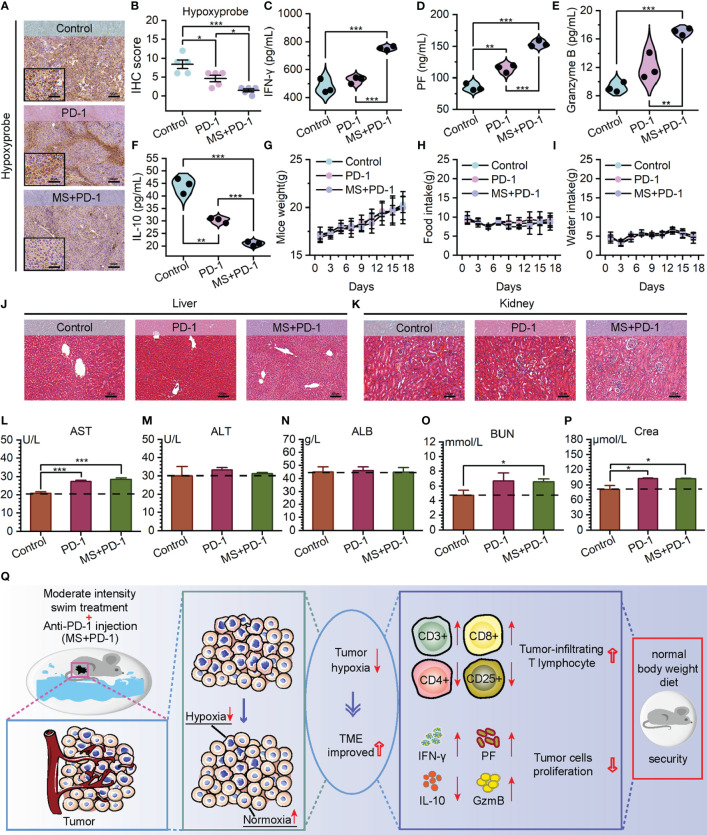
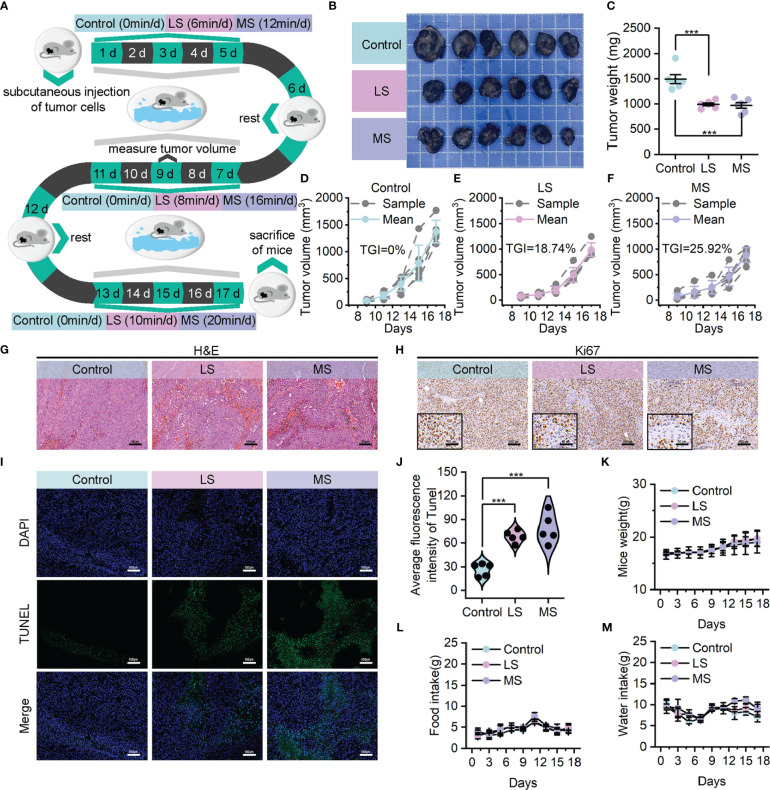
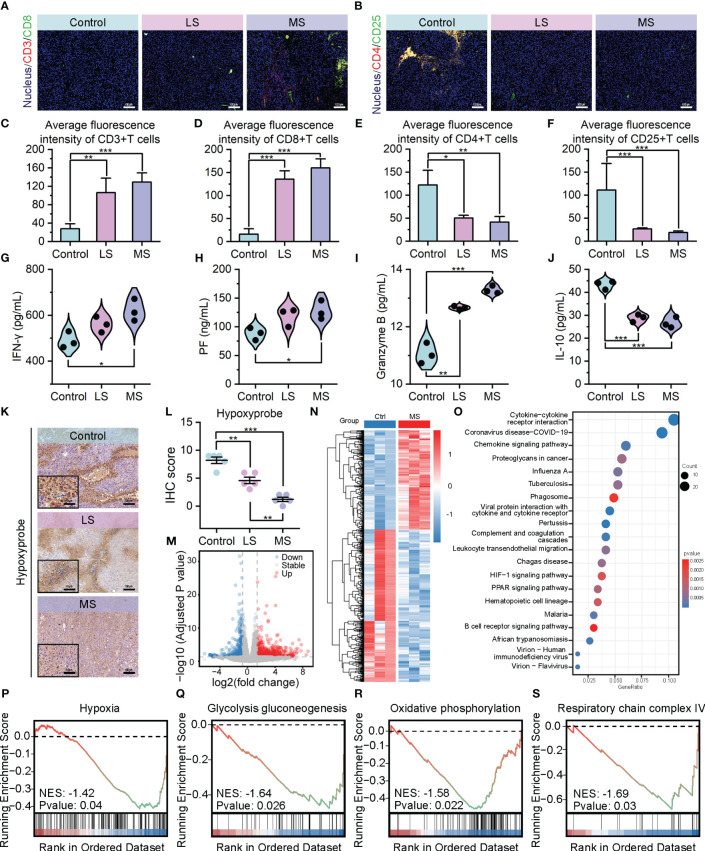
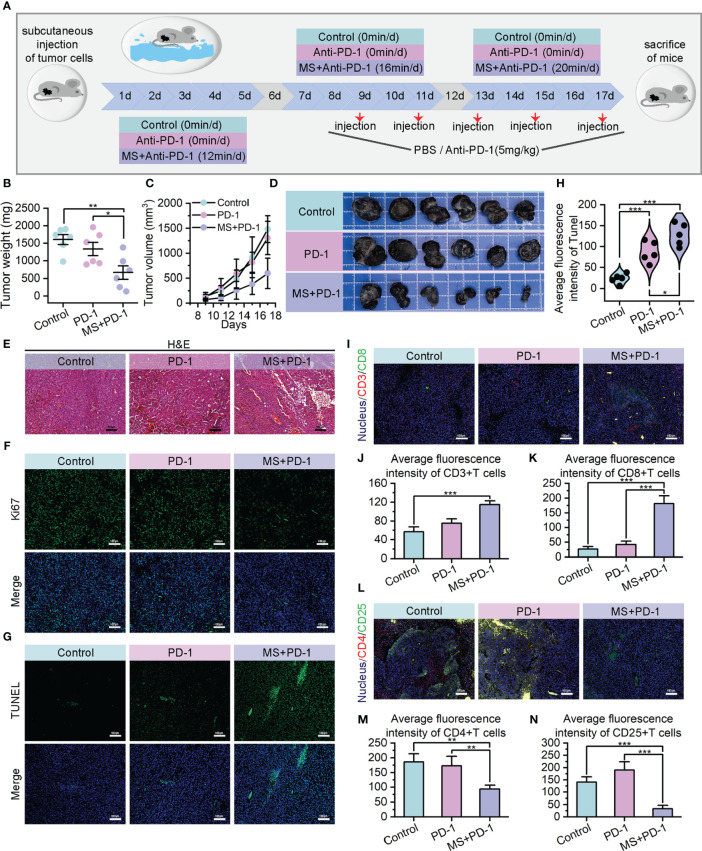
We established a B16F10 homograft malignant melanoma model and implemented two distinct exercise treatments (low/moderate-intensity swim) based on the mice's exercise status. The specific function manner of exercise-induced anti-tumor effects was determined through RNA sequencing and analysis of changes in the tumor microenvironment. Furthermore, moderate-intensity swim that exhibited superior tumor suppression effects was combined with Anti-PD-1 treatment to evaluate its efficacy in mouse models.
Exercise intervention yielded a considerable effect in impeding tumor growth and promoting apoptosis. Immunohistochemistry and RNA sequencing revealed improvements in tumor hypoxia and down-regulation of hypoxia-related pathways. Cellular immunofluorescence and ELISA analyses demonstrated a notable increase of cytotoxic T cell amount and a decrease of regulatory T cells, indicating an improvement of tumor immune microenvironment. In comparison to Anti-PD-1 monotherapy, tumor suppressive efficacy of exercise combination therapy was found to be enhanced with improvements in both the hypoxic tumor microenvironment and T cell infiltration.
Exercise has the potential to function as a hypoxia modulator improving the tumor immune microenvironment, resulting in the promotion of anti-tumor efficacy and the facilitation of biologically safe sensitization of PD-1/PD-L1 immunotherapy.
缺氧与黑色素瘤患者的不良预后相关,而患者对 PD-1/PD-L1 阻断的有限反应率可能归因于缺氧诱导的免疫抑制肿瘤微环境。运动在抗肿瘤过程中具有诸多益处,并有潜力缓解缺氧;然而,其发挥抗肿瘤作用的确切机制尚不清楚,并且与 PD-1/PD-L1 免疫疗法的协同作用是否存在仍有待确定。
我们建立了 B16F10 同种异体恶性黑色素瘤模型,并根据小鼠的运动状态实施了两种不同的运动治疗(低/中强度游泳)。通过 RNA 测序和肿瘤微环境变化分析,确定了运动诱导的抗肿瘤作用的具体功能方式。此外,结合抗 PD-1 治疗,对具有优越肿瘤抑制作用的中强度游泳进行评估,以评估其在小鼠模型中的疗效。
运动干预对抑制肿瘤生长和促进细胞凋亡有显著效果。免疫组化和 RNA 测序显示,肿瘤缺氧情况得到改善,缺氧相关途径下调。细胞免疫荧光和 ELISA 分析表明,细胞毒性 T 细胞数量显著增加,调节性 T 细胞数量减少,提示肿瘤免疫微环境得到改善。与抗 PD-1 单药治疗相比,运动联合治疗的肿瘤抑制效果增强,缺氧肿瘤微环境和 T 细胞浸润均得到改善。
运动有潜力作为一种缺氧调节剂,改善肿瘤免疫微环境,从而促进抗肿瘤疗效,并促进 PD-1/PD-L1 免疫治疗的生物学安全性增敏。