Suryawan I Gde Rurus, Ratri Anudya Kartika, Andrianto Andrianto, Ardiana Meity, Nugraha Ricardo Adrian
Department of Cardiology and Vascular Medicine, Faculty of Medicine Universitas Airlangga, Dr. Soetomo General Hospital, Surabaya, Indonesia.
Ann Pediatr Cardiol. 2023 May-Jun;16(3):189-193. doi: 10.4103/apc.apc_9_23. Epub 2023 Sep 8.
Polytetrafluoroethylene (PTFE) patch is commonly used during surgical closure for atrial septal defect (ASD) and ventricular septal defect (VSD). However, this patch has several limitations such as its inability to grow or remodel, especially in children and young adults. To tackle these limitations, we have tried to use fibronectin and human adipose-derived mesenchymal stem cells (hAMSCs) in the PTFE patch.
To understand the impact of fibronectin to enhance hAMSCs cell-to-cell adherence and cell-to-patch surface attachment into PTFE patches used in the surgical closure of ASD or VSD.
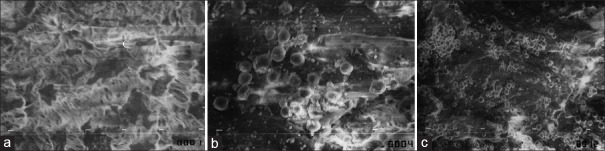
The hAMSCs were plated and fixated with 15 mL methanol and cluster of differentiation (CD) 90+, CD105+, and CD45 - antibodies were labeled with fluorescein isothiocyanate, rinsed with phosphate-buffered saline, and analyzed under a fluorescence microscope. Fibronectin solution (0.1%) was used to soak patch scaffolds for approximately 2-h duration and then dried for 20 min in the treatment group. The samples were examined with a scanning electron microscope (SEM).
SEM examination showed incomplete attachment of the cells even after 10 days in the control group at 1.14 ± 1.13. In contrast, the treatment group showed more cells attached to the patch surface at 31.25 ± 13.28 ( ≤ 0.0001). The observation at 5 days was 17.67 ± 20.21, at 7 days was 12.11 ± 10.94, and at 10 days was 18.83 ± 23.25. There was no significant statistical difference in mean cell per view among each treatment group ( = 0.802).
Our work demonstrates that fibronectin has a positive impact on hAMSC attachment seeded onto the PTFE patch. These properties, in combination with their developmental plasticity, have generated tremendous interest in regenerative medicine.
聚四氟乙烯(PTFE)补片常用于房间隔缺损(ASD)和室间隔缺损(VSD)的手术闭合。然而,这种补片有几个局限性,比如它无法生长或重塑,尤其是在儿童和年轻人中。为了解决这些局限性,我们尝试在PTFE补片中使用纤连蛋白和人脂肪间充质干细胞(hAMSCs)。
了解纤连蛋白对增强hAMSCs细胞间黏附以及细胞与用于ASD或VSD手术闭合的PTFE补片表面附着的影响。
接种hAMSCs并用15 mL甲醇固定,用异硫氰酸荧光素标记分化簇(CD)90 +、CD105 +和CD45 -抗体,用磷酸盐缓冲盐水冲洗,然后在荧光显微镜下分析。在治疗组中,用纤连蛋白溶液(0.1%)浸泡补片支架约2小时,然后干燥20分钟。用扫描电子显微镜(SEM)检查样品。
SEM检查显示,对照组即使在10天后细胞附着也不完全,为1.14±1.13。相比之下,治疗组有更多细胞附着在补片表面,为31.25±13.28(P≤0.0001)。5天时的观察结果为17.67±20.21,7天时为12.11±10.94,10天时为18.83±23.25。各治疗组每个视野的平均细胞数无显著统计学差异(P = 0.802)。
我们的研究表明,纤连蛋白对接种到PTFE补片上的hAMSC附着有积极影响。这些特性,再加上它们的发育可塑性,在再生医学中引起了极大的兴趣。