Emerg Infect Dis. 2023 Nov;29(11):2325-2334. doi: 10.3201/eid2911.230703.
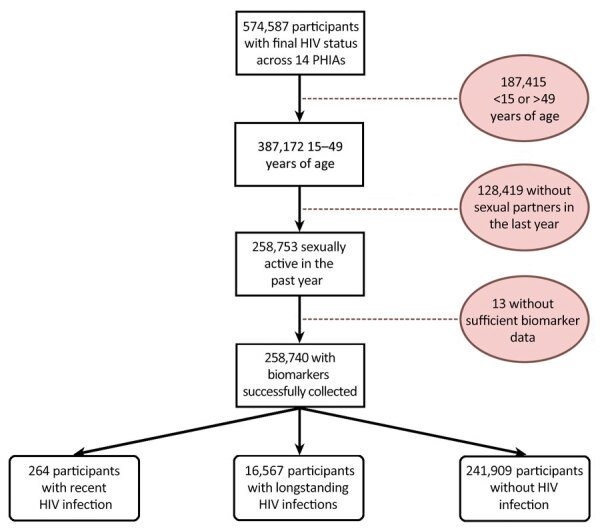
Identifying persons who have newly acquired HIV infections is critical for characterizing the HIV epidemic direction. We analyzed pooled data from nationally representative Population-Based HIV Impact Assessment surveys conducted across 14 countries in Africa for recent infection risk factors. We included adults 15-49 years of age who had sex during the previous year and used a recent infection testing algorithm to distinguish recent from long-term infections. We collected risk factor information via participant interviews and assessed correlates of recent infection using multinomial logistic regression, incorporating each survey's complex sampling design. Compared with HIV-negative persons, persons with higher odds of recent HIV infection were women, were divorced/separated/widowed, had multiple recent sex partners, had a recent HIV-positive sex partner or one with unknown status, and lived in communities with higher HIV viremia prevalence. Prevention programs focusing on persons at higher risk for HIV and their sexual partners will contribute to reducing HIV incidence.
确定新近感染 HIV 的人群对于描述 HIV 流行趋势至关重要。我们分析了来自非洲 14 个国家的具有全国代表性的基于人群的 HIV 影响评估调查的汇总数据,以了解近期感染的风险因素。我们纳入了在过去一年中有过性行为且年龄在 15-49 岁之间的成年人,并使用近期感染检测算法来区分近期和长期感染。我们通过参与者访谈收集了风险因素信息,并使用多项逻辑回归评估了近期感染的相关性,同时考虑了每个调查的复杂抽样设计。与 HIV 阴性者相比,新近感染 HIV 风险较高的人群为女性、离异/分居/丧偶、有多个近期性伴侣、有最近 HIV 阳性性伴侣或未知 HIV 状态的性伴侣,且生活在 HIV 病毒载量较高的社区。针对处于 HIV 感染高风险人群及其性伴侣的预防计划将有助于降低 HIV 发病率。