Institute of Epidemiology and Health Care, University College London, London, United Kingdom.
Department of Health Sciences, Faculty of Sciences, University of York, York, United Kingdom.
PLoS One. 2023 Oct 25;18(10):e0290653. doi: 10.1371/journal.pone.0290653. eCollection 2023.
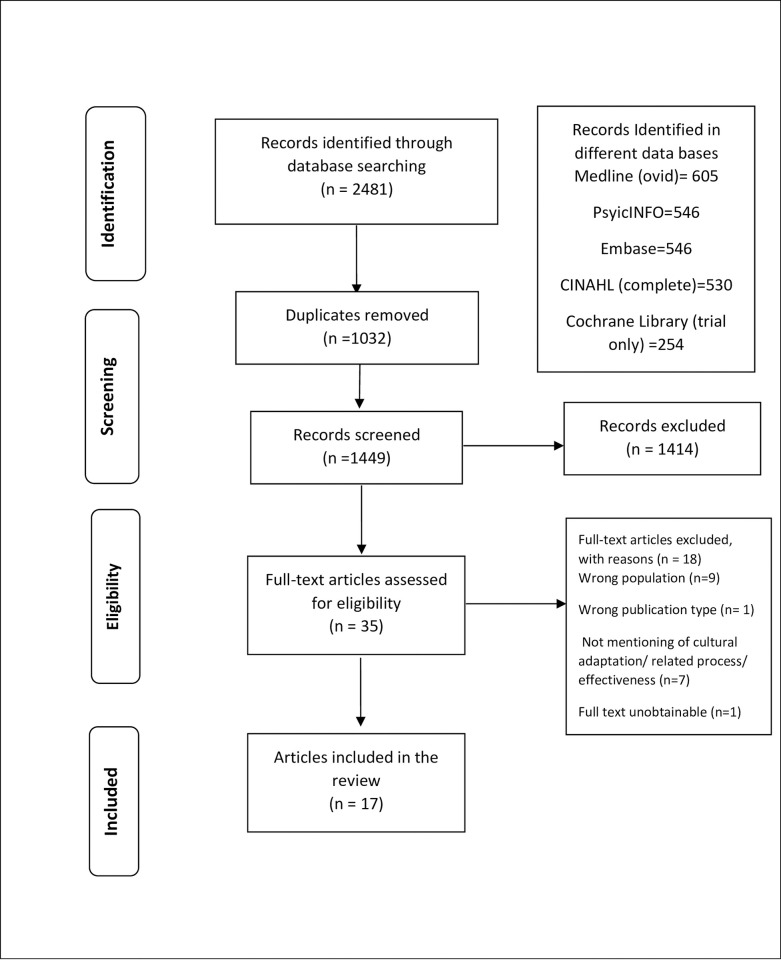
Mental health problems among young people are a major global public health challenge. Psychological interventions may improve mental health, yet most are developed in western cultures, and it is unclear whether they are applicable to other geographical settings and can be delivered successfully to diverse populations. We identified empirical studies focusing upon cross-culturally adapted psychological interventions and examined the cultural adaptation process used and the effectiveness of the interventions in the treatment of depression and/or anxiety disorders among young people (defined here as children and adolescents aged between 8-18 years).
We conducted a scoping review aligning to the guidelines reported in the Preferred Reporting Items for Systematic Reviews and Meta-Analysis Extension for Scoping Reviews (PRISMA-ScR) Statement. Stakeholder engagement enabled us to discuss the findings of the review and obtain feedback.
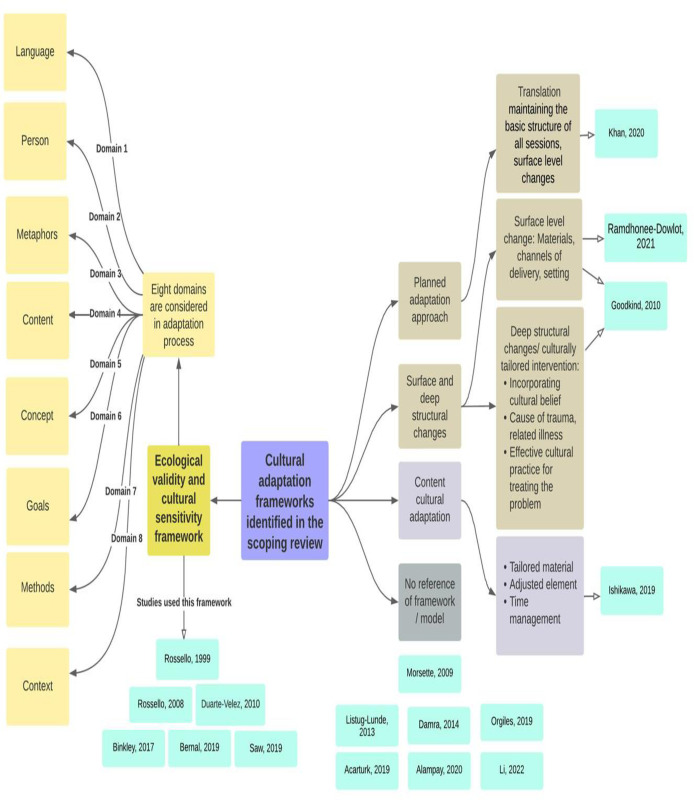
We identified 17 studies of cross-culturally adapted psychological interventions that considered the appropriate language, metaphors, culturally appropriate terms, and cultural values of young people. Most studies (n = 11) adopted a randomised control trial (RCT) methodology. Six studies used the ecological validity and cultural sensitivity framework. Planned adaptation, cultural adaptation of content, and surface and deep structure level adaptations were used in other studies. Apart from one pilot study, all studies reported that culturally adapted interventions resulted in improvements in depression and/or anxiety symptoms in young people. The results suggest the potential effectiveness of cross-culturally adapted interventions within this context. Our stakeholder consultations demonstrated that engaging different community-level stakeholders in the adaptation process was highly recommended.
Whilst most included studies indicated improvements in depression and/or anxiety symptoms in young people following a cross-culturally adapted intervention, more work is needed in this area. In particular, focus should be placed upon identifying the dimensions of interventions that should be culturally adapted to make them acceptable, engaging and effective.
年轻人的心理健康问题是一个重大的全球公共卫生挑战。心理干预措施可能改善心理健康,但大多数都是在西方文化中开发的,尚不清楚它们是否适用于其他地理环境,以及是否能够成功地向不同人群提供。我们确定了专注于跨文化适应心理干预的实证研究,并考察了所使用的文化适应过程以及干预措施在治疗年轻人(定义为 8-18 岁的儿童和青少年)的抑郁和/或焦虑障碍中的有效性。
我们按照在系统评价和荟萃分析扩展的首选报告项目(PRISMA-ScR)声明中报告的指南进行了范围审查。利益相关者的参与使我们能够讨论审查结果并获得反馈。
我们确定了 17 项跨文化适应心理干预研究,这些研究考虑了年轻人的适当语言、隐喻、文化上适当的术语和文化价值观。大多数研究(n=11)采用了随机对照试验(RCT)方法。六项研究采用了生态有效性和文化敏感性框架。其他研究采用了计划的适应、内容的文化适应以及表面和深层结构水平的适应。除了一项试点研究外,所有研究都报告说,跨文化适应的干预措施导致年轻人的抑郁和/或焦虑症状有所改善。结果表明,在这种情况下,跨文化适应的干预措施具有潜在的有效性。我们的利益相关者磋商表明,高度建议让不同的社区层面利益相关者参与适应过程。
虽然大多数纳入的研究表明,跨文化适应干预后年轻人的抑郁和/或焦虑症状有所改善,但在这方面还需要做更多的工作。特别是,应重点确定需要进行文化适应的干预措施的维度,以使它们具有可接受性、参与性和有效性。