Department of Psychology, University of Texas at Austin, 108 E. Dean Keaton St, Austin, TX, 78712, USA.
Sci Rep. 2023 Oct 25;13(1):18277. doi: 10.1038/s41598-023-45495-4.
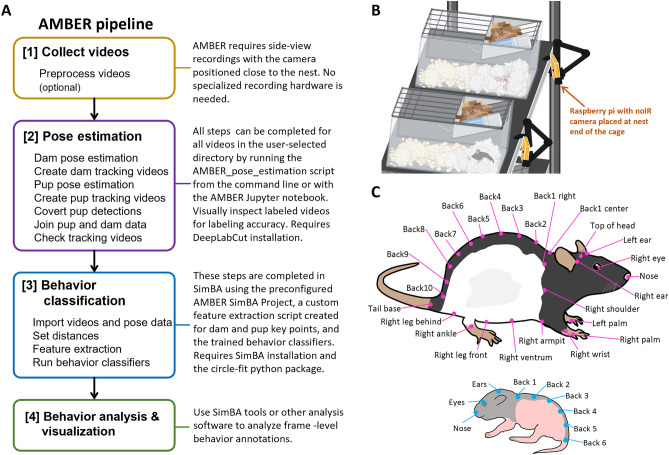
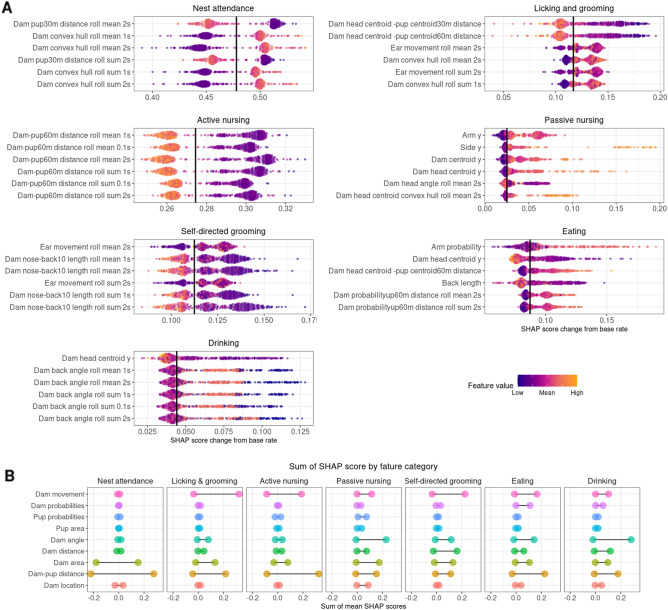
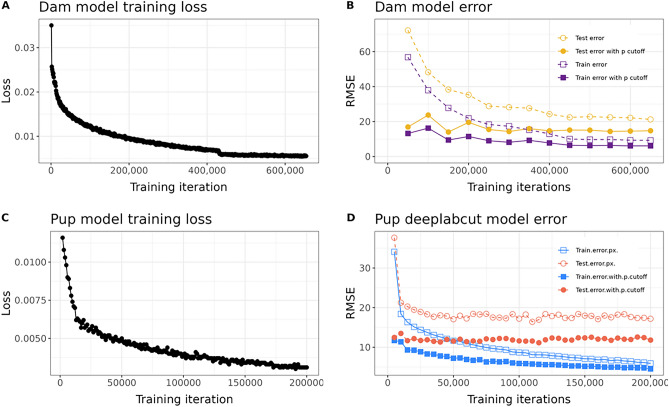
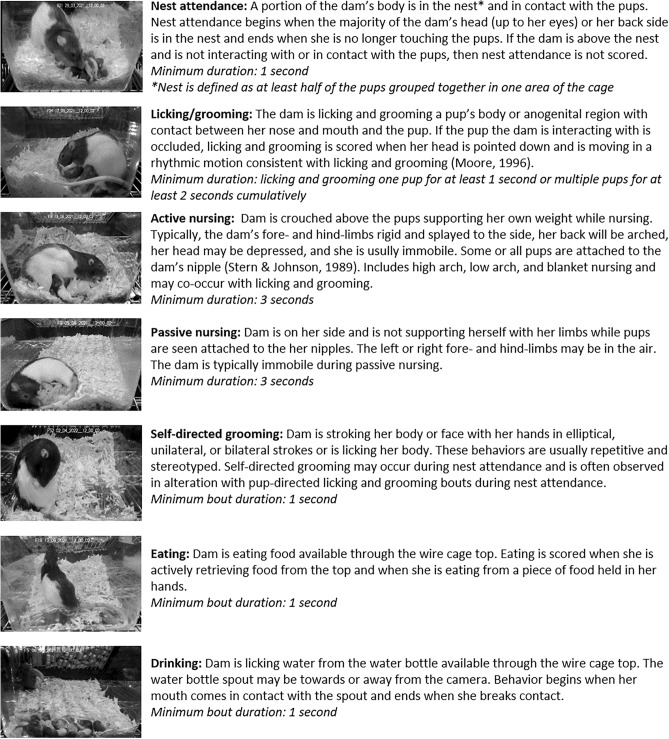
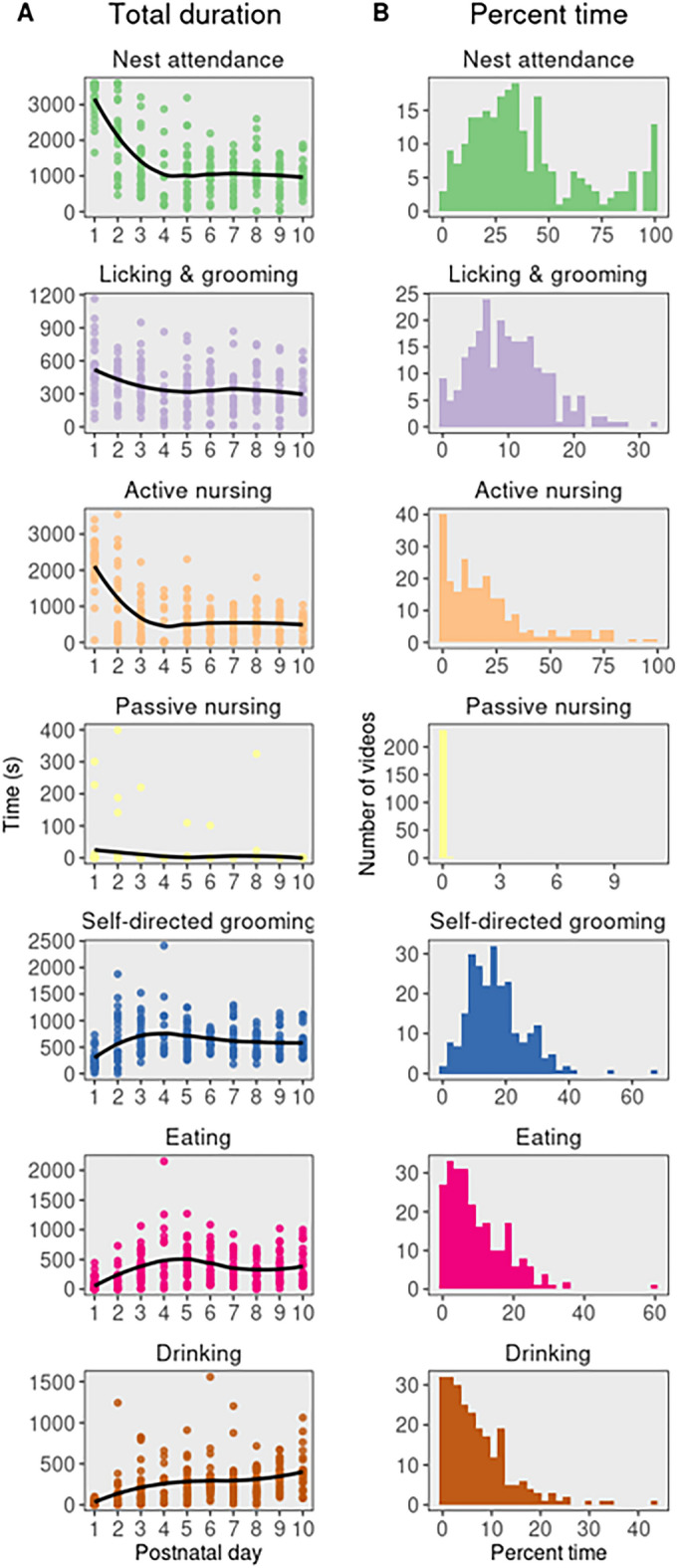
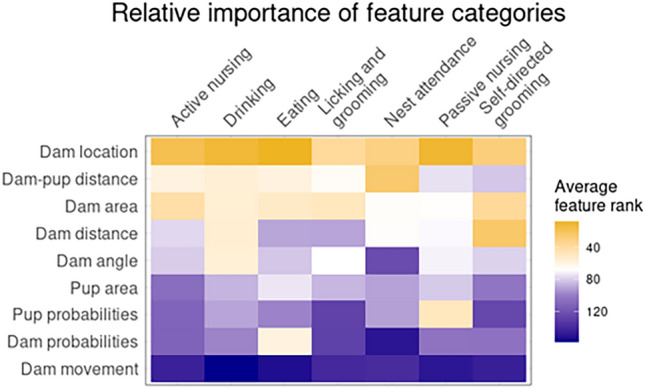
Mother-infant interactions during the early postnatal period are critical for infant survival and the scaffolding of infant development. Rodent models are used extensively to understand how these early social experiences influence neurobiology across the lifespan. However, methods for measuring postnatal dam-pup interactions typically involve time-consuming manual scoring, vary widely between research groups, and produce low density data that limits downstream analytical applications. To address these methodological issues, we developed the Automated Maternal Behavior during Early life in Rodents (AMBER) pipeline for quantifying home-cage maternal and mother-pup interactions using open-source machine learning tools. DeepLabCut was used to track key points on rat dams (32 points) and individual pups (9 points per pup) in postnatal day 1-10 video recordings. Pose estimation models reached key point test errors of approximately 4.1-10 mm (14.39 pixels) and 3.44-7.87 mm (11.81 pixels) depending on depth of animal in the frame averaged across all key points for dam and pups respectively. Pose estimation data and human-annotated behavior labels from 38 videos were used with Simple Behavioral Analysis (SimBA) to generate behavior classifiers for dam active nursing, passive nursing, nest attendance, licking and grooming, self-directed grooming, eating, and drinking using random forest algorithms. All classifiers had excellent performance on test frames, with F scores above 0.886. Performance on hold-out videos remained high for nest attendance (F = 0.990), active nursing (F = 0.828), and licking and grooming (F = 0.766) but was lower for eating, drinking, and self-directed grooming (F = 0.534-0.554). A set of 242 videos was used with AMBER and produced behavior measures in the expected range from postnatal 1-10 home-cage videos. This pipeline is a major advancement in assessing home-cage dam-pup interactions in a way that reduces experimenter burden while increasing reproducibility, reliability, and detail of data for use in developmental studies without the need for special housing systems or proprietary software.
母婴互动在产后早期对于婴儿的生存和发育至关重要。啮齿动物模型被广泛用于了解这些早期社会经验如何影响整个生命周期的神经生物学。然而,测量产后母-幼互动的方法通常涉及耗时的手动评分,在不同的研究小组之间差异很大,并且产生的低密度数据限制了下游分析应用。为了解决这些方法学问题,我们开发了用于量化啮齿动物早期家庭笼中母性行为和母-幼互动的自动母婴行为(AMBER)管道,该管道使用开源机器学习工具。DeepLabCut 用于在产后第 1-10 天的视频记录中跟踪大鼠母鼠(32 个点)和单个幼鼠(每个幼鼠 9 个点)的关键点。姿势估计模型在所有关键点上,根据动物在框架中的深度,达到了大约 4.1-10 毫米(14.39 像素)和 3.44-7.87 毫米(11.81 像素)的关键点测试误差,分别用于母鼠和幼鼠。从 38 个视频中获取姿势估计数据和人工注释的行为标签,并使用简单行为分析(SimBA)生成母鼠主动哺乳、被动哺乳、巢居、舔舐和梳理、自我梳理、进食和饮水的行为分类器,使用随机森林算法。所有分类器在测试帧上的性能都非常出色,F 分数均高于 0.886。巢居、主动哺乳和舔舐和梳理的保留视频性能较高(F=0.990),但进食、饮水和自我梳理的性能较低(F=0.534-0.554)。使用 AMBER 处理了一组 242 个视频,并在产后 1-10 天家庭笼中视频的预期范围内生成了行为测量结果。该管道在评估家庭笼中母-幼互动方面取得了重大进展,在减少实验者负担的同时,提高了可重复性、可靠性和数据的详细程度,而无需特殊的饲养系统或专有软件。