Department of Pharmacology & Neuroscience, North Texas Eye Research Institute, University of North Texas Health Science Center, Fort Worth, TX 76107, USA.
Cells. 2023 Oct 14;12(20):2452. doi: 10.3390/cells12202452.
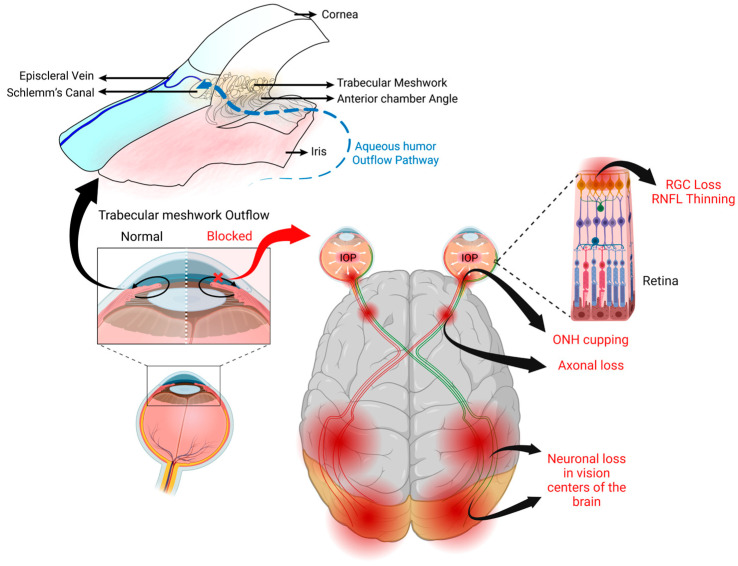
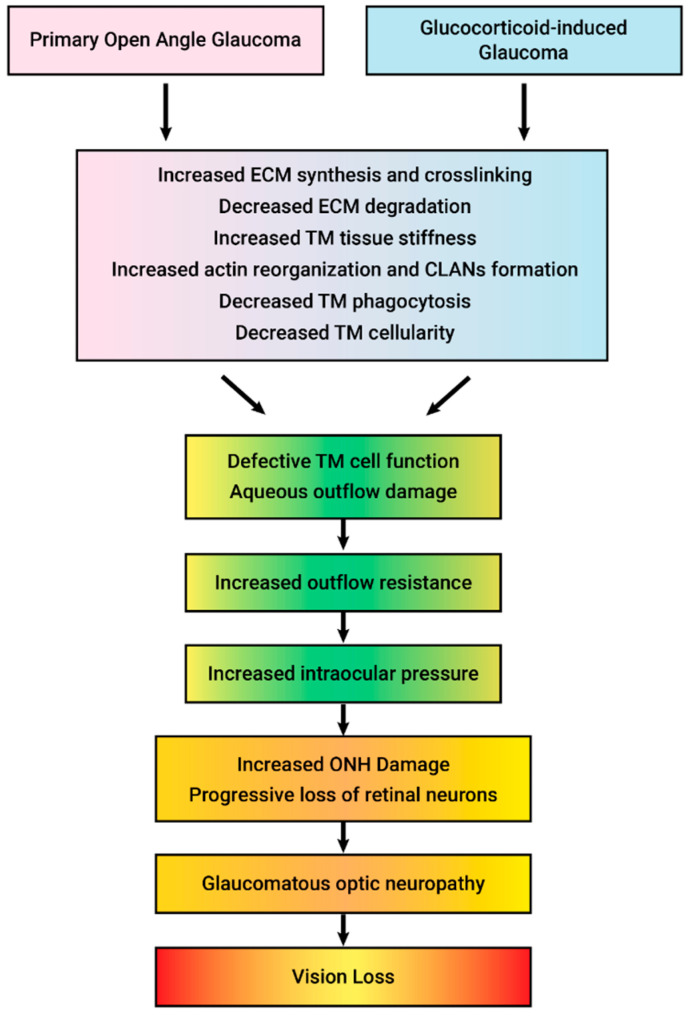
The glucocorticoid receptor (GR), including both alternative spliced isoforms (GRα and GRβ), has been implicated in the development of primary open-angle glaucoma (POAG) and iatrogenic glucocorticoid-induced glaucoma (GIG). POAG is the most common form of glaucoma, which is the leading cause of irreversible vision loss and blindness in the world. Glucocorticoids (GCs) are commonly used therapeutically for ocular and numerous other diseases/conditions. One serious side effect of prolonged GC therapy is the development of iatrogenic secondary ocular hypertension (OHT) and OAG (i.e., GC-induced glaucoma (GIG)) that clinically and pathologically mimics POAG. GC-induced OHT is caused by pathogenic damage to the trabecular meshwork (TM), a tissue involved in regulating aqueous humor outflow and intraocular pressure. TM cells derived from POAG eyes (GTM cells) have a lower expression of GRβ, a dominant negative regulator of GC activity, compared to TM cells from age-matched control eyes. Therefore, GTM cells have a greater pathogenic response to GCs. Almost all POAG patients develop GC-OHT when treated with GCs, in contrast to a GC responder rate of 40% in the normal population. An increased expression of GRβ can block GC-induced pathogenic changes in TM cells and reverse GC-OHT in mice. The endogenous expression of GRβ in the TM may relate to differences in the development of GC-OHT in the normal population. A number of studies have suggested increased levels of endogenous cortisol in POAG patients as well as differences in cortisol metabolism, suggesting that GCs may be involved in the development of POAG. Additional studies are warranted to better understand the molecular mechanisms involved in POAG and GIG in order to develop new disease-modifying therapies to better treat these two sight threatening forms of glaucoma. The purpose of this timely review is to highlight the pathological and clinical features of GC-OHT and GIG, mechanisms responsible for GC responsiveness, potential therapeutic options, as well as to compare the similar features of GIG with POAG.
糖皮质激素受体(GR),包括两种选择性剪接异构体(GRα和GRβ),与原发性开角型青光眼(POAG)和医源性糖皮质激素诱导性青光眼(GIG)的发展有关。POAG 是最常见的青光眼类型,是全球导致不可逆转视力丧失和失明的主要原因。糖皮质激素(GCs)广泛用于眼部和许多其他疾病/病症的治疗。长期 GC 治疗的一个严重副作用是医源性继发性眼高压(OHT)和 OAG(即 GC 诱导性青光眼(GIG))的发展,其临床表现和病理学上与 POAG 相似。GC 诱导的 OHT 是由小梁网(TM)的致病损伤引起的,TM 是参与调节房水流出和眼内压的组织。与年龄匹配的对照眼的 TM 细胞相比,来自 POAG 眼的 TM 细胞(GTM 细胞)GRβ表达较低,GRβ是 GC 活性的显性负调节剂。因此,GTM 细胞对 GCs 具有更大的致病反应。几乎所有 POAG 患者在接受 GCs 治疗时都会发展为 GC-OHT,而在正常人群中,GC 反应者的比例为 40%。GRβ的表达增加可以阻断 GC 诱导的 TM 细胞的致病变化,并在小鼠中逆转 GC-OHT。TM 中 GRβ的内源性表达可能与正常人群中 GC-OHT 的发展差异有关。一些研究表明,POAG 患者的内源性皮质醇水平升高以及皮质醇代谢的差异,表明 GCs 可能参与了 POAG 的发展。需要进一步的研究来更好地了解 POAG 和 GIG 中涉及的分子机制,以便开发新的疾病修饰疗法来更好地治疗这两种威胁视力的青光眼形式。本综述的目的是强调 GC-OHT 和 GIG 的病理和临床特征、负责 GC 反应性的机制、潜在的治疗选择,并比较 GIG 与 POAG 的相似特征。