Department of Ophthalmology, Fooyin University Hospital, Pingtung, Taiwan.
Department of Pharmacy and Master Program, Tajen University, Pingtung, Taiwan.
Int J Med Sci. 2021 Jan 1;18(4):1007-1014. doi: 10.7150/ijms.47912. eCollection 2021.
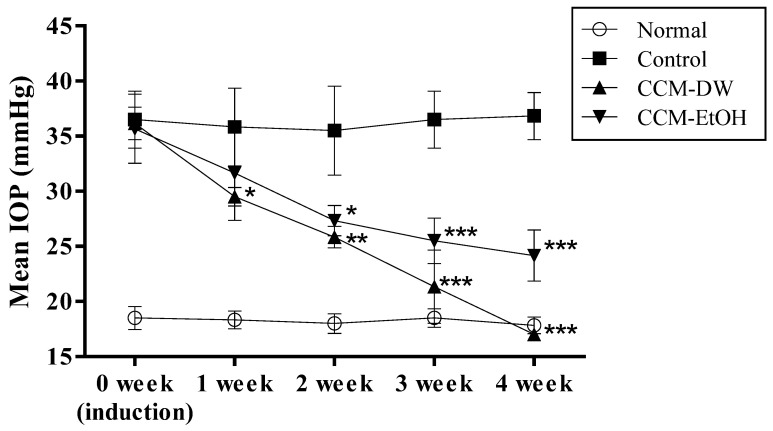
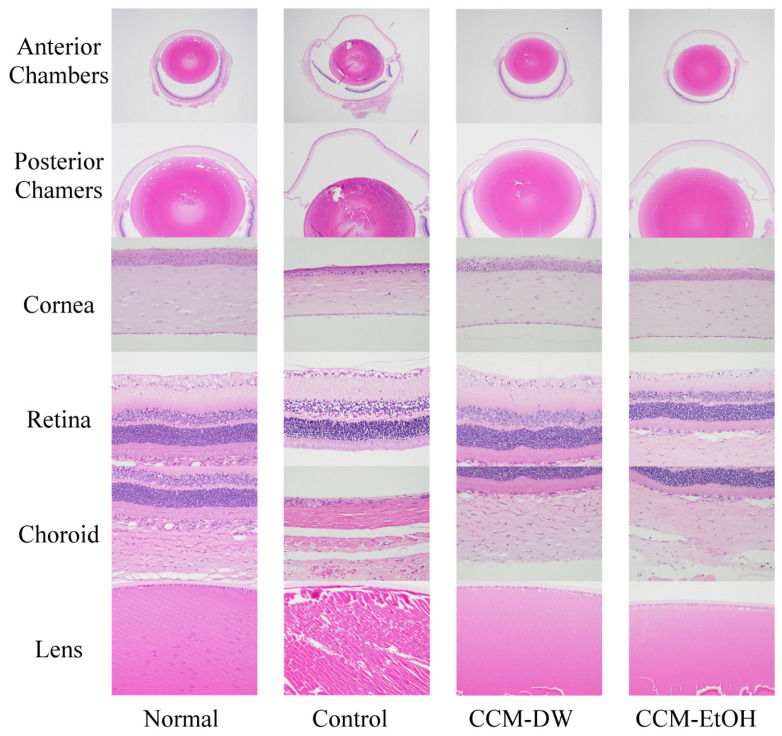
Glaucoma is a leading cause of irreversible blindness worldwide. This study evaluates the reduction of intraocular pressure (IOP) induced by mycelia extract in a steroid-induced rat model of glaucoma. mycelia is a well-known and valued traditional Chinese herbal medicine. mycelia were cultured using a liquid fermentation technique. The harvested mycelia were then lyophilized and extracted with two solvents, water and ethanol. The aqueous extract (CCM-DW) and ethanolic extract (CCM-EtOH) of the mycelia were obtained through lyophilization. Sprague Dawley rats were randomly divided into four groups (n = 6 in each group): a normal group, a control group, and experimental groups treated with CCM-DW, or CCM-EtOH (both at 50 mg/kg/body weight). Except for those in the normal group, all rats received a subconjunctival injection of betamethasone to induce high IOP. The rats in the experimental groups received a daily administration of CCM by oral gavage for four consecutive weeks. IOP reduction is the known treatment for glaucoma. The results revealed that steroid treatment caused a significant increase in the animals' IOP (control group). Elevated IOP decreased significantly after treatment with CCM-DW and CCM-EtOH (p < 0.01), and CCM-DW was more effective than CCM-EtOH. CCM-DW and CCM-EtOH were capable of causing significant decreases in high IOP-induced lesions in pathological studies in which it was shown that the efficacy of CCM-DW surpassed that of CCM-EtOH. After CCM-DW administration for 28 days, there were significant decreases in malondialdehyde and lactate dehydrogenase levels and significant increases in catalase, superoxide dismutase, and glutathione peroxidase levels. In summary, mycelia may be beneficial for preventing or treating glaucoma due to its significant IOP-lowering and antioxidant activities.
青光眼是全球导致不可逆性失明的主要原因。本研究评估了菌丝体提取物在类固醇诱导的青光眼大鼠模型中降低眼内压(IOP)的作用。菌丝体是一种众所周知且备受推崇的传统中药。菌丝体采用液体发酵技术进行培养。收获的菌丝体经过冻干后,分别用水和乙醇两种溶剂提取。菌丝体的水提物(CCM-DW)和醇提物(CCM-EtOH)通过冻干获得。将 Sprague Dawley 大鼠随机分为四组(每组 6 只):正常组、对照组和用 CCM-DW 或 CCM-EtOH(均为 50mg/kg/体重)处理的实验组。除正常组外,所有大鼠均接受球结膜下注射倍他米松以诱导高 IOP。实验组大鼠连续四周每天通过口服给予 CCM。降低 IOP 是治疗青光眼的已知方法。结果显示,类固醇治疗导致动物 IOP 显著升高(对照组)。CCM-DW 和 CCM-EtOH 治疗后,IOP 显著降低(p<0.01),CCM-DW 比 CCM-EtOH 更有效。CCM-DW 和 CCM-EtOH 均可显著降低病理研究中高 IOP 诱导损伤,表明 CCM-DW 的疗效优于 CCM-EtOH。CCM-DW 给药 28 天后,丙二醛和乳酸脱氢酶水平显著降低,过氧化氢酶、超氧化物歧化酶和谷胱甘肽过氧化物酶水平显著升高。综上所述,由于菌丝体具有显著的降眼压和抗氧化活性,因此可能有益于预防或治疗青光眼。