Ranjan Amaresh K, Gulati Anil
Research and Development, Pharmazz Inc., Willowbrook, IL 60527, USA.
Department of Bioengineering, The University of Illinois at Chicago, Chicago, IL 60607, USA.
J Clin Med. 2023 Oct 20;12(20):6653. doi: 10.3390/jcm12206653.
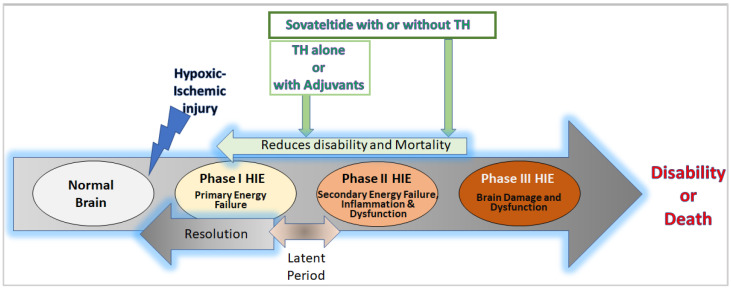
Neonatal hypoxic-ischemic encephalopathy (HIE) is a condition that results in brain damage in newborns due to insufficient blood and oxygen supply during or after birth. HIE is a major cause of neurological disability and mortality in newborns, with over one million neonatal deaths occurring annually worldwide. The severity of brain injury and the outcome of HIE depend on several factors, including the cause of oxygen deprivation, brain maturity, regional blood flow, and maternal health conditions. HIE is classified into mild, moderate, and severe categories based on the extent of brain damage and resulting neurological issues. The pathophysiology of HIE involves different phases, including the primary phase, latent phase, secondary phase, and tertiary phase. The primary and secondary phases are characterized by episodes of energy and cell metabolism failures, increased cytotoxicity and apoptosis, and activated microglia and inflammation in the brain. A tertiary phase occurs if the brain injury persists, characterized by reduced neural plasticity and neuronal loss. Understanding the cellular and molecular aspects of the different phases of HIE is crucial for developing new interventions and therapeutics. This review aims to discuss the pathophysiology of HIE, therapeutic hypothermia (TH), the only approved therapy for HIE, ongoing developments of adjuvants for TH, and potential future drugs for HIE.
新生儿缺氧缺血性脑病(HIE)是一种由于出生时或出生后血液和氧气供应不足而导致新生儿脑损伤的病症。HIE是新生儿神经残疾和死亡的主要原因,全球每年有超过100万新生儿死亡。脑损伤的严重程度和HIE的预后取决于几个因素,包括缺氧原因、脑成熟度、局部血流以及母亲的健康状况。根据脑损伤的程度和由此产生的神经问题,HIE分为轻度、中度和重度三类。HIE的病理生理学涉及不同阶段,包括急性期、潜伏期、亚急性期和慢性期。急性期和亚急性期的特征是能量和细胞代谢衰竭、细胞毒性和细胞凋亡增加、脑内小胶质细胞活化和炎症。如果脑损伤持续存在,则会进入慢性期,其特征是神经可塑性降低和神经元丢失。了解HIE不同阶段的细胞和分子层面对于开发新的干预措施和治疗方法至关重要。本综述旨在讨论HIE的病理生理学、治疗性低温(TH)——HIE唯一被批准的治疗方法、TH辅助药物的最新进展以及HIE未来可能的药物。