Galili Uri
Department of Medicine, Rush University Medical College, Chicago, IL 60612, USA.
Bioengineering (Basel). 2023 Oct 6;10(10):1165. doi: 10.3390/bioengineering10101165.
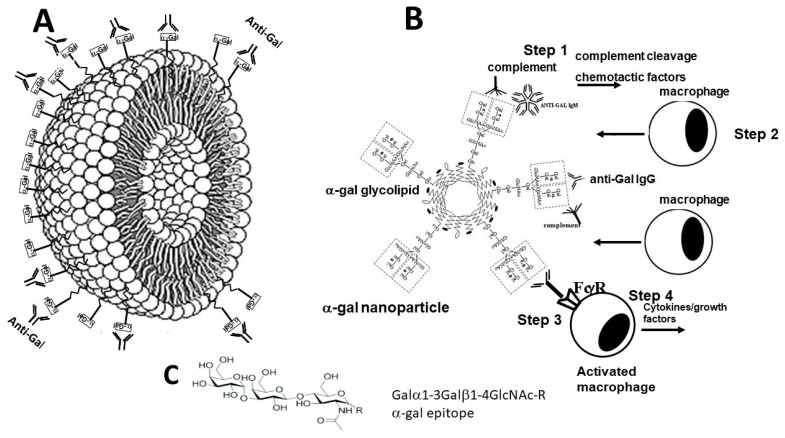
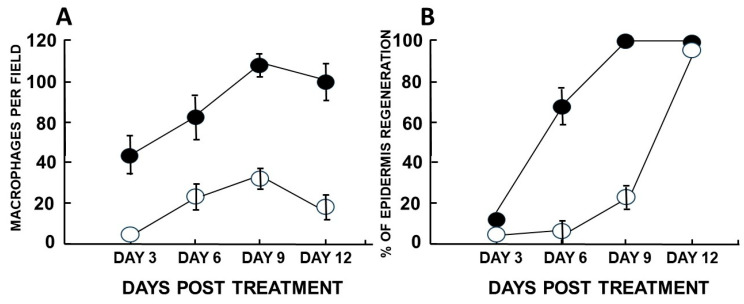
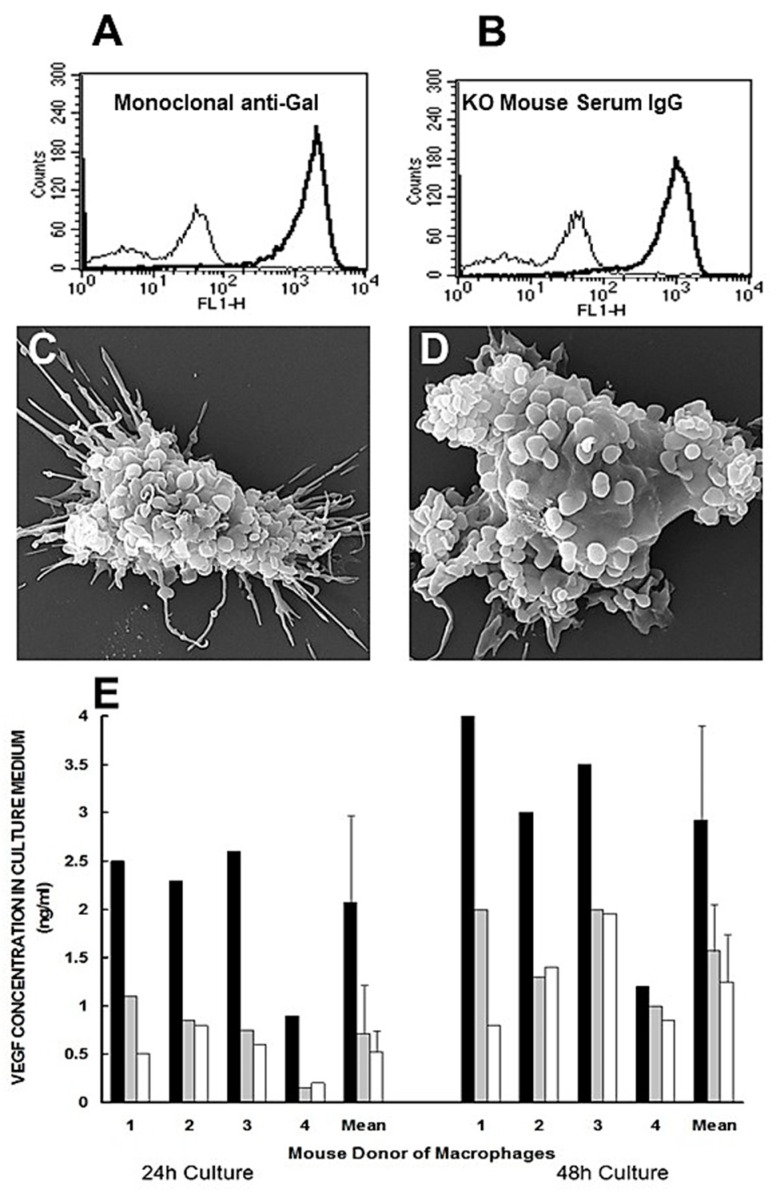
Macrophages play a pivotal role in the process of healing burns. One of the major risks in the course of burn healing, in the absence of regenerating epidermis, is infections, which greatly contribute to morbidity and mortality in such patients. Therefore, it is widely agreed that accelerating the recruitment of macrophages into burns may contribute to faster regeneration of the epidermis, thus decreasing the risk of infections. This review describes a unique method for the rapid recruitment of macrophages into burns and the activation of these macrophages to mediate accelerated regrowth of the epidermis and healing of burns. The method is based on the application of bio-degradable "α-gal" nanoparticles to burns. These nanoparticles present multiple α-gal epitopes (Galα1-3Galβ1-4GlcNAc-R), which bind the abundant natural anti-Gal antibody that constitutes ~1% of immunoglobulins in humans. Anti-Gal/α-gal nanoparticle interaction activates the complement system, resulting in localized production of the complement cleavage peptides C5a and C3a, which are highly effective chemotactic factors for monocyte-derived macrophages. The macrophages recruited into the α-gal nanoparticle-treated burns are activated following interaction between the Fc portion of anti-Gal coating the nanoparticles and the multiple Fc receptors on macrophage cell membranes. The activated macrophages secrete a variety of cytokines/growth factors that accelerate the regrowth of the epidermis and regeneration of the injured skin, thereby cutting the healing time by half. Studies on the healing of thermal injuries in the skin of anti-Gal-producing mice demonstrated a much faster recruitment of macrophages into burns treated with α-gal nanoparticles than in control burns treated with saline and healing of the burns within 6 days, whereas healing of control burns took ~12 days. α-Gal nanoparticles are non-toxic and do not cause chronic granulomas. These findings suggest that α-gal nanoparticles treatment may harness anti-Gal for inducing similar accelerated burn healing effects also in humans.
巨噬细胞在烧伤愈合过程中起着关键作用。在烧伤愈合过程中,若缺乏表皮再生,主要风险之一是感染,这在很大程度上导致此类患者的发病率和死亡率。因此,人们普遍认为加速巨噬细胞向烧伤部位的募集可能有助于表皮更快再生,从而降低感染风险。本综述描述了一种将巨噬细胞快速募集到烧伤部位并激活这些巨噬细胞以介导表皮加速再生和烧伤愈合的独特方法。该方法基于将可生物降解的“α-半乳糖”纳米颗粒应用于烧伤部位。这些纳米颗粒呈现多个α-半乳糖表位(Galα1-3Galβ1-4GlcNAc-R),它们与丰富的天然抗Gal抗体结合,该抗体占人类免疫球蛋白的约1%。抗Gal/α-半乳糖纳米颗粒相互作用激活补体系统,导致补体裂解肽C5a和C3a的局部产生,它们是单核细胞衍生巨噬细胞的高效趋化因子。募集到用α-半乳糖纳米颗粒处理的烧伤部位的巨噬细胞在包被纳米颗粒的抗Gal的Fc部分与巨噬细胞膜上的多个Fc受体相互作用后被激活。活化的巨噬细胞分泌多种细胞因子/生长因子,加速表皮再生和受损皮肤的修复,从而将愈合时间缩短一半。对产生抗Gal的小鼠皮肤热损伤愈合的研究表明,与用盐水处理的对照烧伤相比,用α-半乳糖纳米颗粒处理的烧伤部位巨噬细胞的募集速度要快得多,烧伤在6天内愈合,而对照烧伤的愈合需要约12天。α-半乳糖纳米颗粒无毒,不会引起慢性肉芽肿。这些发现表明,α-半乳糖纳米颗粒治疗可能利用抗Gal在人类中诱导类似的加速烧伤愈合效果。