School of Pharmacy and Bioengineering, Keele University, Stoke-on-Trent ST4 7QB, UK.
Department of Medicine, Surgery and Dentistry, University of Salerno, Via S. Allende, 84081 Baronissi, Italy.
Int J Mol Sci. 2023 Oct 12;24(20):15107. doi: 10.3390/ijms242015107.
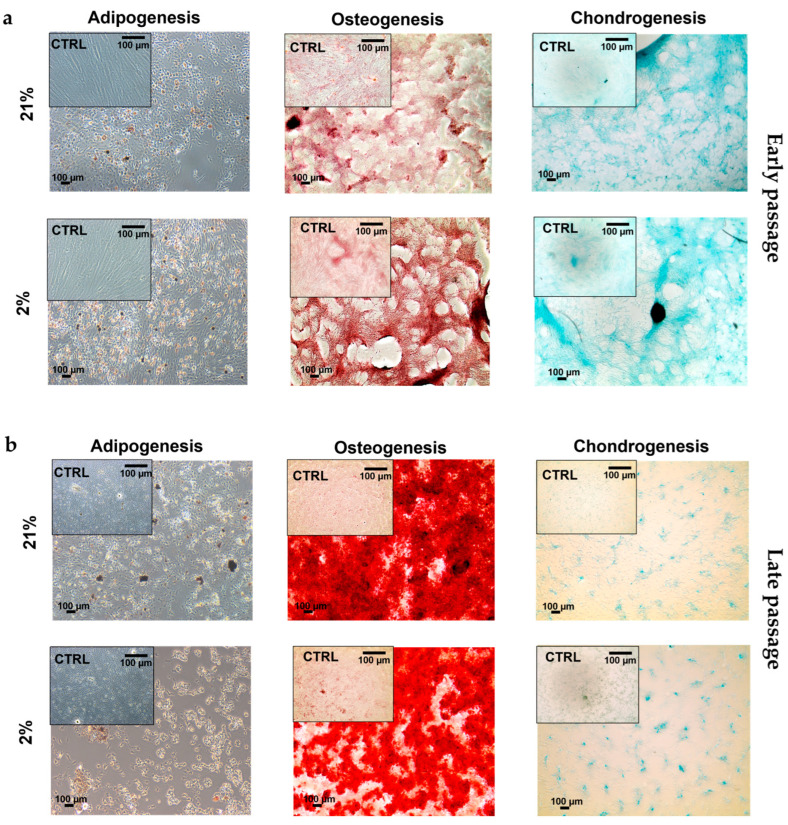
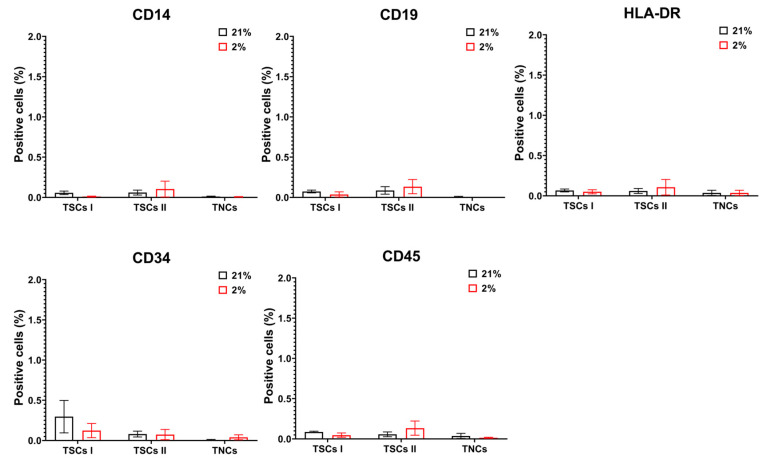
Tendon injuries caused by overuse or age-related deterioration are frequent. Incomplete knowledge of somatic tendon cell biology and their progenitors has hindered interventions for the effective repair of injured tendons. Here, we sought to compare and contrast distinct tendon-derived cell populations: type I and II tendon stem cells (TSCs) and tenocytes (TNCs). Porcine type I and II TSCs were isolated via the enzymatic digestion of distinct membranes (paratenon and endotenon, respectively), while tenocytes were isolated through an explant method. Resultant cell populations were characterized by morphology, differentiation, molecular, flow cytometry, and immunofluorescence analysis. Cells were isolated, cultured, and evaluated in two alternate oxygen concentrations (physiological (2%) and air (21%)) to determine the role of oxygen in cell biology determination within this relatively avascular tissue. The different cell populations demonstrated distinct proliferative potential, morphology, and transcript levels (both for tenogenic and stem cell markers). In contrast, all tendon-derived cell populations displayed multipotent differentiation potential and immunophenotypes (positive for CD90 and CD44). Type II TSCs emerged as the most promising tendon-derived cell population for expansion, given their enhanced proliferative potential, multipotency, and maintenance of a tenogenic profile at early and late passage. Moreover, in all cases, physoxia promoted the enhanced proliferation and maintenance of a tenogenic profile. These observations help shed light on the biological mechanisms of tendon cells, with the potential to aid in the development of novel therapeutic approaches for tendon disorders.
过度使用或与年龄相关的恶化导致的肌腱损伤很常见。对躯体肌腱细胞生物学及其祖细胞的不完全了解,阻碍了对受伤肌腱进行有效修复的干预措施。在这里,我们试图比较和对比不同的肌腱衍生细胞群体:I 型和 II 型肌腱干细胞(TSC)和肌腱细胞(TNC)。通过对不同膜(分别为腱旁组织和腱内膜)的酶消化,分离出猪 I 型和 II 型 TSC,而肌腱细胞则通过外植体方法分离。通过形态学、分化、分子、流式细胞术和免疫荧光分析对所得细胞群体进行了表征。将细胞在两种不同的氧浓度(生理浓度(2%)和空气浓度(21%))下进行分离、培养和评估,以确定氧气在这个相对无血管组织中对细胞生物学的作用。不同的细胞群体表现出不同的增殖潜力、形态和转录水平(包括肌腱和成体干细胞标志物)。相比之下,所有肌腱衍生细胞群体均显示出多能分化潜力和免疫表型(CD90 和 CD44 阳性)。考虑到 II 型 TSC 具有增强的增殖潜力、多能性以及在早期和晚期传代时保持肌腱表型,它是最有前途的肌腱衍生细胞群体,适合进行扩增。此外,在所有情况下,低氧条件都能促进增殖和保持肌腱表型。这些观察结果有助于阐明肌腱细胞的生物学机制,为肌腱疾病的新型治疗方法的发展提供了帮助。