Department of Biomedical Engineering, Johns Hopkins University School of Medicine, Baltimore, MD 21205, USA.
Division of Cardiology, Department of Medicine, Johns Hopkins University School of Medicine, Baltimore, MD 21205, USA.
Genes (Basel). 2023 Sep 25;14(10):1864. doi: 10.3390/genes14101864.
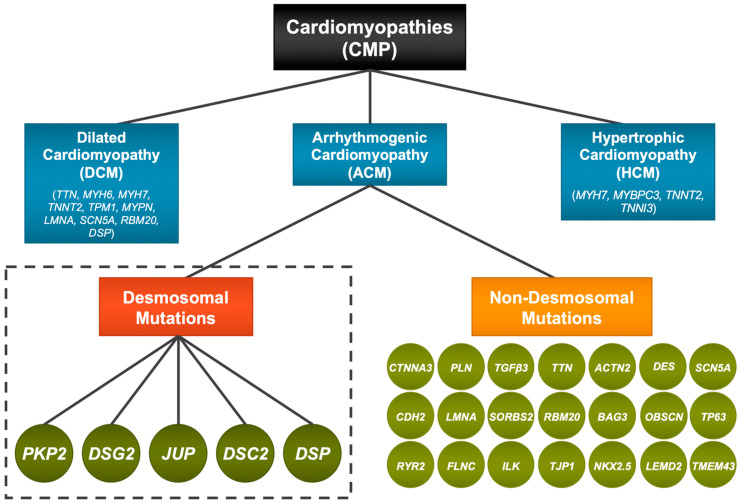
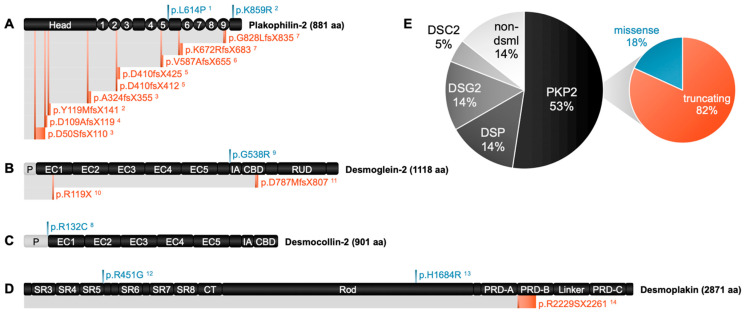
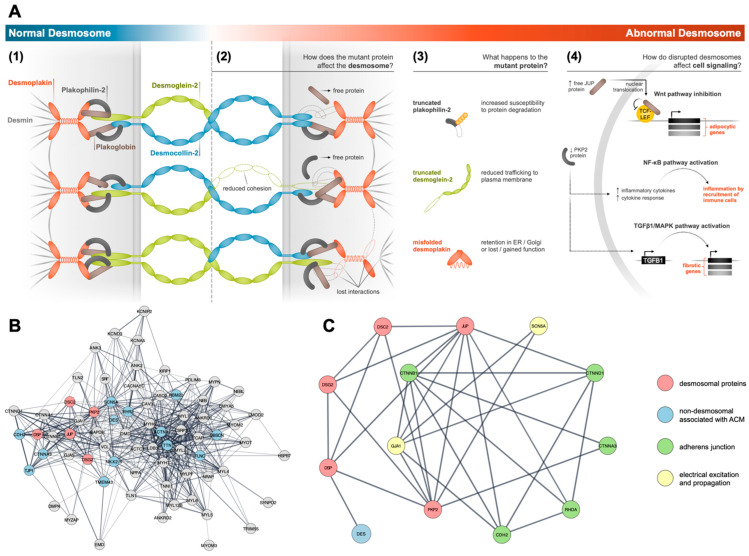
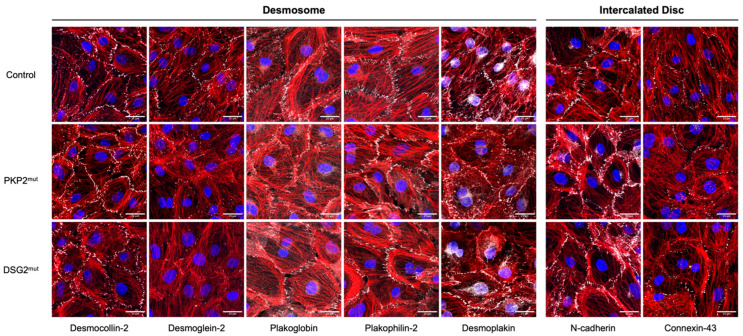
Cardiomyopathies (CMPs) represent a significant healthcare burden and are a major cause of heart failure leading to premature death. Several CMPs are now recognized to have a strong genetic basis, including arrhythmogenic cardiomyopathy (ACM), which predisposes patients to arrhythmic episodes. Variants in one of the five genes ( and ) encoding proteins of the desmosome are known to cause a subset of ACM, which we classify as desmosome-related ACM (dACM). Phenotypically, this disease may lead to sudden cardiac death in young athletes and, during late stages, is often accompanied by myocardial fibrofatty infiltrates. While the pathogenicity of the desmosome genes has been well established through animal studies and limited supplies of primary human cells, these systems have drawbacks that limit their utility and relevance to understanding human disease. Human induced pluripotent stem cells (hiPSCs) have emerged as a powerful tool for modeling ACM in vitro that can overcome these challenges, as they represent a reproducible and scalable source of cardiomyocytes (CMs) that recapitulate patient phenotypes. In this review, we provide an overview of dACM, summarize findings in other model systems linking desmosome proteins with this disease, and provide an up-to-date summary of the work that has been conducted in hiPSC-cardiomyocyte (hiPSC-CM) models of dACM. In the context of the hiPSC-CM model system, we highlight novel findings that have contributed to our understanding of disease and enumerate the limitations, prospects, and directions for research to consider towards future progress.
心肌病(CMPs)是一个重大的医疗保健负担,也是导致心力衰竭和过早死亡的主要原因。现在已经认识到几种 CMP 具有很强的遗传基础,包括致心律失常性心肌病(ACM),它使患者容易发生心律失常。现已发现编码桥粒蛋白的五个基因(和)中的变异会导致一部分 ACM,我们将其归类为桥粒相关 ACM(dACM)。从表型上看,这种疾病可能导致年轻运动员猝死,而在晚期,常伴有心肌纤维脂肪浸润。虽然通过动物研究和有限的原代人类细胞供应已经充分证实了桥粒基因的致病性,但这些系统存在局限性,限制了它们在理解人类疾病方面的应用和相关性。人类诱导多能干细胞(hiPSCs)已成为体外建模 ACM 的有力工具,可以克服这些挑战,因为它们是可重现和可扩展的心肌细胞(CM)来源,可以重现患者表型。在这篇综述中,我们概述了 dACM,总结了将桥粒蛋白与这种疾病联系起来的其他模型系统中的发现,并提供了 dACM 的 hiPSC-心肌细胞(hiPSC-CM)模型方面的最新工作摘要。在 hiPSC-CM 模型系统的背景下,我们强调了有助于我们理解疾病的新发现,并列举了限制、前景和研究方向,以考虑未来的进展。