Gómez-García Alejandro, Jiménez Daniel A Acuña, Zamora William J, Barazorda-Ccahuana Haruna L, Chávez-Fumagalli Miguel Á, Valli Marilia, Andricopulo Adriano D, Bolzani Vanderlan da S, Olmedo Dionisio A, Solís Pablo N, Núñez Marvin J, Rodríguez Pérez Johny R, Valencia Sánchez Hoover A, Cortés Hernández Héctor F, Medina-Franco José L
DIFACQUIM Research Group, Department of Pharmacy, School of Chemistry, Universidad Nacional Autónoma de México Avenida Universidad 3000, Mexico City 04510, Mexico.
CBio3 Laboratory, School of Chemistry, University of Costa Rica, San Pedro, San José 11501-2060, Costa Rica.
Pharmaceuticals (Basel). 2023 Sep 30;16(10):1388. doi: 10.3390/ph16101388.
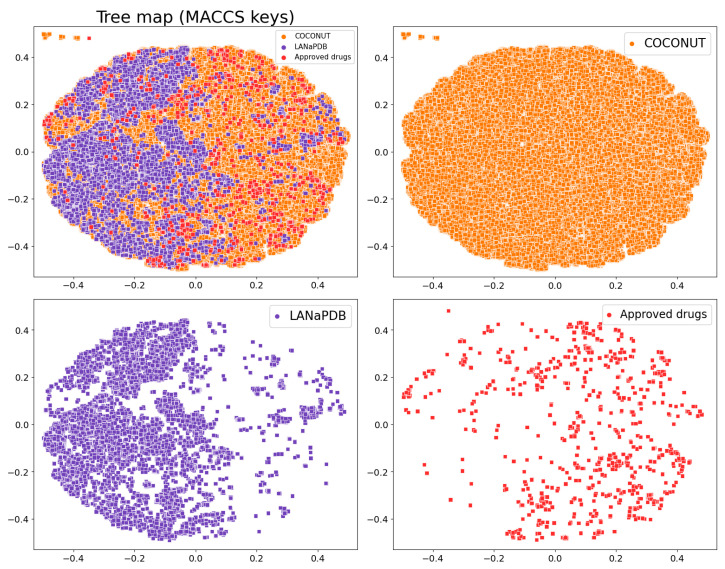
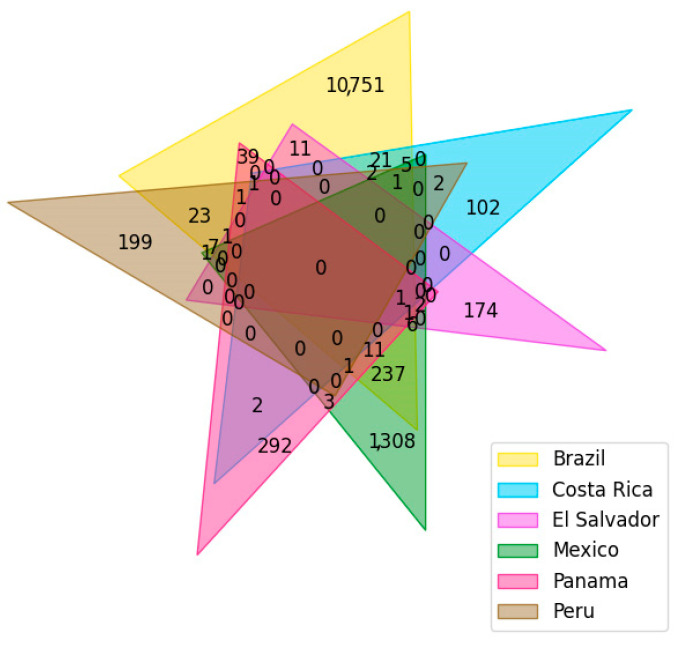
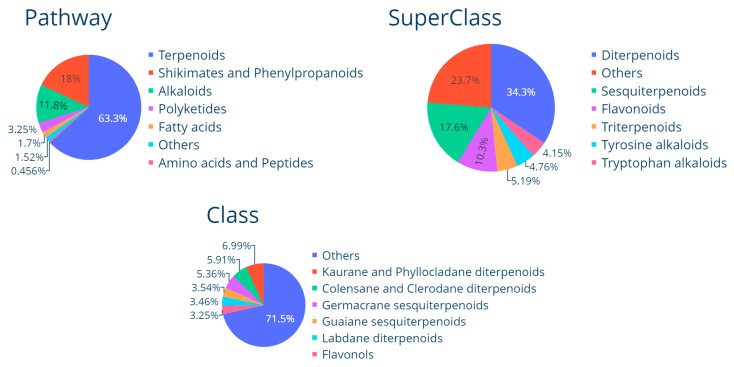
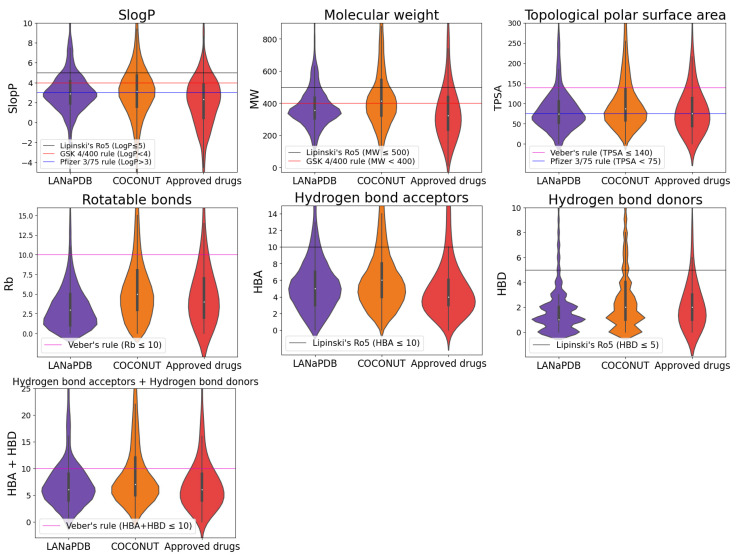
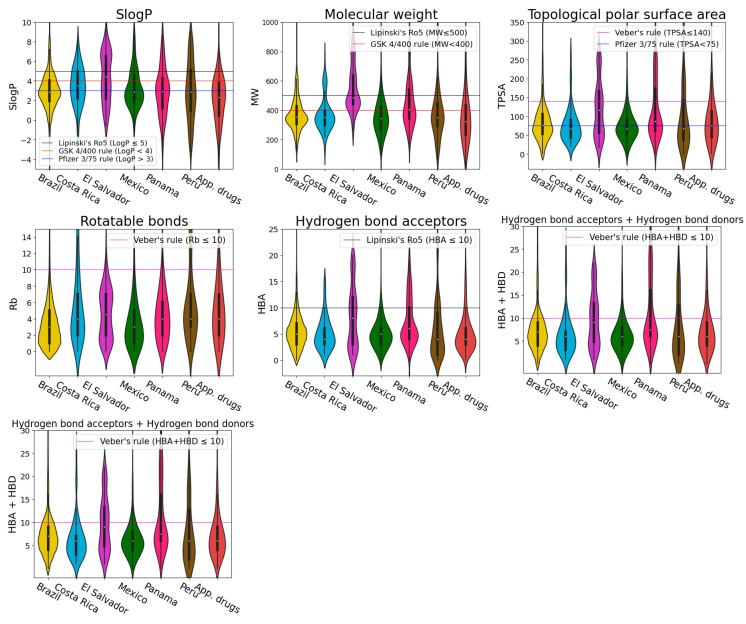
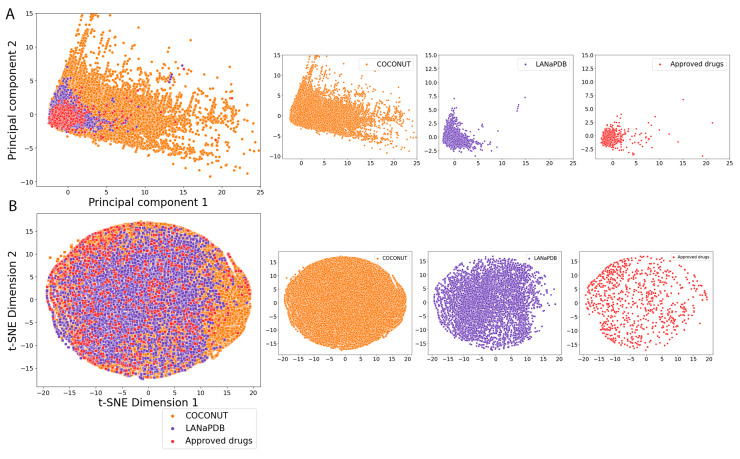
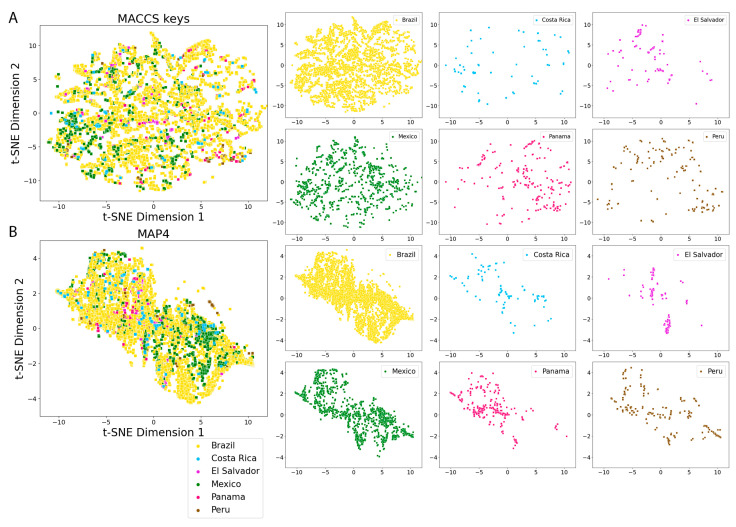
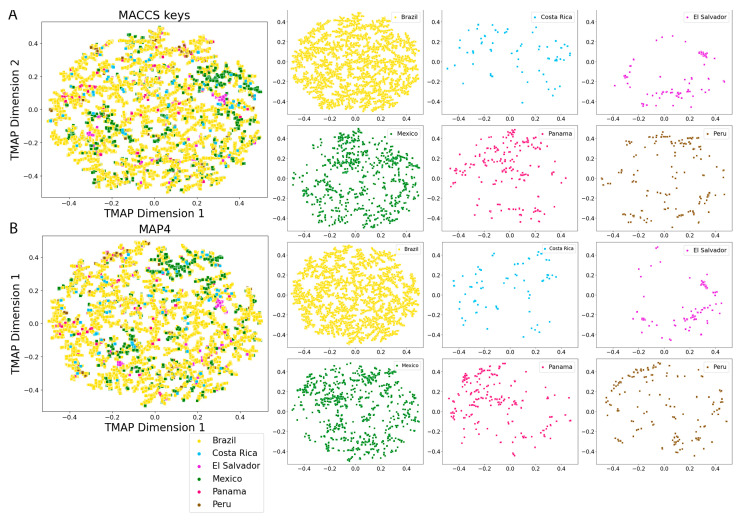
The number of databases of natural products (NPs) has increased substantially. Latin America is extraordinarily rich in biodiversity, enabling the identification of novel NPs, which has encouraged both the development of databases and the implementation of those that are being created or are under development. In a collective effort from several Latin American countries, herein we introduce the first version of the Latin American Natural Products Database (LANaPDB), a public compound collection that gathers the chemical information of NPs contained in diverse databases from this geographical region. The current version of LANaPDB unifies the information from six countries and contains 12,959 chemical structures. The structural classification showed that the most abundant compounds are the terpenoids (63.2%), phenylpropanoids (18%) and alkaloids (11.8%). From the analysis of the distribution of properties of pharmaceutical interest, it was observed that many LANaPDB compounds satisfy some drug-like rules of thumb for physicochemical properties. The concept of the chemical multiverse was employed to generate multiple chemical spaces from two different fingerprints and two dimensionality reduction techniques. Comparing LANaPDB with FDA-approved drugs and the major open-access repository of NPs, COCONUT, it was concluded that the chemical space covered by LANaPDB completely overlaps with COCONUT and, in some regions, with FDA-approved drugs. LANaPDB will be updated, adding more compounds from each database, plus the addition of databases from other Latin American countries.
天然产物(NP)数据库的数量已大幅增加。拉丁美洲拥有极为丰富的生物多样性,这使得新型天然产物得以识别,从而推动了数据库的开发以及正在创建或正在开发的数据库的实施。在几个拉丁美洲国家的共同努力下,我们在此推出拉丁美洲天然产物数据库(LANaPDB)的首个版本,这是一个公共化合物集合,汇集了来自该地理区域不同数据库中天然产物的化学信息。LANaPDB的当前版本整合了来自六个国家的信息,包含12,959个化学结构。结构分类表明,最丰富的化合物是萜类化合物(63.2%)、苯丙素类化合物(18%)和生物碱(11.8%)。通过对具有药学意义的性质分布进行分析,发现许多LANaPDB化合物符合一些关于物理化学性质的类似药物的经验法则。化学多重宇宙的概念被用于从两种不同的指纹和两种降维技术生成多个化学空间。将LANaPDB与美国食品药品监督管理局(FDA)批准的药物以及天然产物的主要开放获取数据库COCONUT进行比较后得出结论,LANaPDB覆盖的化学空间与COCONUT完全重叠,并且在某些区域与FDA批准的药物重叠。LANaPDB将进行更新,从每个数据库中添加更多化合物,以及添加来自其他拉丁美洲国家的数据库。