Wu Tony, Liu Chang, Kannan Rangaramanujam M
Center for Nanomedicine, Wilmer Eye Institute, Johns Hopkins University School of Medicine, Baltimore, MD 21287, USA.
Pharmaceutics. 2023 Oct 5;15(10):2428. doi: 10.3390/pharmaceutics15102428.
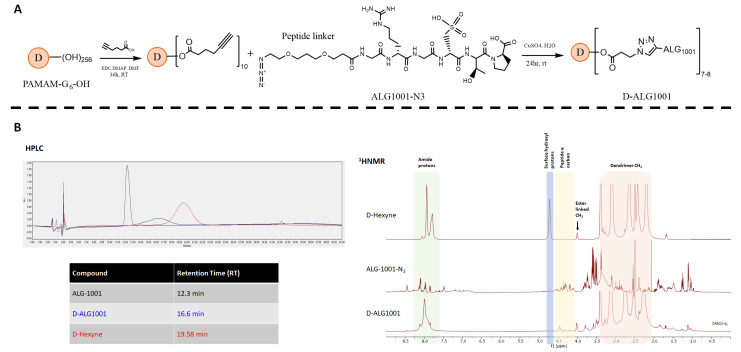
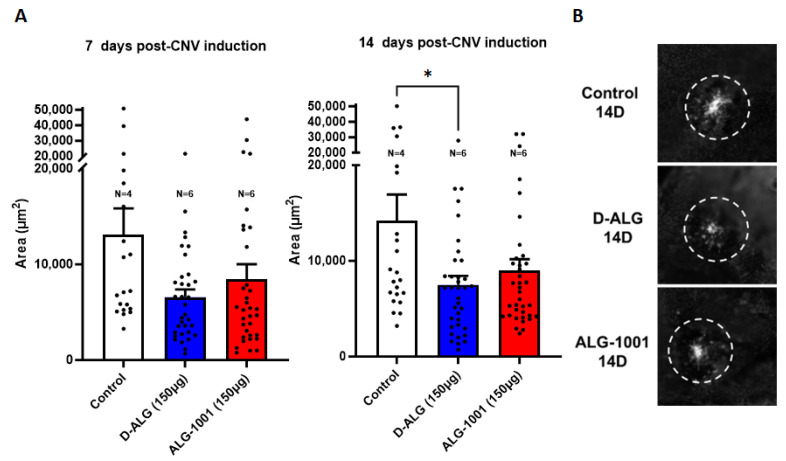
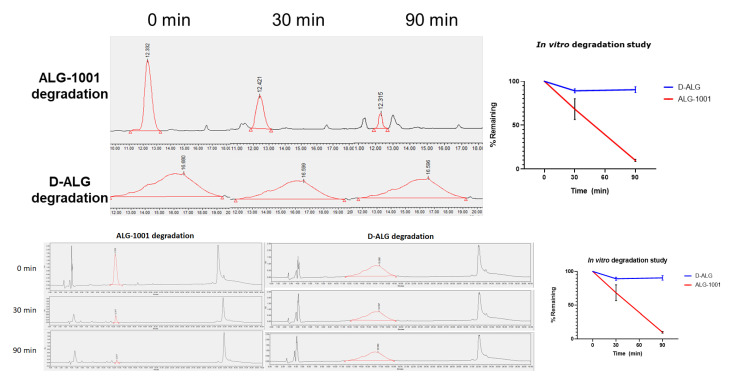
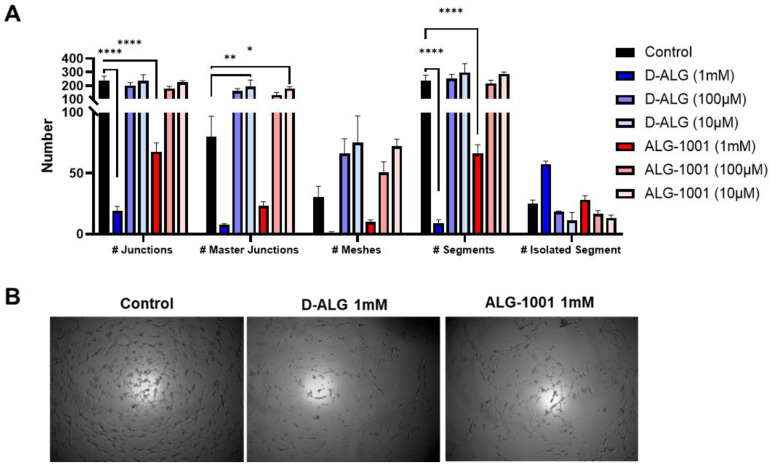
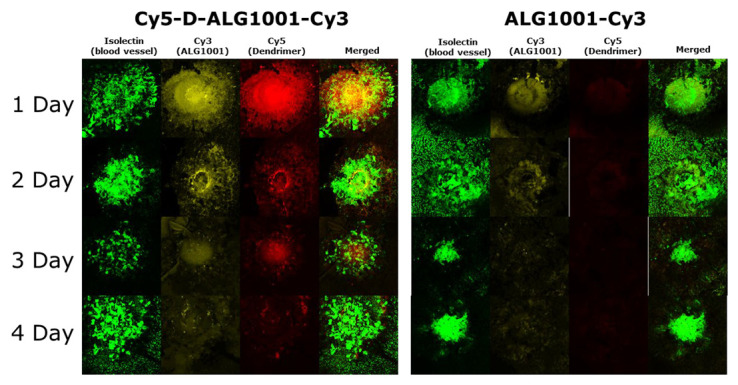
Wet age-related macular degeneration (AMD) is an end-stage event in a complex pathogenesis of macular degeneration, involving the abnormal growth of blood vessels at the retinal pigment epithelium driven by vascular endothelial growth factor (VEGF). Current therapies seek to interrupt VEGF signaling to halt the progress of neovascularization, but a significant patient population is not responsive. New treatment modalities such as integrin-binding peptides (risuteganib/Luminate/ALG-1001) are being explored to address this clinical need but these treatments necessitate the use of intravitreal injections (IVT), which carries risks of complications and restricts its availability in less-developed countries. Successful systemic delivery of peptide-based therapeutics must overcome obstacles such as degradation by proteinases in circulation and off-target binding. In this work, we present a novel dendrimer-integrin-binding peptide (D-ALG) synthesized with a noncleavable, "clickable" linker. In vitro, D-ALG protected the peptide payload from enzymatic degradation for up to 1.5 h (~90% of the compound remained intact) in a high concentration of proteinase (2 mg/mL) whereas ~90% of free ALG-1001 was degraded in the same period. Further, dendrimer conjugation preserved the antiangiogenic activity of ALG-1001 in vitro with significant reductions in endothelial vessel network formation compared to untreated controls. In vivo, direct intravitreal injections of ALG-1001 and D-ALG produced reductions in the CNV lesion area but in systemically dosed animals, only D-ALG produced significant reductions of CNV lesion area at 14 days. Imaging data suggested that the difference in efficacy may be due to more D-ALG remaining in the target area than ALG-1001 after administration. The results presented here offer a clinically relevant route for peptide therapeutics by addressing the major obstacles that these therapies face in delivery.
湿性年龄相关性黄斑变性(AMD)是黄斑变性复杂发病机制中的终末期事件,涉及由血管内皮生长因子(VEGF)驱动的视网膜色素上皮层血管异常生长。目前的治疗方法旨在阻断VEGF信号传导以阻止新生血管形成的进展,但相当一部分患者对此无反应。正在探索新的治疗方式,如整合素结合肽(利殊单抗/Luminate/ALG - 1001)来满足这一临床需求,但这些治疗需要玻璃体内注射(IVT),这存在并发症风险,并且在欠发达国家限制了其可用性。基于肽的治疗药物的成功全身递送必须克服诸如循环中蛋白酶降解和脱靶结合等障碍。在这项工作中,我们展示了一种用不可裂解的“可点击”连接子合成的新型树枝状聚合物 - 整合素结合肽(D - ALG)。在体外,在高浓度蛋白酶(2 mg/mL)中,D - ALG可保护肽载荷长达1.5小时不被酶解(约90%的化合物保持完整),而同期约90%的游离ALG - 1001被降解。此外,树枝状聚合物偶联在体外保留了ALG - 1001的抗血管生成活性,与未处理的对照相比,内皮血管网络形成显著减少。在体内,直接玻璃体内注射ALG - 1001和D - ALG可使脉络膜新生血管(CNV)病变面积减小,但在全身给药的动物中,仅D - ALG在14天时能使CNV病变面积显著减小。成像数据表明,疗效差异可能是由于给药后D - ALG比ALG - 1001更多地留在靶区域。此处呈现的结果通过解决这些治疗在递送方面面临的主要障碍,为肽治疗药物提供了一条临床相关途径。