Center for Genetic Medicine Research, Children's National Research & Innovation Campus, Washington, DC, USA.
Department of Genomics & Precision Medicine, George Washington University, Washington, DC, USA.
BMC Med Genomics. 2023 Oct 30;16(1):268. doi: 10.1186/s12920-023-01707-4.
During gestation, stressors to the fetus, including viral exposure or maternal psychological distress, can fundamentally alter the neonatal epigenome, and may be associated with long-term impaired developmental outcomes. The impact of in utero exposure to the COVID-19 pandemic on the newborn epigenome has yet to be described.
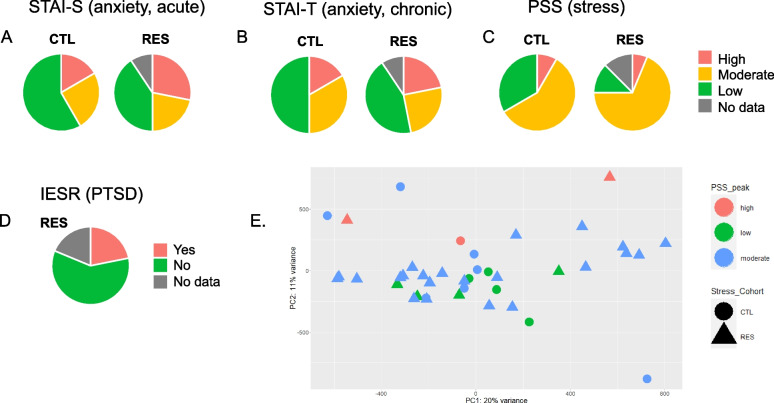
This study aimed to determine whether there are unique epigenetic signatures in newborns who experienced otherwise healthy pregnancies that occurred during the COVID-19 pandemic (Project RESCUE). The pre-pandemic control and pandemic cohorts (Project RESCUE) included in this study are part of a prospective observational and longitudinal cohort study that evaluates the impact of elevated prenatal maternal stress during the COVID-19 pandemic on early childhood neurodevelopment. Using buccal swabs collected at birth, differential DNA methylation analysis was performed using the Infinium MethylationEPIC arrays and linear regression analysis. Pathway analysis and gene ontology enrichment were performed on resultant gene lists.
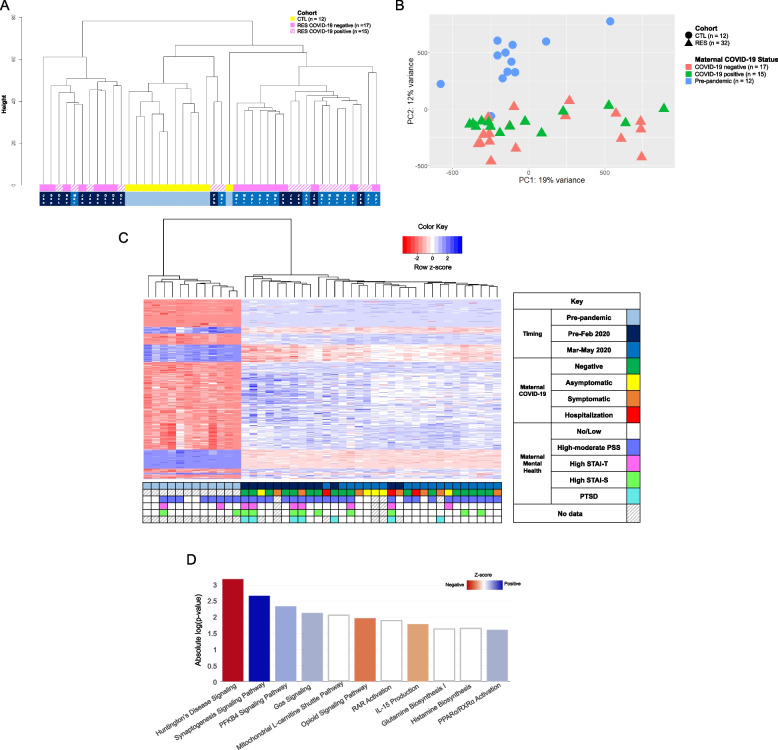
Widespread differential methylation was found between neonates exposed in utero to the pandemic and pre-pandemic neonates. In contrast, there were no apparent epigenetic differences associated with maternal COVID-19 infection during pregnancy. Differential methylation was observed among genomic sites that underpin important neurological pathways that have been previously reported in the literature to be differentially methylated because of prenatal stress, such as NR3C1.
The present study reveals potential associations between exposure to the COVID-19 pandemic during pregnancy and subsequent changes in the newborn epigenome. While this finding warrants further investigation, it is a point that should be considered in any study assessing newborn DNA methylation studies obtained during this period, even in otherwise healthy pregnancies.
在胎儿发育期间,包括病毒暴露或母体心理困扰在内的压力源可能会从根本上改变新生儿的表观基因组,并可能与长期发育受损的结果有关。子宫内暴露于 COVID-19 大流行对新生儿表观基因组的影响尚未得到描述。
本研究旨在确定在 COVID-19 大流行期间经历健康妊娠的新生儿是否存在独特的表观遗传特征(项目 RESCUE)。本研究中包含的大流行前对照和大流行队列(项目 RESCUE)是一项前瞻性观察性和纵向队列研究的一部分,该研究评估了 COVID-19 大流行期间升高的产前母体压力对儿童早期神经发育的影响。使用在出生时收集的口腔拭子,使用 Infinium MethylationEPIC 阵列进行差异 DNA 甲基化分析,并进行线性回归分析。对生成的基因列表进行途径分析和基因本体富集分析。
在子宫内暴露于大流行的新生儿与大流行前的新生儿之间发现了广泛的差异甲基化。相比之下,与母亲在怀孕期间感染 COVID-19 没有明显的表观遗传差异。在先前文献中报道的与产前应激有关的重要神经途径的基因组位点上观察到了差异甲基化,例如 NR3C1。
本研究揭示了怀孕期间暴露于 COVID-19 大流行与新生儿随后的表观基因组变化之间的潜在关联。虽然这一发现需要进一步研究,但在评估在此期间获得的新生儿 DNA 甲基化研究的任何研究中,都应该考虑到这一点,即使在健康妊娠中也是如此。