Liu Chuanbo, Tang Liang, Hou Chunsheng, Zhang Jufang, Li Jinsheng
Department of Plastic and Cosmetic Surgery, Affiliated Hangzhou First People's Hospital, Zhejiang University School of Medicine, Hangzhou, Zhejiang, People's Republic of China.
Clin Cosmet Investig Dermatol. 2023 Oct 24;16:3023-3034. doi: 10.2147/CCID.S430852. eCollection 2023.
High levels of VEGF and excessive angiogenesis contribute significantly to hypertrophic scar (HS) formation. Our study aimed to preliminarily investigate the effect of axitinib, a selective VEGF receptor tyrosine kinase inhibitor, on angiogenesis of HS and to explore its possible mechanism in a rabbit ear model.
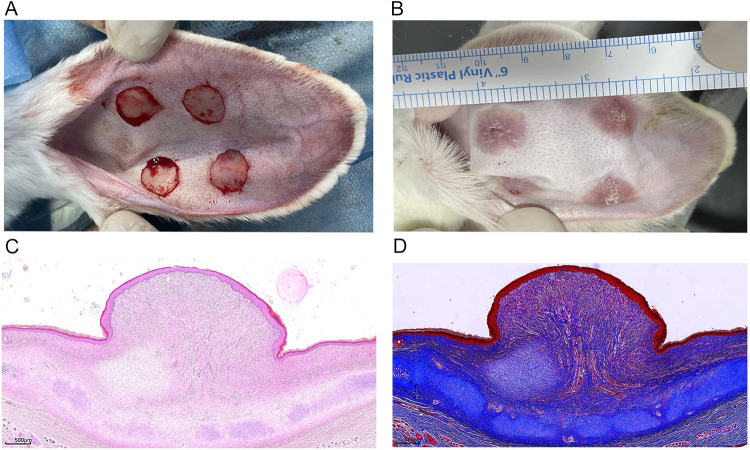
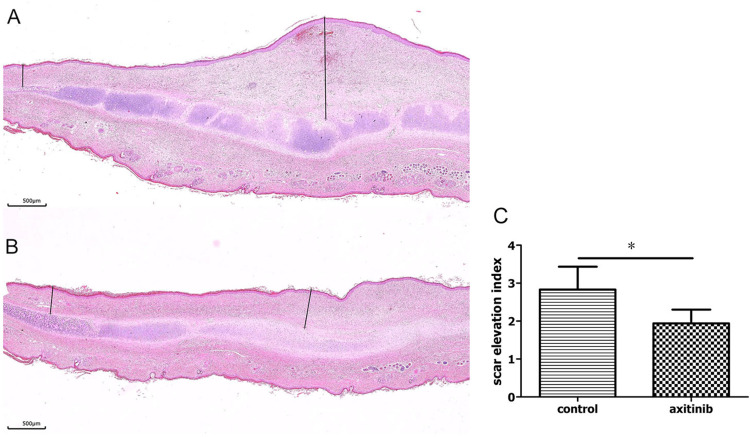
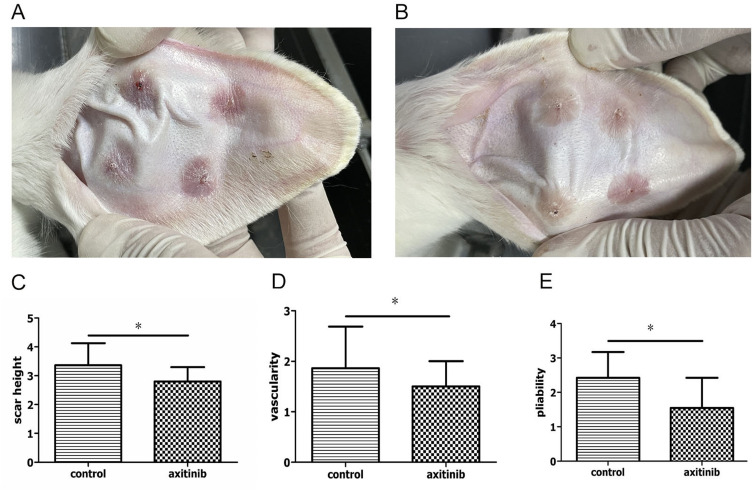
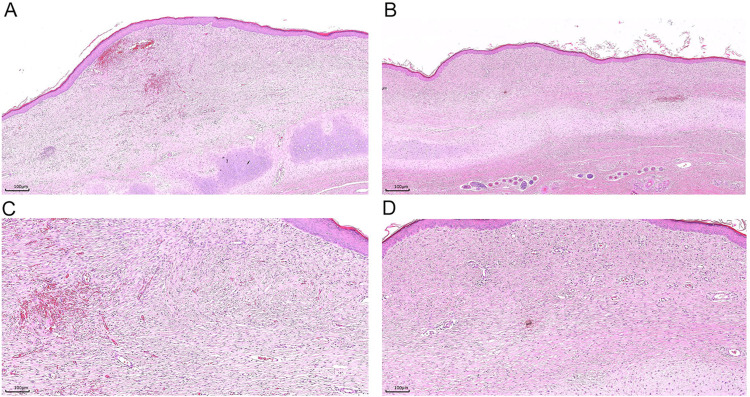
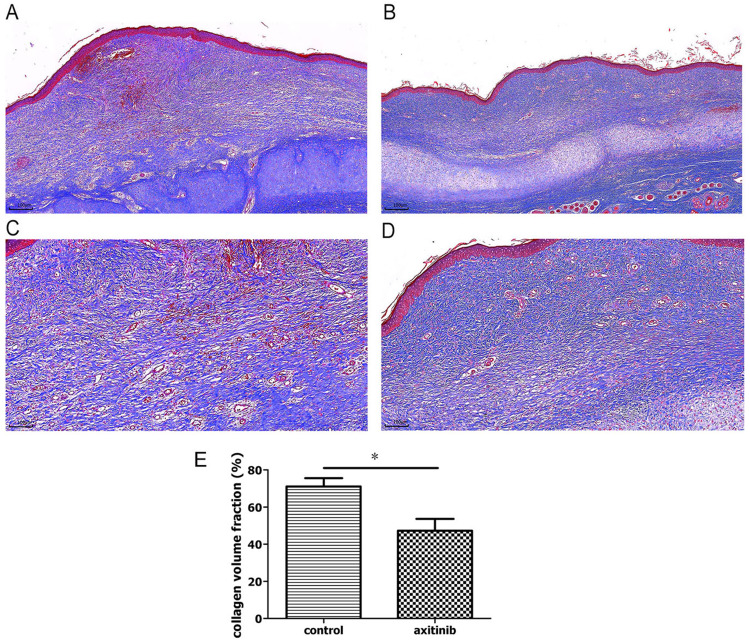
Ten male New Zealand white rabbits were used to establish HS models and then randomised to the control and axitinib groups. The scar tissues in the two groups were injected with axitinib or normal saline, and they were evaluated after one month of treatment. Macroscopic scar thickness, vascularity and pliability, as well as histopathological analysis including HE staining and Masson staining and scar elevation index (SEI) between two groups were compared. Immunohistochemical staining of CD31 in two groups was conducted to assess the degree of angiogenesis in HS tissue. The protein expression of protein kinase B (AKT) and ribosomal protein S6 kinase (p70S6K) and their phosphorylation levels in both groups were examined by Western blot analysis.
The macroscopic and histological observation showed intralesional axitinib injection significantly reduced scar thickness, vascularity and pliability of HS in the rabbit ear model. The value of SEI in HE assessment was also significantly declined in the axitinib group. Furthermore, immunohistochemical analysis revealed that axitinib suppressed the expression of CD31 in HS tissue, and the mean IOD for blood vessels was significantly lower in the axitinib-treated group. Additionally, axitinib effectively attenuated the protein expression of p70S6K, p-AKT and p-p70S6K by Western blot analysis.
Our study suggests that intralesional injection of axitinib can effectively attenuate HS by reducing angiogenesis in the rabbit ear model, and this inhibitory effect may be mediated by suppression of AKT/p70S6K signaling pathway. It indicates that axitinib may be a promising option for the treatment of HS in the future.
高水平的血管内皮生长因子(VEGF)和过度血管生成对肥厚性瘢痕(HS)形成有显著影响。本研究旨在初步探讨选择性VEGF受体酪氨酸激酶抑制剂阿昔替尼对HS血管生成的影响,并在兔耳模型中探索其可能机制。
选用10只雄性新西兰白兔建立HS模型,然后随机分为对照组和阿昔替尼组。两组瘢痕组织分别注射阿昔替尼或生理盐水,治疗1个月后进行评估。比较两组的宏观瘢痕厚度、血管分布和柔韧性,以及包括苏木精-伊红(HE)染色、Masson染色和瘢痕增生指数(SEI)在内的组织病理学分析。对两组进行CD31免疫组织化学染色以评估HS组织中的血管生成程度。通过蛋白质印迹分析检测两组中蛋白激酶B(AKT)和核糖体蛋白S6激酶(p70S6K)的蛋白表达及其磷酸化水平。
宏观和组织学观察显示,在兔耳模型中,病灶内注射阿昔替尼显著降低了HS的瘢痕厚度、血管分布和柔韧性。阿昔替尼组在HE评估中的SEI值也显著下降。此外,免疫组织化学分析显示阿昔替尼抑制了HS组织中CD31的表达,阿昔替尼治疗组血管的平均积分光密度显著降低。另外,通过蛋白质印迹分析,阿昔替尼有效减弱了p70S6K、p-AKT和p-p70S6K的蛋白表达。
我们的研究表明,在兔耳模型中,病灶内注射阿昔替尼可通过减少血管生成有效减轻HS,这种抑制作用可能是通过抑制AKT/p70S6K信号通路介导。这表明阿昔替尼未来可能是治疗HS的一个有前景的选择。