Croatian Veterinary Institute, Savska cesta 143, 10000, Zagreb, Croatia.
Department of Veterinary Pathology, Faculty of Veterinary Medicine, University of Zagreb, Heinzelova 55, 10000, Zagreb, Croatia.
Sci Rep. 2023 Oct 31;13(1):18780. doi: 10.1038/s41598-023-45994-4.
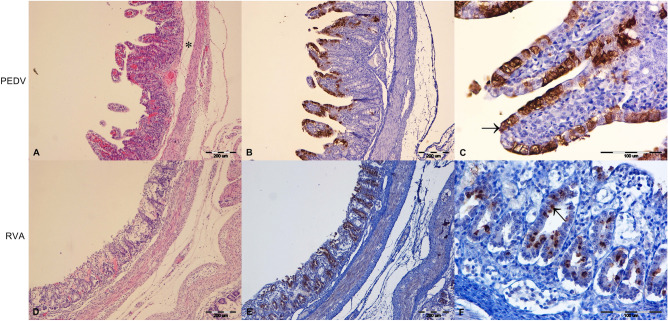
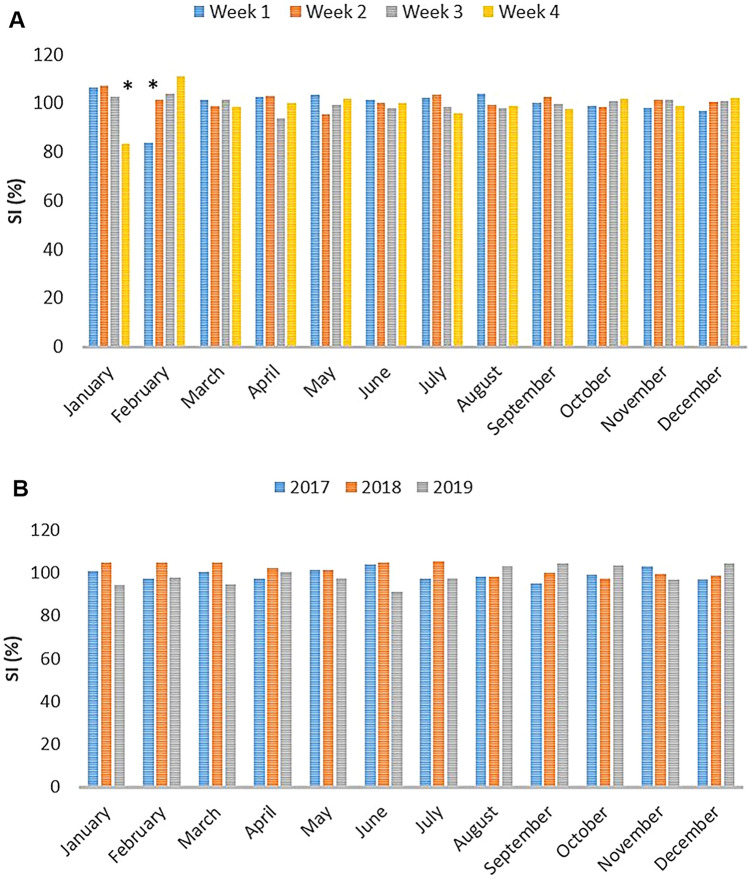
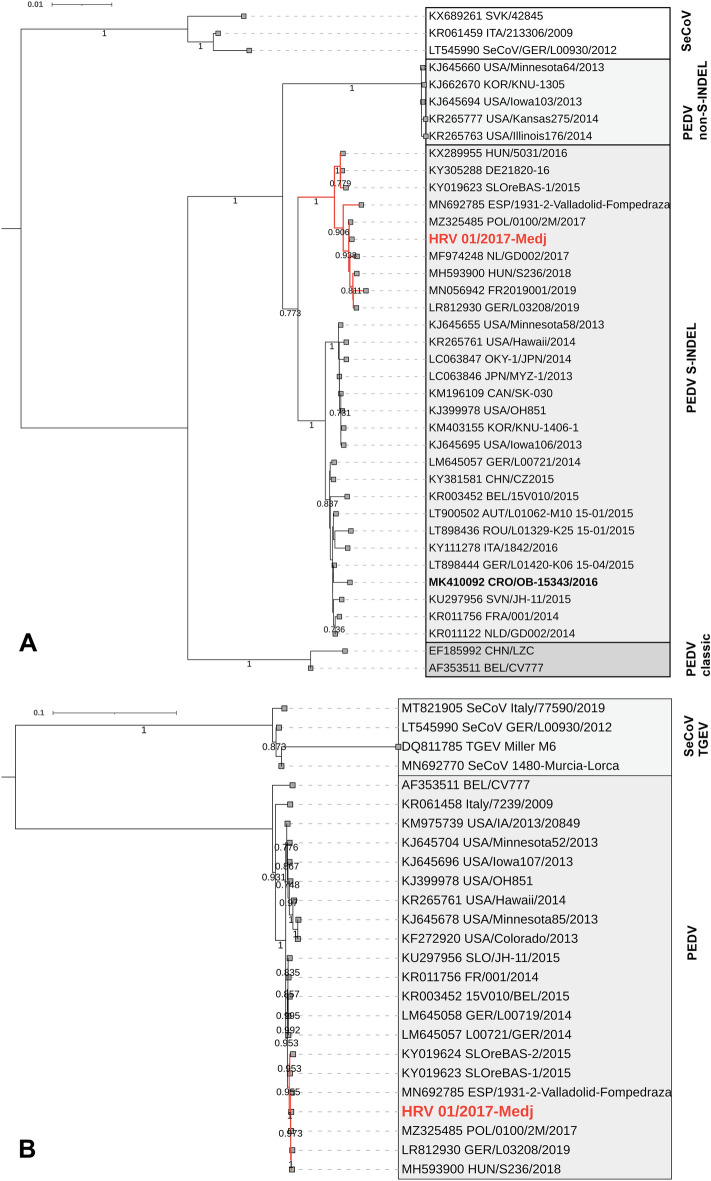
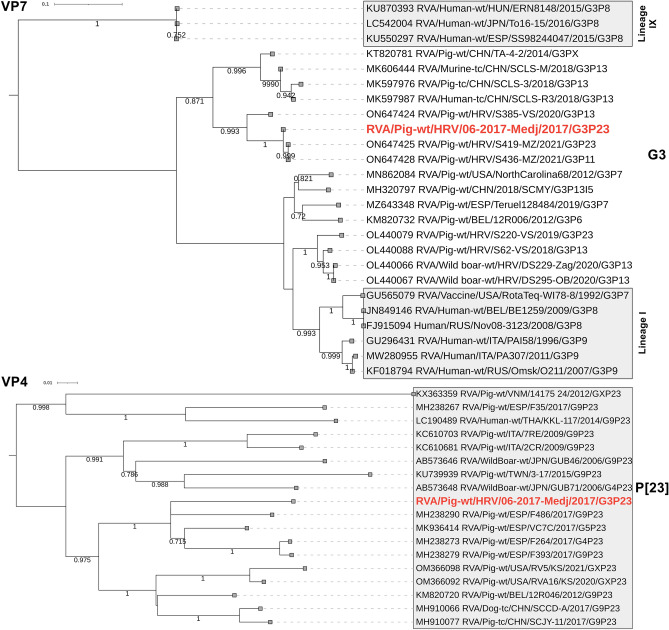
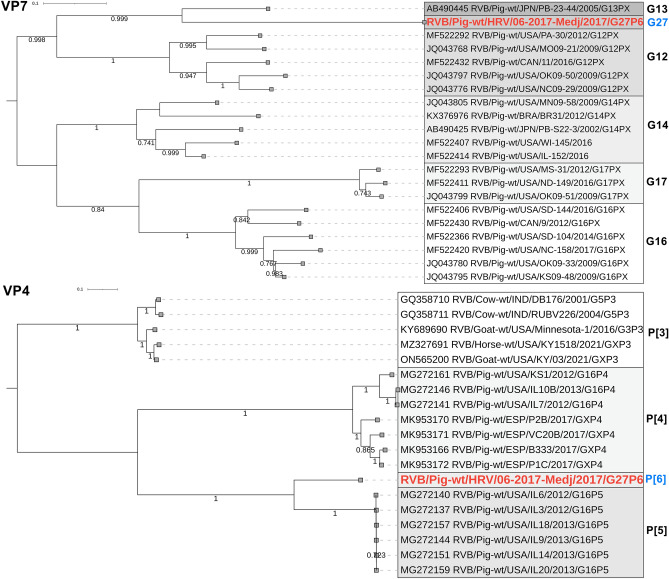
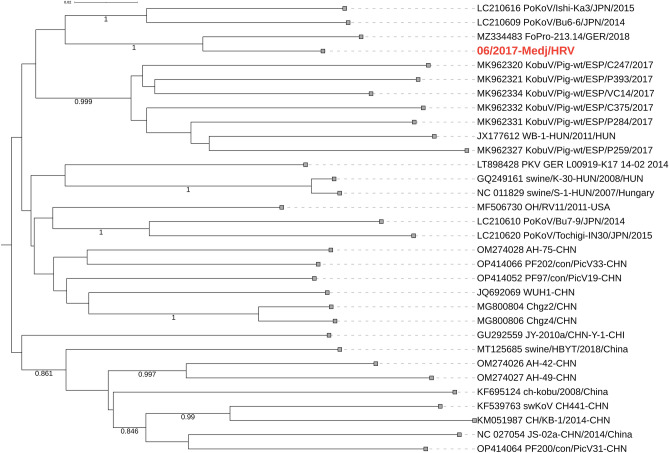
Viral enteric pathogens continuously burden intensive pig farming, causing gastrointestinal diseases of epidemic and endemic nature. The present study investigated two diarrhoea outbreaks on a large farrow-to-finish holding and subsequent circulation of outbreak-related enteric viruses. These viruses were characterised by whole genome sequencing, and statistical evaluation of the impact on specific production metrics was performed. The results provided evidence that the Porcine epidemic diarrhoea virus-swine enteric coronavirus (PEDV-SeCoV) S gene recombinant strain was responsible for the first outbreak, whilst Rotavirus A (RVA) in a mixed infection with Rotavirus B (RVB) and porcine kobuvirus (PKV) probably caused the second diarrhoea outbreak. Whole genome characterisation revealed a porcine origin of all viruses involved and significant heterogeneity of RVB strain, proposing four novel genotypes and changes in RVB VP1 genotype classification. The statistical evaluation confirmed only a minor disturbance in the number of weaned pigs per sow, with statistical forecasting showing positive trends. A follow-up study corroborated the endemicity of RVA and PKV, in contrast to PEDV-SeCoV. Punctual, comprehensive and timely investigation of diarrhoea outbreaks is a prerequisite for applying adequate pig health and biosecurity management. Calculating such outbreaks' impact on production metrics can potentially shape future decisions on management improvements.
病毒性肠道病原体不断困扰集约化养猪业,导致具有流行和地方病性质的胃肠道疾病。本研究调查了一个大型母猪到育肥场的两次腹泻暴发事件,以及随后与暴发相关的肠道病毒的传播情况。这些病毒通过全基因组测序进行了表征,并对其对特定生产指标的影响进行了统计评估。结果表明,猪流行性腹泻病毒-猪肠道冠状病毒(PEDV-SeCoV)S 基因重组株是第一次暴发的原因,而轮状病毒 A(RVA)与轮状病毒 B(RVB)和猪博卡病毒(PKV)的混合感染可能是第二次腹泻暴发的原因。全基因组特征表明所有涉及的病毒均起源于猪,并且 RVB 株具有显著的异质性,提出了 4 种新型基因型,并改变了 RVB VP1 基因型分类。统计评估仅确认了每头母猪断奶仔猪数量的轻微干扰,统计预测显示出积极的趋势。后续研究证实了 RVA 和 PKV 的地方性,而 PEDV-SeCoV 则不然。及时、全面和及时地调查腹泻暴发是实施适当猪健康和生物安全管理的前提。计算此类暴发对生产指标的影响可能会对未来的管理改进决策产生影响。