Jiangsu Engineering Laboratory of Animal Immunology, Institute of Immunology, College of Veterinary Medicine, Academy for Advanced Interdisciplinary Studies, Nanjing Agricultural University, Nanjing, China.
Department of Microbiology, Immunology and Transplantation, Rega Institute, KU Leuven, Leuven, Belgium.
Mol Biol Evol. 2022 Feb 3;39(2). doi: 10.1093/molbev/msab364.
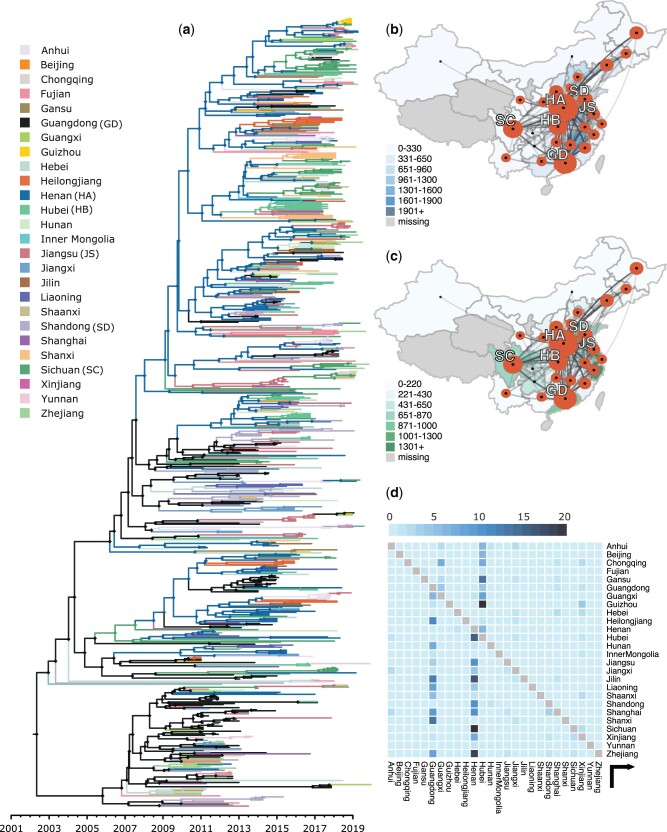
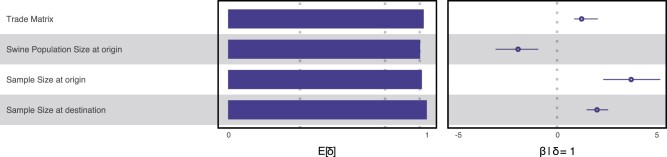
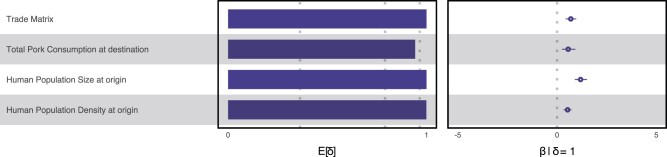
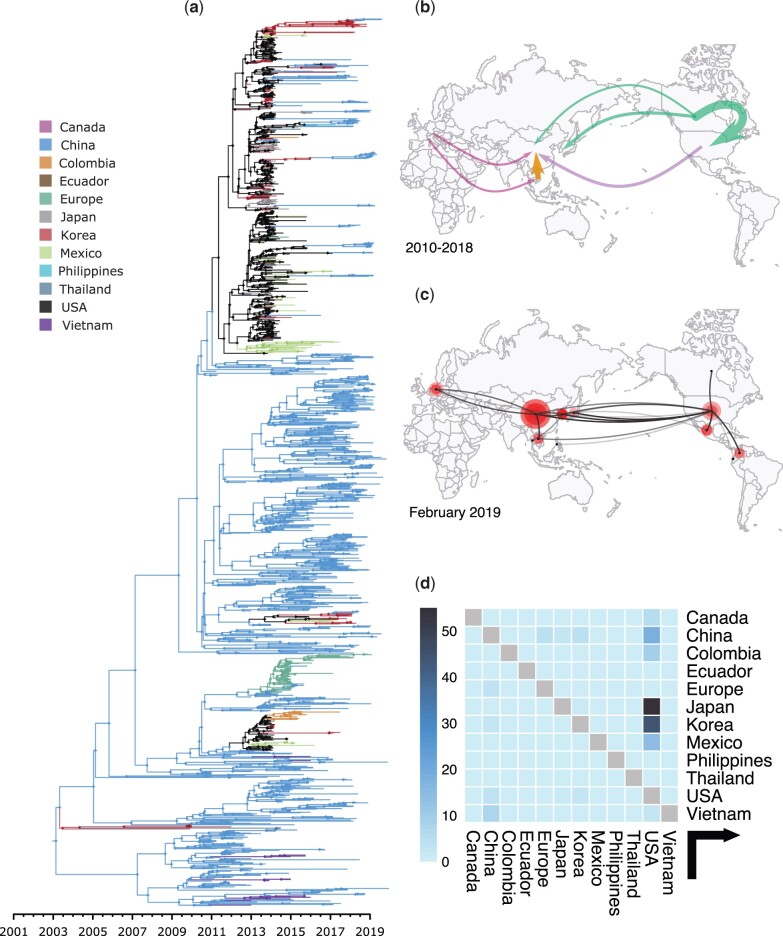
The ongoing SARS (severe acute respiratory syndrome)-CoV (coronavirus)-2 pandemic has exposed major gaps in our knowledge on the origin, ecology, evolution, and spread of animal coronaviruses. Porcine epidemic diarrhea virus (PEDV) is a member of the genus Alphacoronavirus in the family Coronaviridae that may have originated from bats and leads to significant hazards and widespread epidemics in the swine population. The role of local and global trade of live swine and swine-related products in disseminating PEDV remains unclear, especially in developing countries with complex swine production systems. Here, we undertake an in-depth phylogeographic analysis of PEDV sequence data (including 247 newly sequenced samples) and employ an extension of this inference framework that enables formally testing the contribution of a range of predictor variables to the geographic spread of PEDV. Within China, the provinces of Guangdong and Henan were identified as primary hubs for the spread of PEDV, for which we estimate live swine trade to play a very important role. On a global scale, the United States and China maintain the highest number of PEDV lineages. We estimate that, after an initial introduction out of China, the United States acted as an important source of PEDV introductions into Japan, Korea, China, and Mexico. Live swine trade also explains the dispersal of PEDV on a global scale. Given the increasingly global trade of live swine, our findings have important implications for designing prevention and containment measures to combat a wide range of livestock coronaviruses.
正在持续的严重急性呼吸系统综合征(SARS)-冠状病毒(CoV)-2 大流行暴露出了我们在动物冠状病毒的起源、生态、进化和传播方面的知识的重大空白。猪流行性腹泻病毒(PEDV)是冠状病毒科冠状病毒属的一员,可能源自蝙蝠,对猪群造成重大危害并引发广泛流行。猪只和猪相关产品的本地和全球贸易在传播 PEDV 方面的作用尚不清楚,尤其是在具有复杂猪生产系统的发展中国家。在这里,我们对 PEDV 序列数据(包括 247 个新测序样本)进行了深入的系统发育地理分析,并采用了这种推断框架的扩展,从而能够正式测试一系列预测变量对 PEDV 地理传播的贡献。在中国,广东省和河南省被确定为 PEDV 传播的主要中心,我们估计活猪贸易在此过程中发挥了非常重要的作用。在全球范围内,美国和中国拥有最多的 PEDV 谱系。我们估计,在美国最初从中国引入 PEDV 后,美国成为 PEDV 传入日本、韩国、中国和墨西哥的重要来源。活猪贸易也解释了 PEDV 在全球范围内的传播。鉴于活猪的贸易日益全球化,我们的研究结果对设计预防和控制措施以对抗广泛的家畜冠状病毒具有重要意义。