Laboratoire Eaux, Hydro-Systèmes et Agriculture (LEHSA), Institut International d'Ingénierie de l'Eau et de l'Environnement (2iE), Ouagadougou, Burkina Faso.
Laboratoire Eco-Matériaux et Habitat Durable (LEMHaD), Institut International d'Ingénierie de l'Eau et de l'Environnement (2iE), Ouagadougou, Burkina Faso.
Sci Rep. 2023 Oct 31;13(1):18702. doi: 10.1038/s41598-023-46007-0.
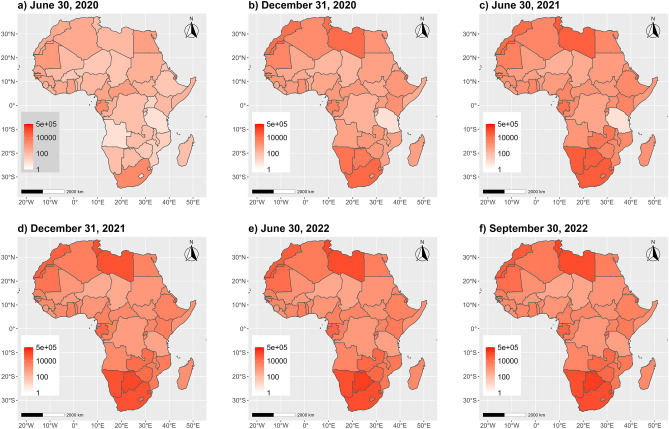
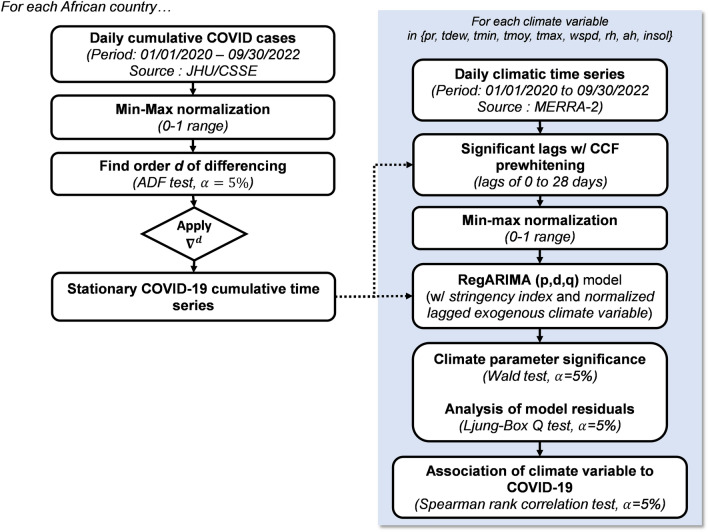
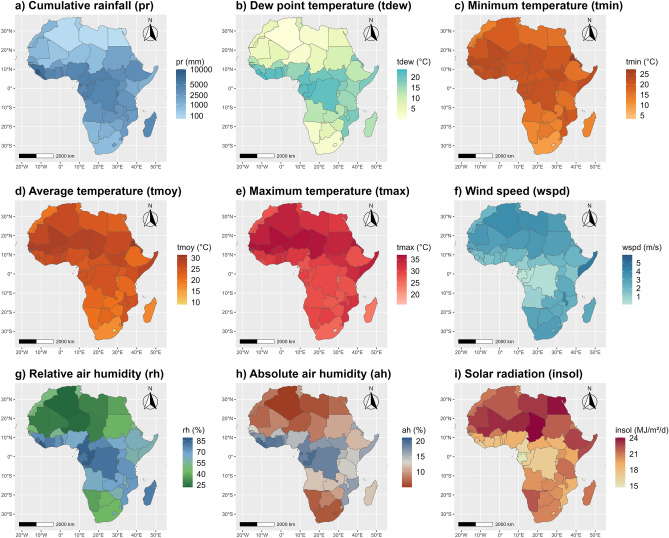
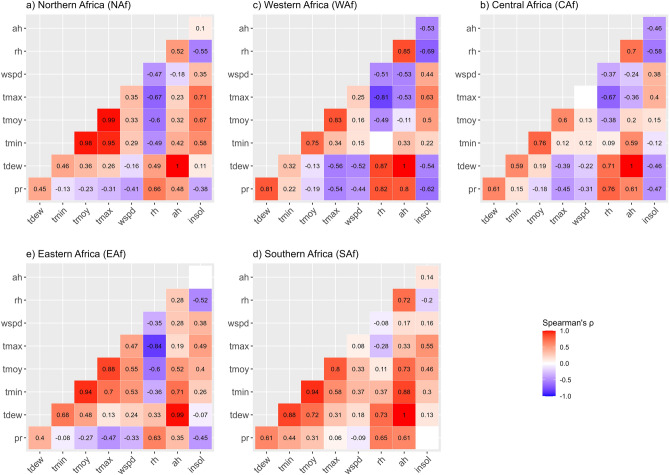
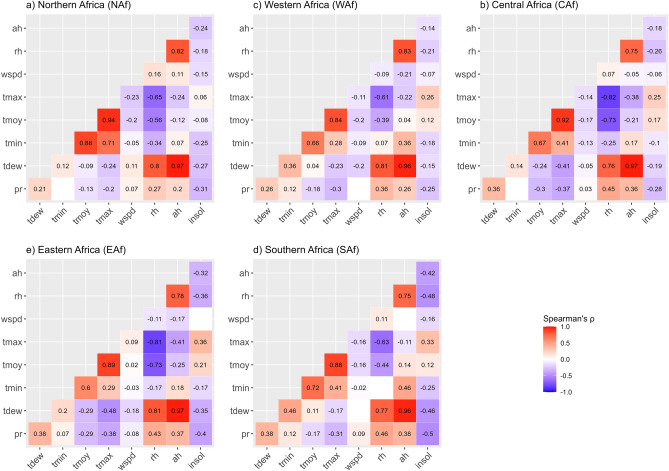
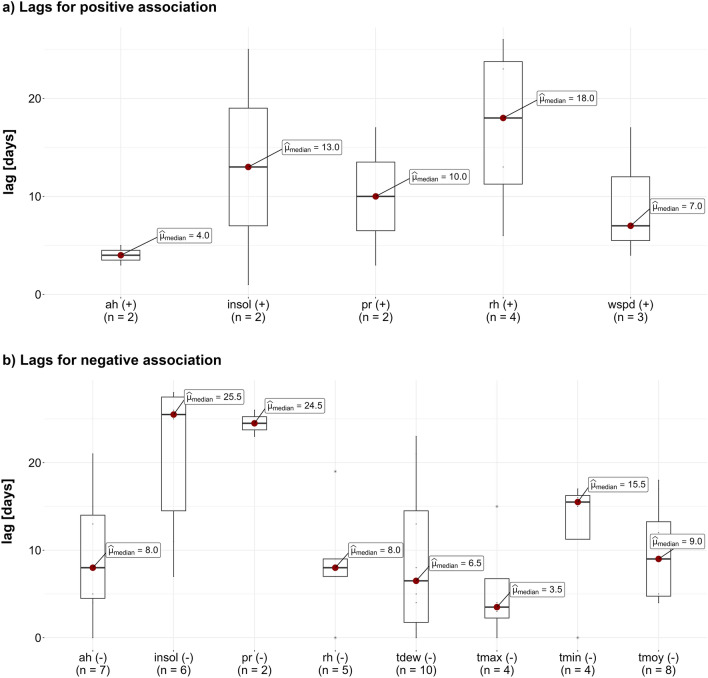
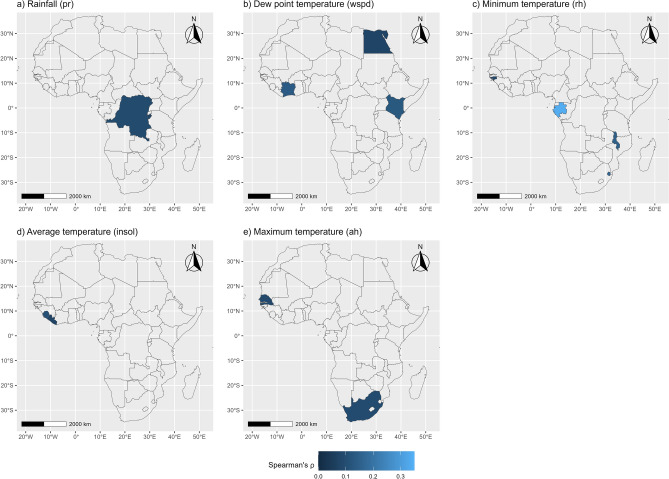
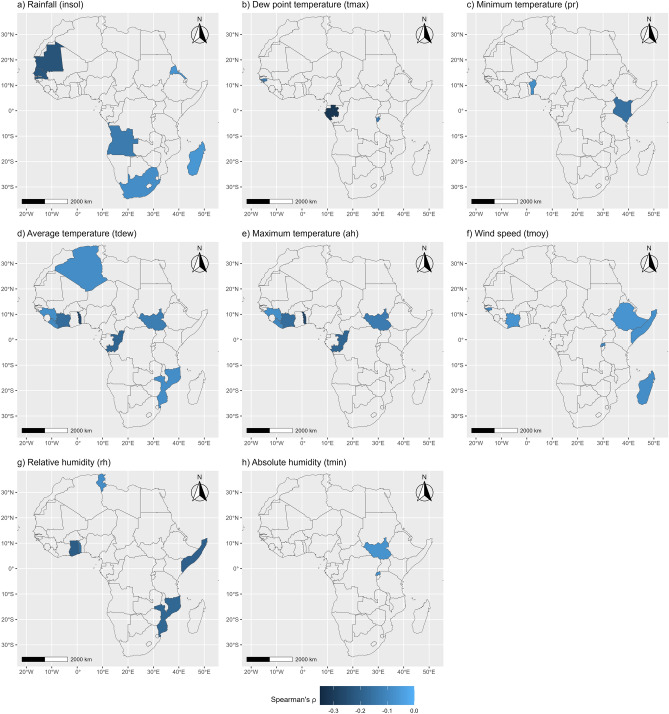
The role of climate in the Coronavirus disease 2019 (COVID-19) transmission appears to be controversial, as reported in earlier studies. In Africa, the subject is poorly documented. In this study, over the period from January 1st, 2020 to September 31, 2022, the daily variations in cumulative confirmed cases of COVID-19 for each African country (54 countries) are modelled through time-series-based approaches and using meteorological factors as covariates. It is suggested from the findings that climate plays a role in COVID-19 transmission since at least one meteorological factor is found to be significant in 32 countries. In decreasing order, the most often occurring meteorological factors are dewpoint temperature, relative and absolute humidity, average temperature and solar radiation. Most of these factors show a lagged effect with confirmed cases (between 0 and 28 days). Also, some meteorological factors exhibit contrasting effects on COVID-19 transmission, resulting in both positive and negative association with cumulative cases, therefore highlighting the complex nature of the interplay between climate and COVID-19 transmission.
气候在 2019 年冠状病毒病(COVID-19)传播中的作用似乎存在争议,早期研究就有报道。在非洲,这方面的研究记录很少。本研究中,通过时间序列方法,利用气象因素作为协变量,对 2020 年 1 月 1 日至 2022 年 9 月 31 日期间每个非洲国家(54 个国家)累计确诊 COVID-19 病例的日变化进行建模。研究结果表明,气候在 COVID-19 的传播中起作用,因为在 32 个国家中至少有一个气象因素是显著的。出现频率按降序排列的气象因素依次为露点温度、相对湿度和绝对湿度、平均温度和太阳辐射。这些因素大多与确诊病例存在滞后效应(0 至 28 天)。此外,一些气象因素对 COVID-19 的传播表现出相反的影响,与累计病例呈正相关或负相关,因此突出了气候与 COVID-19 传播之间相互作用的复杂性。