Department of Oncology, The Second Affiliated Hospital of Anhui Medical University, Hefei, Anhui, China.
Department of General Practice, The Second Affiliated Hospital of Anhui Medical University, Hefei, Anhui, China.
J Cell Mol Med. 2024 Jan;28(1):e18020. doi: 10.1111/jcmm.18020. Epub 2023 Nov 1.
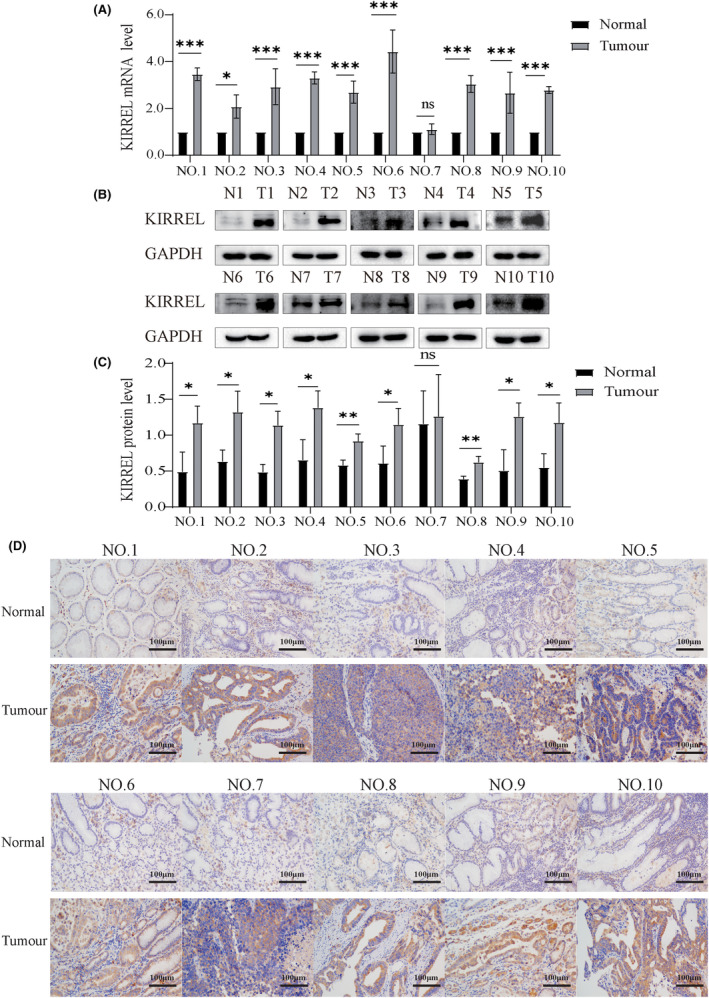
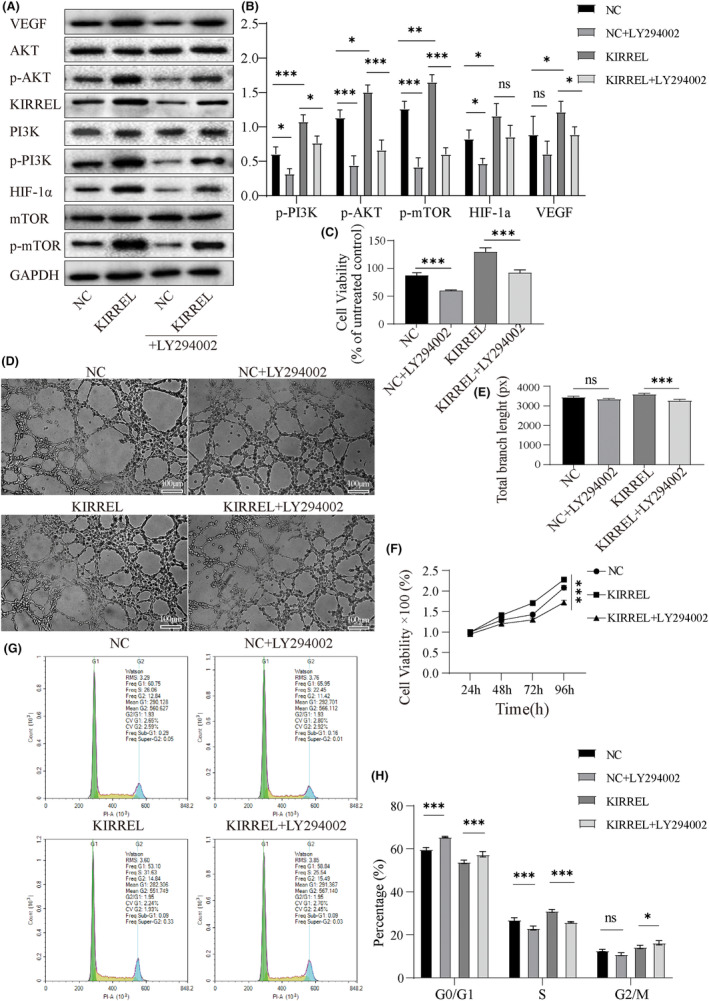
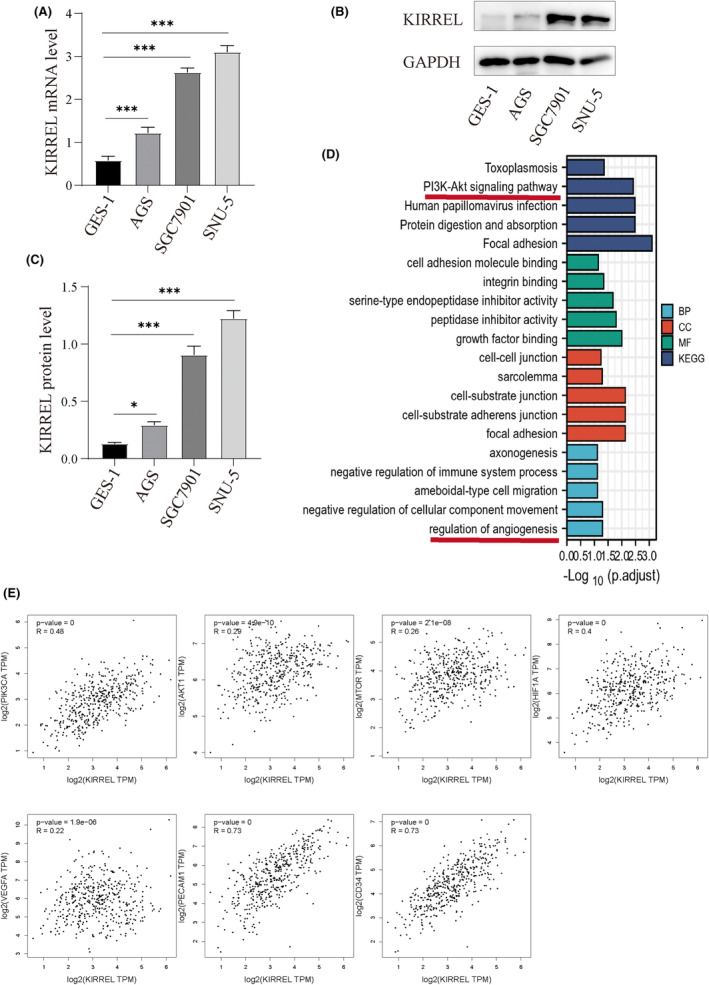
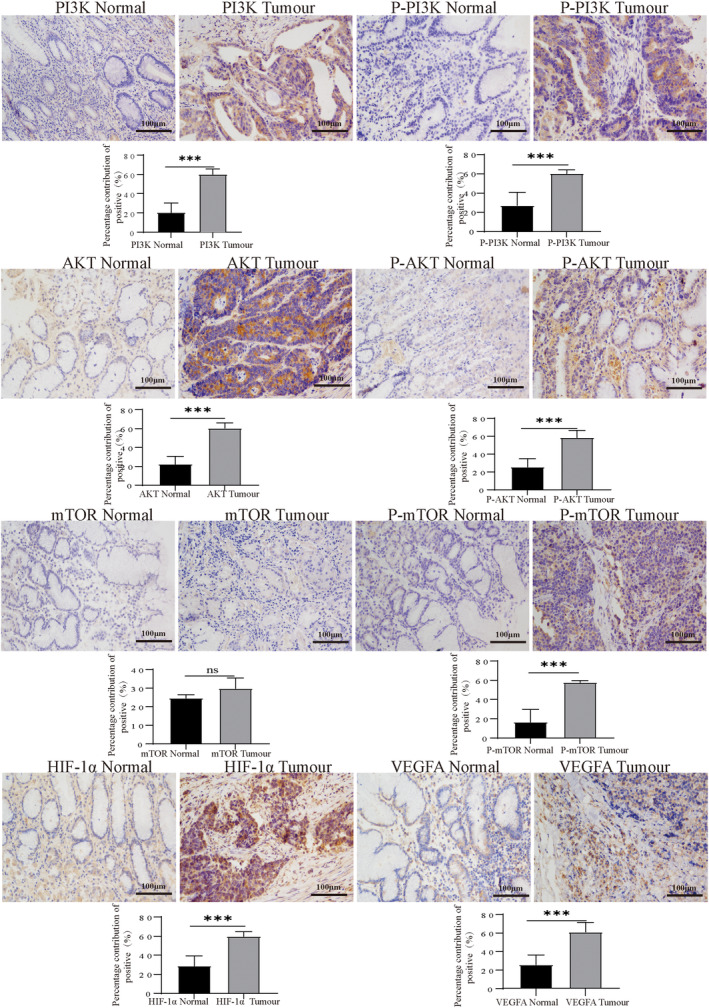
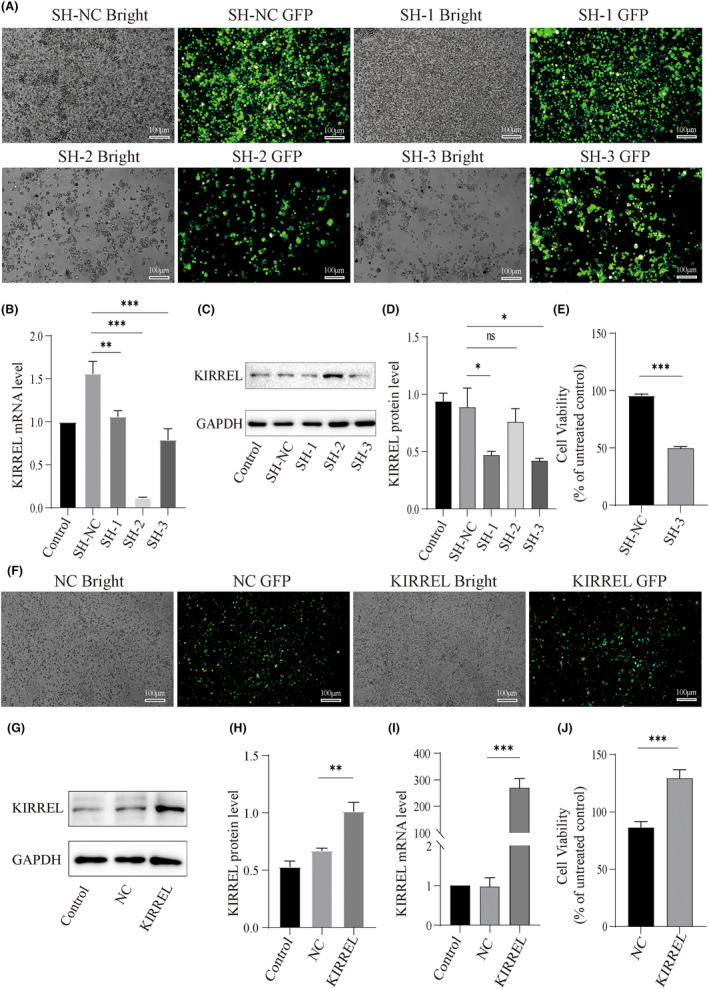
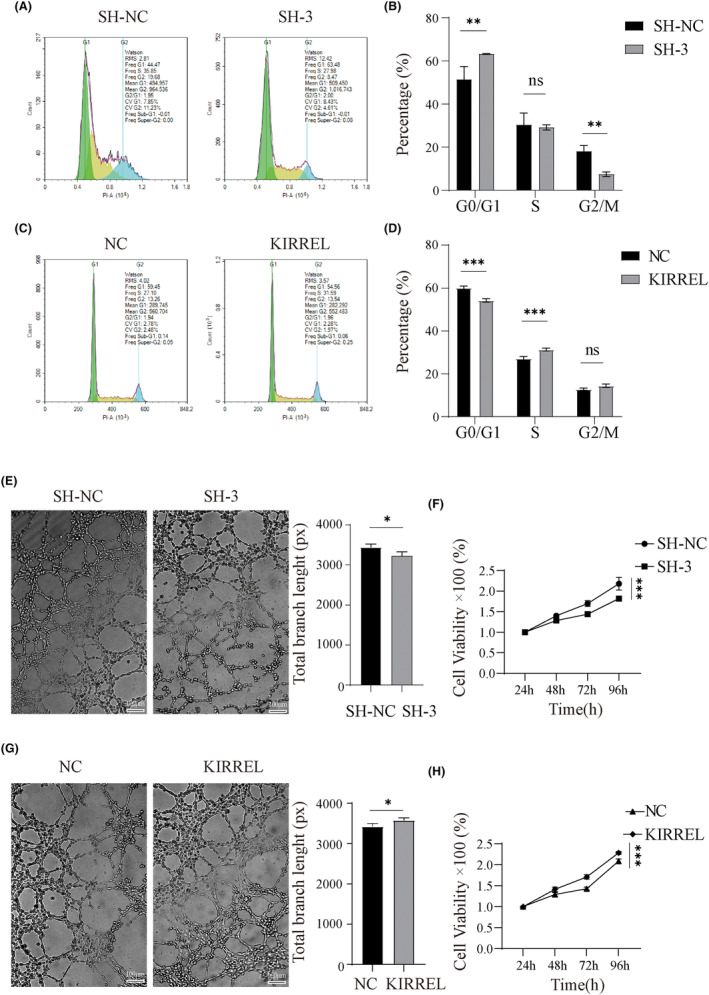
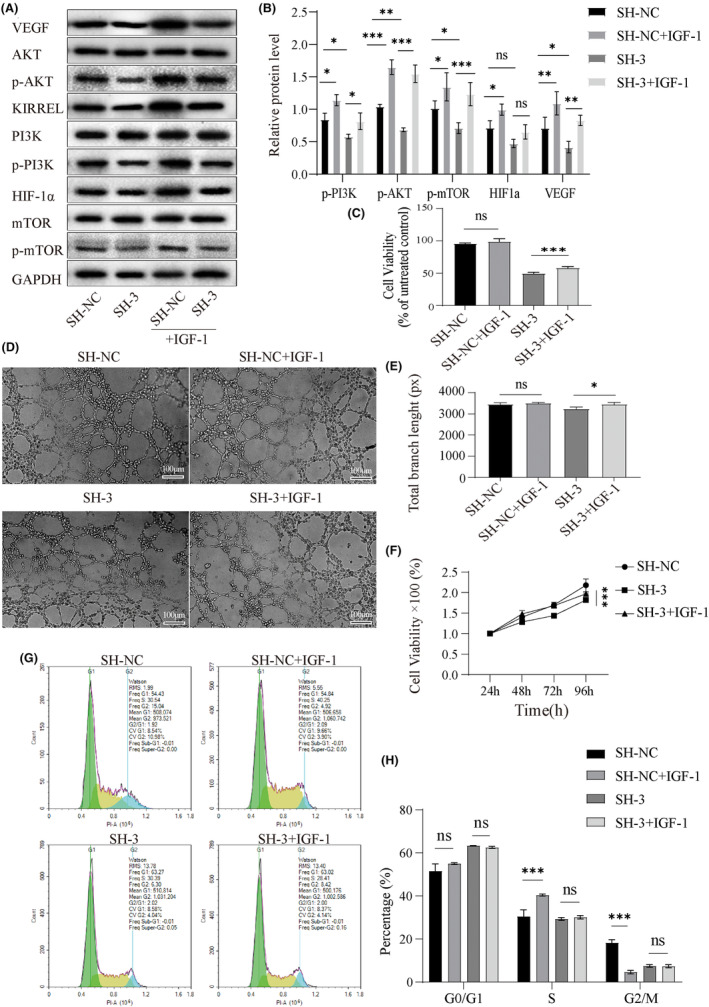
Anti-angiogenesis is a promising therapeutic strategy for delaying tumour progression that offers, new hope for gastric cancer targeted therapy. The purpose of this study was to investigate the precise mechanism by which Kin of IRRE-like protein 1 (KIRREL) contributes to the development of gastric cancer, particularly in terms of tumour angiogenesis. Differential expression of KIRREL in tissues and cells was detected using quantitative real-time polymerase chain reaction, western blotting and immunohistochemistry. A bioinformatics analysis was conducted to screen for the function and pathway enrichment of KIRREL in gastric cancer. Lentivirus-induced KIRREL silencing in SNU-5 cells and lentivirus-induced KIRREL overexpression in AGS cells were used to study the effect of KIRREL on the proliferation, cell cycle and angiogenesis of gastric cancer cells. Moreover, the expressions of PI3K, P-PI3K, AKT, P-AKT, mTOR, P-mTOR, HIF-1α and VEGF were also detected. Gastric cancer tissues and cells had high levels of KIRREL expression, which is associated with the proliferation, cell cycle and angiogenesis of gastric cancer cells. After silencing and overexpressing KIRREL in SNU-5 and AGS cells, respectively, the proliferation and angiogenesis of SNU-5 cells were inhibited, while the proliferation and angiogenesis of AGS cells were promoted. According to a bioinformatics analysis of the KIRREL gene, angiogenesis regulation and the PI3K/AKT pathway were highly connected. The PI3K/AKT/mTOR pathway was repressed and stimulated by KIRREL silencing and overexpression, respectively. IGF-1, an AKT agonist, and LY294002, an inhibitor, reversed the effects of KIRREL silencing and overexpression on the PI3K/AKT/mTOR pathway and on gastric cancer cell proliferation and angiogenesis. KIRREL may mediate the proliferation and angiogenesis of gastric cancer cells through the PI3K/AKT/mTOR signalling pathway. These findings could help in the further development of potential anti-angiogenesis targets.
抗血管生成是一种有前途的肿瘤进展延迟治疗策略,为胃癌靶向治疗带来了新的希望。本研究旨在探讨 Kin of IRRE-like protein 1 (KIRREL) 促进胃癌发展的精确机制,特别是在肿瘤血管生成方面。采用实时定量聚合酶链反应、western blot 和免疫组织化学检测组织和细胞中 KIRREL 的差异表达。通过生物信息学分析筛选胃癌中 KIRREL 的功能和通路富集。利用慢病毒诱导 SNU-5 细胞中 KIRREL 沉默和慢病毒诱导 AGS 细胞中 KIRREL 过表达,研究 KIRREL 对胃癌细胞增殖、细胞周期和血管生成的影响。此外,还检测了 PI3K、P-PI3K、AKT、P-AKT、mTOR、P-mTOR、HIF-1α 和 VEGF 的表达。胃癌组织和细胞中 KIRREL 表达水平较高,与胃癌细胞的增殖、细胞周期和血管生成有关。在 SNU-5 和 AGS 细胞中分别沉默和过表达 KIRREL 后,SNU-5 细胞的增殖和血管生成受到抑制,而 AGS 细胞的增殖和血管生成受到促进。通过对 KIRREL 基因进行生物信息学分析,发现血管生成调节和 PI3K/AKT 通路高度相关。KIRREL 沉默和过表达分别抑制和激活 PI3K/AKT/mTOR 通路。AKT 激动剂 IGF-1 和 PI3K/AKT/mTOR 通路抑制剂 LY294002 逆转了 KIRREL 沉默和过表达对 PI3K/AKT/mTOR 通路以及胃癌细胞增殖和血管生成的影响。KIRREL 可能通过 PI3K/AKT/mTOR 信号通路介导胃癌细胞的增殖和血管生成。这些发现有助于进一步开发潜在的抗血管生成靶点。