King Hussein Cancer Center, Amman, Jordan.
Cardiff University, Cardiff, Wales, UK.
BMC Infect Dis. 2023 Nov 1;23(1):751. doi: 10.1186/s12879-023-08745-4.
The generalizability of the Surviving Sepsis Campaign (SSC) guidelines to various patient populations and hospital settings has been debated. A quantitative assessment of the diversity and representation in the clinical evidence supporting the guidelines would help evaluate the generalizability of the recommendations and identify strategic research goals and priorities. In this study, we evaluated the diversity of patients in the original studies, in terms of sex, race/ethnicity, and geographical location. We also assessed diversity in sex and geographical representation among study first and last authors.
All clinical studies cited in support of the 2021 SSC adult guideline recommendations were identified. Original clinical studies were included, while editorials, reviews, non-clinical studies, and meta-analyses were excluded. For eligible studies, we recorded the proportion of male patients, percentage of each represented racial/ethnic subgroup (when available), and countries in which they were conducted. We also recorded the sex and location of the first and last authors. The World Bank classification was used to categorize countries.
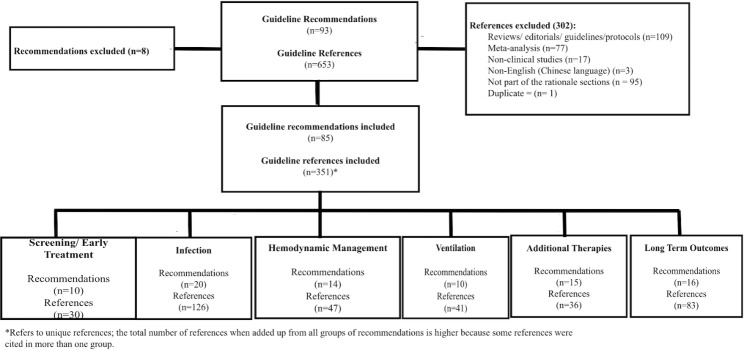
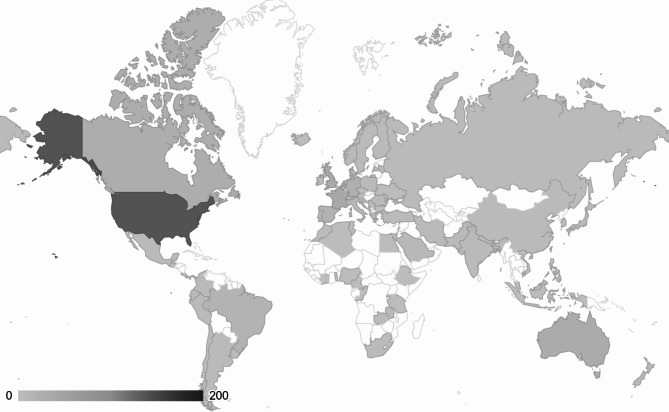
The SSC guidelines included six sections, with 85 recommendations based on 351 clinical studies. The proportion of male patients ranged from 47 to 62%. Most studies did not report the racial/ ethnic distribution of the included patients; when they did so, most were White patients (68-77%). Most studies were conducted in high-income countries (77-99%), which included Europe/Central Asia (33-66%) and North America (36-55%). Moreover, most first/last authors were males (55-93%) and from high-income countries (77-99%).
To enhance the generalizability of the SCC guidelines, stakeholders should define strategies to enhance the diversity and representation in clinical studies. Though there was reasonable representation in sex among patients included in clinical studies, the evidence did not reflect diversity in the race/ethnicity and geographical locations. There was also lack of diversity among the first and last authors contributing to the evidence.
关于《拯救脓毒症运动(SSC)指南》在不同患者人群和医院环境中的推广性一直存在争议。对支持指南的临床证据的多样性和代表性进行定量评估,有助于评估建议的推广性,并确定战略研究目标和重点。在这项研究中,我们评估了原始研究中患者的多样性,包括性别、种族/民族和地理位置。我们还评估了研究第一作者和最后作者的性别和地理代表性的多样性。
确定了所有支持 2021 年 SSC 成人指南推荐的临床研究。纳入了原始临床研究,而排除了社论、综述、非临床研究和荟萃分析。对于符合条件的研究,我们记录了男性患者的比例、每个代表性种族/民族亚组的百分比(如果有)以及进行研究的国家。我们还记录了第一作者和最后作者的性别和所在地。使用世界银行的分类来对国家进行分类。
SSC 指南包括六个部分,有 85 项建议基于 351 项临床研究。男性患者的比例从 47%到 62%不等。大多数研究没有报告纳入患者的种族/民族分布;当他们这样做时,大多数是白人患者(68-77%)。大多数研究是在高收入国家进行的(77-99%),其中包括欧洲/中亚(33-66%)和北美(36-55%)。此外,大多数第一/最后作者是男性(55-93%),来自高收入国家(77-99%)。
为了提高 SCC 指南的推广性,利益相关者应制定策略,提高临床研究的多样性和代表性。虽然纳入临床研究的患者在性别方面有合理的代表性,但证据并未反映种族/民族和地理位置的多样性。对做出贡献的第一作者和最后作者也缺乏多样性。