Ahn Jong Seok, Shin Sangwon, Yang Su-A, Park Eun Kyung, Kim Ki Hwan, Cho Soo Ick, Ock Chan-Young, Kim Seokhwi
Lunit Inc., Seoul, Korea.
Department of Pathology, Ajou University School of Medicine, Suwon, Korea.
J Breast Cancer. 2023 Oct;26(5):405-435. doi: 10.4048/jbc.2023.26.e45.
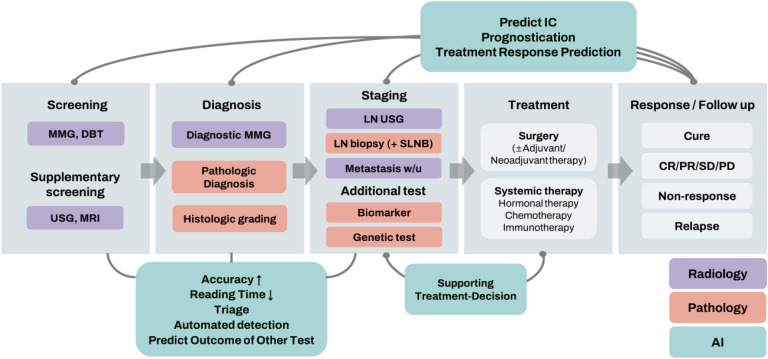
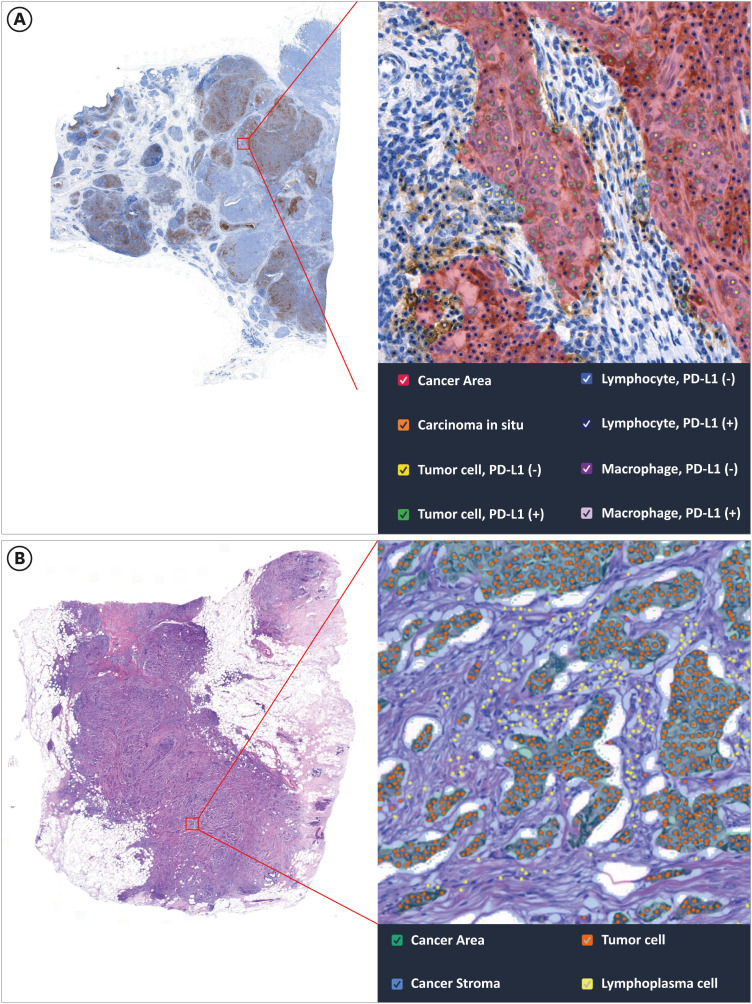
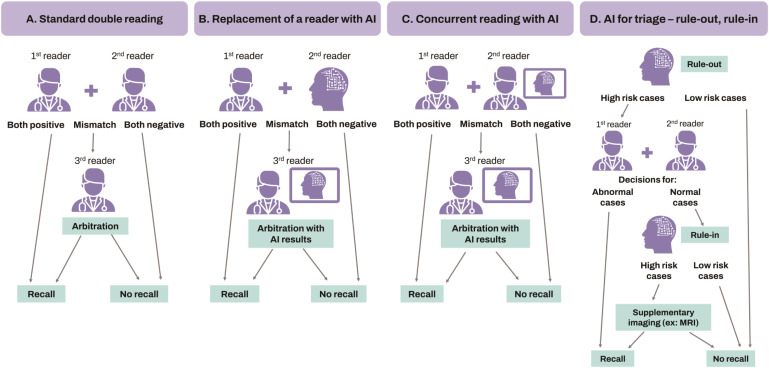
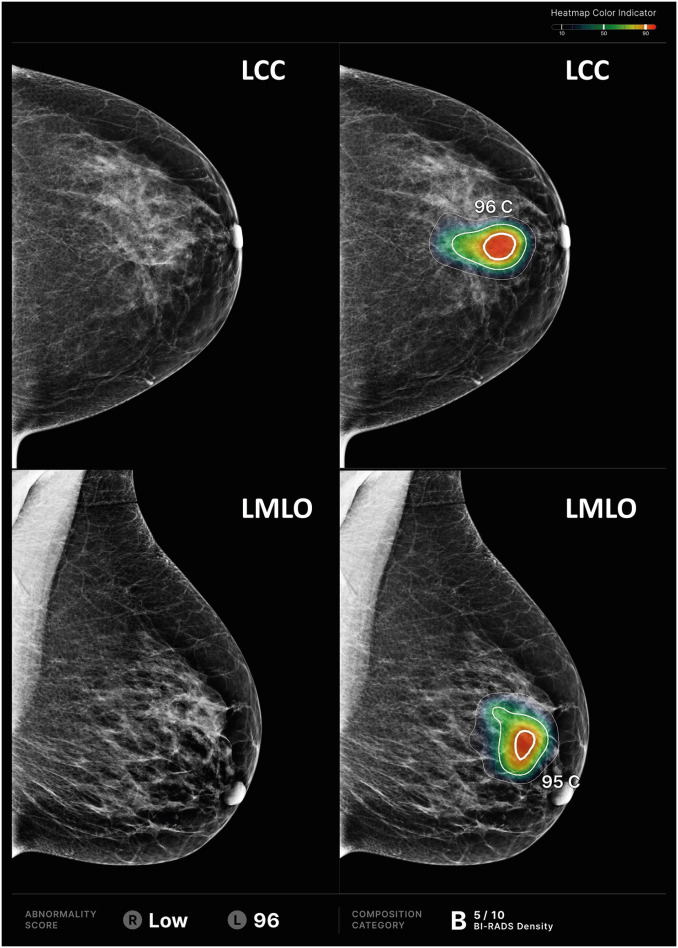
Breast cancer is a significant cause of cancer-related mortality in women worldwide. Early and precise diagnosis is crucial, and clinical outcomes can be markedly enhanced. The rise of artificial intelligence (AI) has ushered in a new era, notably in image analysis, paving the way for major advancements in breast cancer diagnosis and individualized treatment regimens. In the diagnostic workflow for patients with breast cancer, the role of AI encompasses screening, diagnosis, staging, biomarker evaluation, prognostication, and therapeutic response prediction. Although its potential is immense, its complete integration into clinical practice is challenging. Particularly, these challenges include the imperatives for extensive clinical validation, model generalizability, navigating the "black-box" conundrum, and pragmatic considerations of embedding AI into everyday clinical environments. In this review, we comprehensively explored the diverse applications of AI in breast cancer care, underlining its transformative promise and existing impediments. In radiology, we specifically address AI in mammography, tomosynthesis, risk prediction models, and supplementary imaging methods, including magnetic resonance imaging and ultrasound. In pathology, our focus is on AI applications for pathologic diagnosis, evaluation of biomarkers, and predictions related to genetic alterations, treatment response, and prognosis in the context of breast cancer diagnosis and treatment. Our discussion underscores the transformative potential of AI in breast cancer management and emphasizes the importance of focused research to realize the full spectrum of benefits of AI in patient care.
乳腺癌是全球女性癌症相关死亡的一个重要原因。早期准确诊断至关重要,临床结果可得到显著改善。人工智能(AI)的兴起开创了一个新时代,尤其是在图像分析方面,为乳腺癌诊断和个体化治疗方案的重大进展铺平了道路。在乳腺癌患者的诊断工作流程中,人工智能的作用包括筛查、诊断、分期、生物标志物评估、预后预测和治疗反应预测。尽管其潜力巨大,但将其完全融入临床实践具有挑战性。特别是,这些挑战包括广泛临床验证的必要性、模型的通用性、应对“黑匣子”难题以及将人工智能嵌入日常临床环境的实际考虑。在本综述中,我们全面探讨了人工智能在乳腺癌护理中的各种应用,强调了其变革性前景和现有障碍。在放射学方面,我们特别讨论了人工智能在乳腺X线摄影、断层合成、风险预测模型以及包括磁共振成像和超声在内的辅助成像方法中的应用。在病理学方面,我们关注人工智能在病理诊断、生物标志物评估以及乳腺癌诊断和治疗背景下与基因改变、治疗反应和预后相关的预测中的应用。我们的讨论强调了人工智能在乳腺癌管理中的变革潜力,并强调了开展重点研究以实现人工智能在患者护理中全面益处的重要性。