Maloney Bailey E, Carpio Kassandra L, Bilyeu Ashley N, Saunders Danielle R D, Park So Lee, Pohl Adrienne E, Ball Natalia Costa, Raetz Janae L, Huang Claire Y, Higgs Stephen, Barrett Alan D T, Roman-Sosa Gleyder, Kenney Joanie L, Vanlandingham Dana L, Huang Yan-Jang S
Department of Diagnostic Medicine/Pathobiology, College of Veterinary Medicine, Kansas State University, Manhattan, KS, 66506, USA.
Biosecurity Research Institute, Kansas State University, Manhattan, KS, 66506, USA.
NPJ Vaccines. 2023 Nov 6;8(1):172. doi: 10.1038/s41541-023-00765-0.
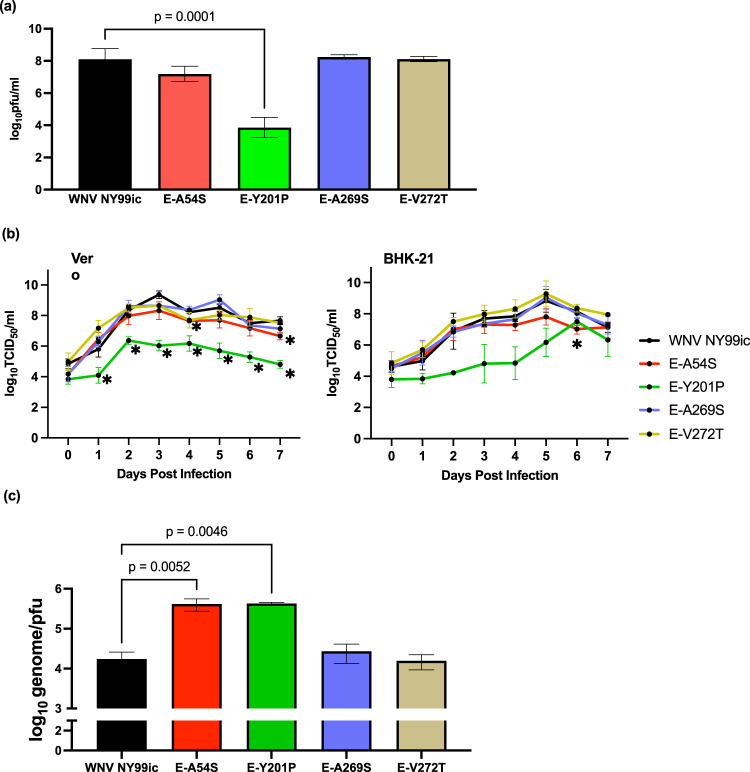
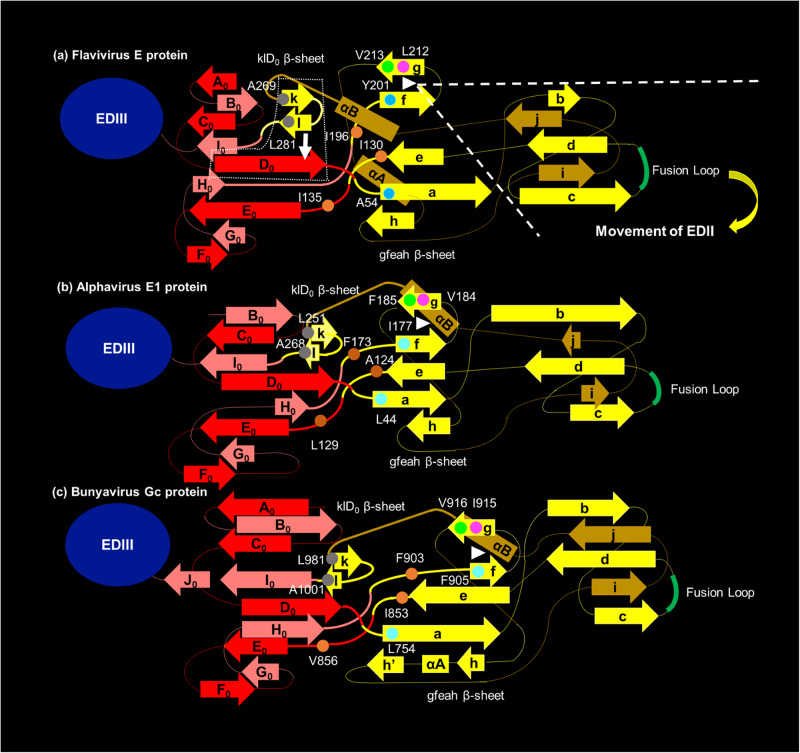
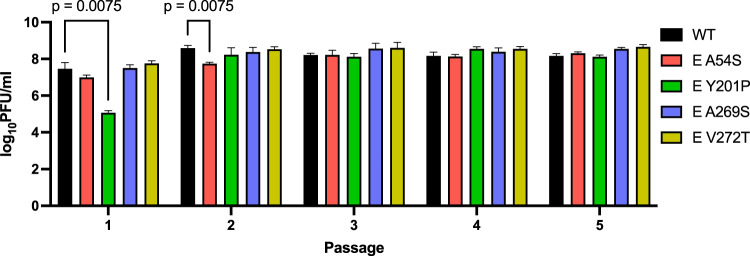
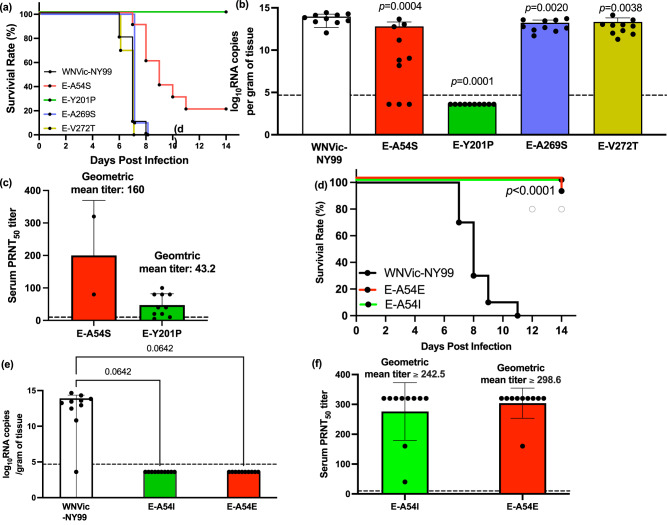
The flavivirus envelope protein is a class II fusion protein that drives flavivirus-cell membrane fusion. The membrane fusion process is triggered by the conformational change of the E protein from dimer in the virion to trimer, which involves the rearrangement of three domains, EDI, EDII, and EDIII. The movement between EDI and EDII initiates the formation of the E protein trimer. The EDI-EDII hinge region utilizes four motifs to exert the hinge effect at the interdomain region and is crucial for the membrane fusion activity of the E protein. Using West Nile virus (WNV) NY99 strain derived from an infectious clone, we investigated the role of eight flavivirus-conserved hydrophobic residues in the EDI-EDII hinge region in the conformational change of E protein from dimer to trimer and viral entry. Single mutations of the E-A54, E-I130, E-I135, E-I196, and E-Y201 residues affected infectivity. Importantly, the E-A54I and E-Y201P mutations fully attenuated the mouse neuroinvasive phenotype of WNV. The results suggest that multiple flavivirus-conserved hydrophobic residues in the EDI-EDII hinge region play a critical role in the structure-function of the E protein and some contribute to the virulence phenotype of flaviviruses as demonstrated by the attenuation of the mouse neuroinvasive phenotype of WNV. Thus, as a proof of concept, residues in the EDI-EDII hinge region are proposed targets to engineer attenuating mutations for inclusion in the rational design of candidate live-attenuated flavivirus vaccines.
黄病毒包膜蛋白是一种II类融合蛋白,可驱动黄病毒与细胞膜融合。膜融合过程由E蛋白从病毒粒子中的二聚体构象转变为三聚体触发,这涉及三个结构域EDI、EDII和EDIII的重排。EDI和EDII之间的移动启动了E蛋白三聚体的形成。EDI-EDII铰链区利用四个基序在结构域间区域发挥铰链作用,对E蛋白的膜融合活性至关重要。利用源自感染性克隆的西尼罗河病毒(WNV)NY99株,我们研究了EDI-EDII铰链区八个黄病毒保守疏水残基在E蛋白从二聚体到三聚体的构象变化以及病毒进入过程中的作用。E-A54、E-I130、E-I135、E-I196和E-Y201残基的单突变影响感染性。重要的是,E-A54I和E-Y201P突变完全减弱了WNV的小鼠神经侵袭表型。结果表明,EDI-EDII铰链区多个黄病毒保守疏水残基在E蛋白的结构功能中起关键作用,如WNV小鼠神经侵袭表型的减弱所示,一些残基对黄病毒的毒力表型有贡献。因此,作为概念验证,EDI-EDII铰链区的残基被提议作为设计减毒突变的靶点,用于合理设计候选黄病毒减毒活疫苗。