China Academy of Building Research (CABR), 30 North Third East Road, Beijing, 100013, China.
National Engineering Research Center of Building Technology, 30 North Third East Road, Beijing, 100013, China.
BMC Public Health. 2023 Nov 8;23(1):2198. doi: 10.1186/s12889-023-17100-w.
Working in a standing posture is considered to improve musculoskeletal comfort and can help enhance office workers' performance in the long term. However, there is a lack of a quantitative, real-time measure that reflects on whether office workers can immediately become more concentrated and work more efficiently when they switch to a standing posture.
To tackle this problem, this study proposed that the number of effective computer interactions could be used as a real-time indicator to measure the productivity of office workers whose work is primarily computer-based. Using this metric, we conducted an exploratory study to investigate the correlation between posture and productivity changes at a 10-minute resolution for eight participants.
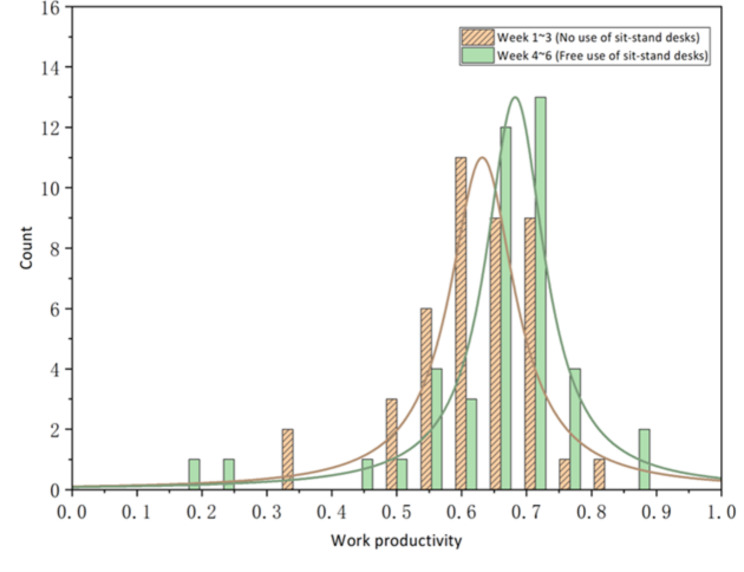
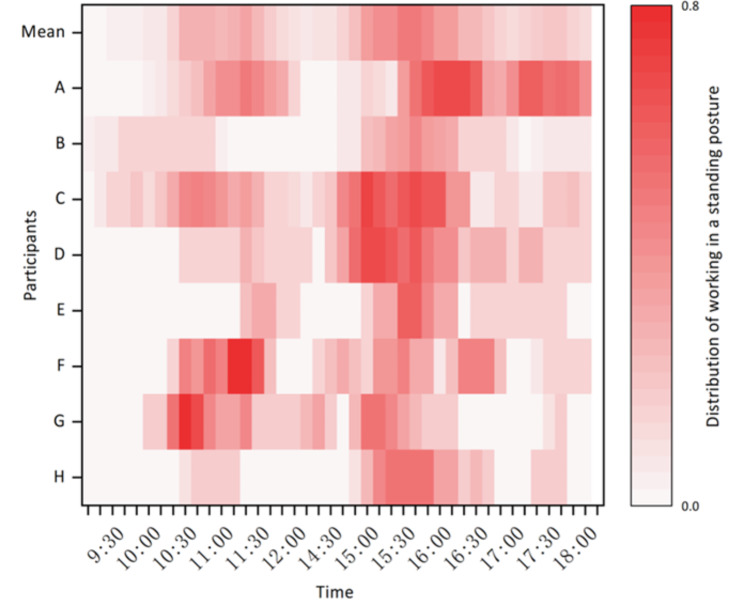
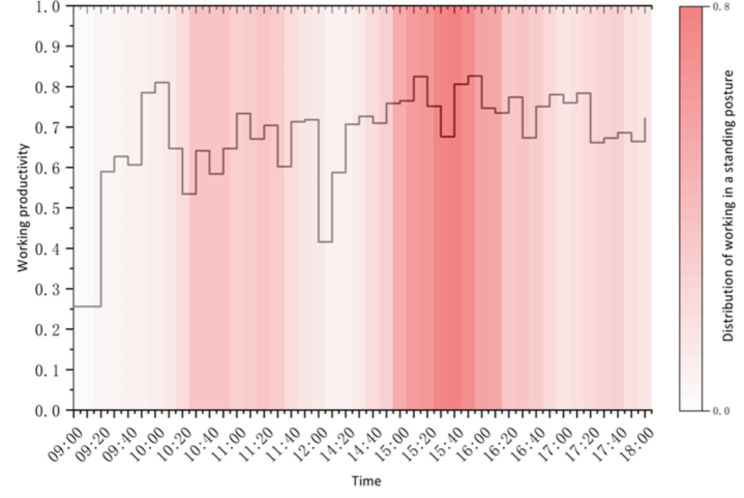
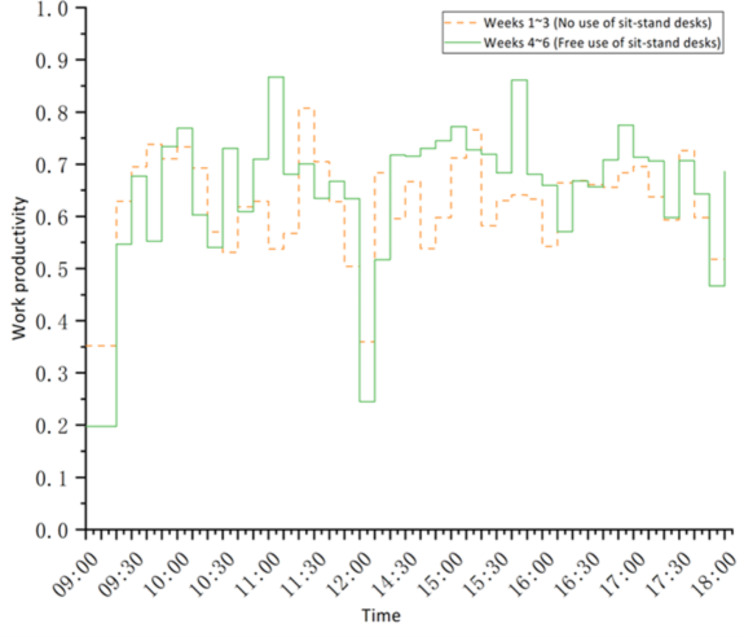
The study found that when allowed to use sit-stand desks to adjust postures, participants chose to switch to standing posture for about 47 min on average once a day; standing work was most frequent between 2:30 - 4:00 pm, followed by 10:30 - 11:30 am, during which time the number of computer interactions also became higher, showing a significant positive correlation. In addition, participants were approximately 6.5% more productive than when they could only work in a sitting posture.
This study revealed that posture changes could have an immediate improvement in productivity.
站立工作被认为可以改善肌肉骨骼舒适度,并有助于长期提高办公人员的工作效率。然而,目前缺乏一种定量的、实时的衡量标准,来反映办公人员在切换至站立姿势时是否能够立即更加集中注意力并更高效地工作。
为了解决这个问题,本研究提出可以使用有效的计算机交互次数作为实时指标,来衡量以计算机为主要工作工具的办公人员的工作效率。使用这个指标,我们对 8 名参与者进行了一项探索性研究,以 10 分钟为分辨率,研究了姿势与生产力变化之间的相关性。
研究发现,当允许使用坐站两用办公桌来调整姿势时,参与者平均每天会选择站立姿势工作约 47 分钟;站立工作最频繁的时间是下午 2:30 到 4:00,其次是上午 10:30 到 11:30,在此期间,计算机交互次数也变多,呈显著正相关。此外,参与者的工作效率比只能坐着工作时提高了约 6.5%。
本研究表明,姿势的改变可以立即提高工作效率。