Division of Infectious Diseases and Global Public Health, Department of Medicine, University of California San Diego, San Diego, USA.
School of Social Work, San Diego State University, 5500 Campanile Dr, San Diego, CA, 92182, USA.
Harm Reduct J. 2023 Nov 8;20(1):165. doi: 10.1186/s12954-023-00899-3.
Women who inject drugs in Ukraine are disproportionately burdened by HIV. To help address the needs of this population, a greater understanding of how interventions may uniquely benefit women who inject drugs is needed.
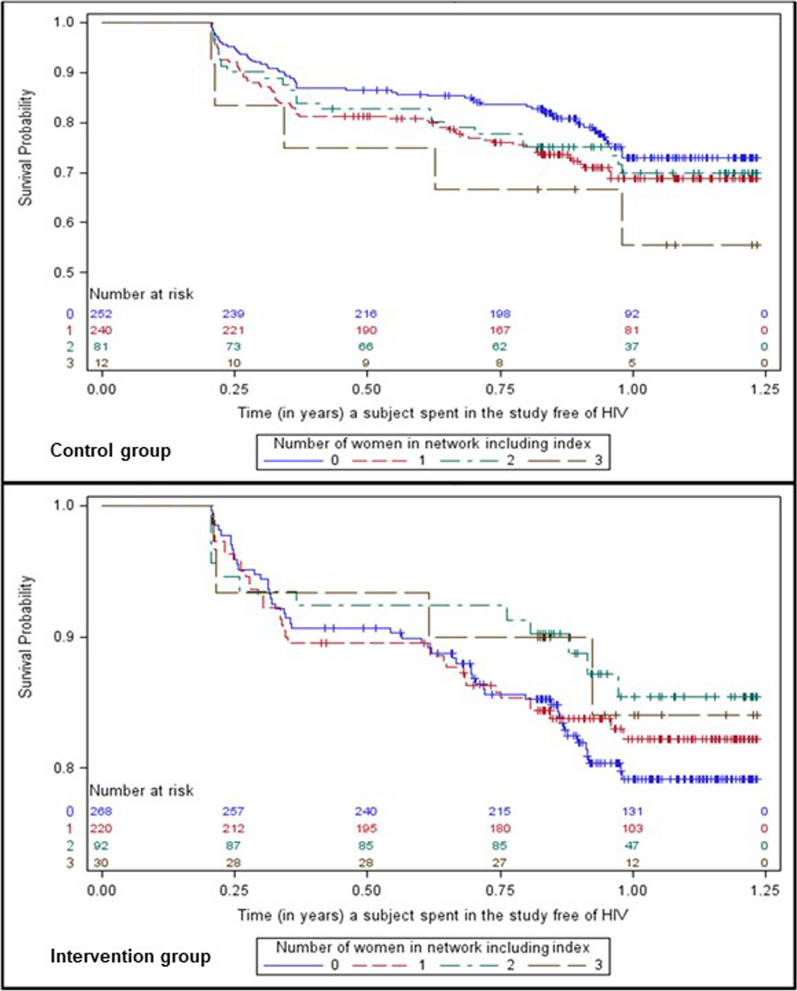
Data come from a randomized controlled trial of a social network intervention targeting people who inject drugs in Ukraine (N = 1195). Indexes, plus two of their injection network members, received HIV testing and counseling (control arm) or HIV testing and counseling plus a social network intervention (intervention arm), in which indexes were trained to influence network members' risk behaviors. We used Cox regressions with interaction terms to assess differences in time to HIV seroconversion between arms by network gender composition and gender of the index. For significant interaction terms, we calculated simple effects, generated survival functions using Kaplan-Meier methods, and compared survival curves using log-rank tests.
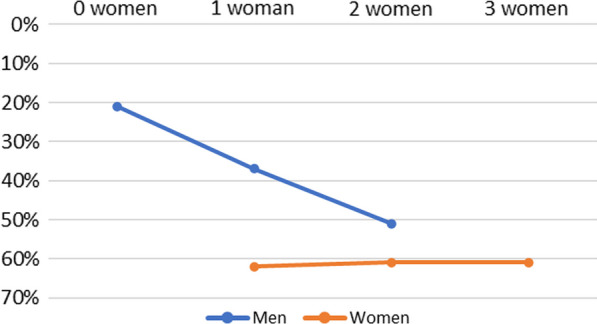
At 12 months, there were 45 seroconversions among women (40.0 [28.3, 51.7] per 100 person years) and 111 among men (28.4 [23.1, 33.6] per 100 person years) in the control arm; there were 27 seroconversions among women (17.1 [10.7, 23.6] per 100 person years) and 77 among men (18.7 [14.5, 22.9] per 100 person years) in the intervention arm. Network gender composition (but not gender of the index) moderated the intervention effect on HIV incidence (p < 0.05). Specifically, the intervention appeared to be even more protective against HIV acquisition as female gender composition increased. In the intervention arm, the HIV seroconversion hazard rate was 44% lower with 1 network female; 61% lower with 2 network females; and 72% lower with 3 network females.
A greater number of women in an injection network, coupled with the provision of risk-reduction strategies, is associated with HIV risk-mitigation, though the mechanisms through which this occurs remain unclear. Findings can support new research and practice directions that prioritize women who inject drugs and more thoughtfully support their health and wellbeing.
在乌克兰,注射毒品的女性受到 HIV 的不成比例的影响。为了帮助满足这一人群的需求,需要更深入地了解干预措施如何能够使注射毒品的女性受益。
数据来自乌克兰一项针对注射毒品者的社交网络干预的随机对照试验(N=1195)。索引及其两名注射网络成员接受 HIV 检测和咨询(对照组)或 HIV 检测和咨询加社交网络干预(干预组),其中索引接受培训以影响网络成员的风险行为。我们使用带有交互项的 Cox 回归来评估网络性别构成和索引性别对 HIV 血清转换时间的差异。对于显著的交互项,我们计算简单效应,使用 Kaplan-Meier 方法生成生存函数,并使用对数秩检验比较生存曲线。
在 12 个月时,对照组中有 45 名女性(每 100 人年 40.0[28.3,51.7])和 111 名男性(每 100 人年 28.4[23.1,33.6])血清转换;干预组中有 27 名女性(每 100 人年 17.1[10.7,23.6])和 77 名男性(每 100 人年 18.7[14.5,22.9])血清转换。网络性别构成(而不是索引性别)调节了干预对 HIV 发病率的影响(p<0.05)。具体而言,随着女性性别构成的增加,干预对 HIV 获得的保护作用似乎更强。在干预组中,网络中有 1 名女性时,HIV 血清转换的危险率降低 44%;有 2 名女性时,降低 61%;有 3 名女性时,降低 72%。
注射网络中女性人数的增加,加上提供减少风险的策略,与 HIV 风险缓解有关,尽管其发生机制尚不清楚。这些发现可以支持新的研究和实践方向,优先考虑注射毒品的女性,并更周到地支持她们的健康和福祉。