Department of Data Science, Dana-Farber Cancer Institute, Boston, Massachusetts.
Department of Biostatistics, Harvard T.H. Chan School of Public Health, Boston, Massachusetts.
Cancer Epidemiol Biomarkers Prev. 2024 Jan 9;33(1):158-169. doi: 10.1158/1055-9965.EPI-23-0262.
KRAS is among the most commonly mutated oncogenes in cancer, and previous studies have shown associations with survival in many cancer contexts. Evidence from both clinical observations and mouse experiments further suggests that these associations are allele- and tissue-specific. These findings motivate using clinical data to understand gene interactions and clinical covariates within different alleles and tissues.
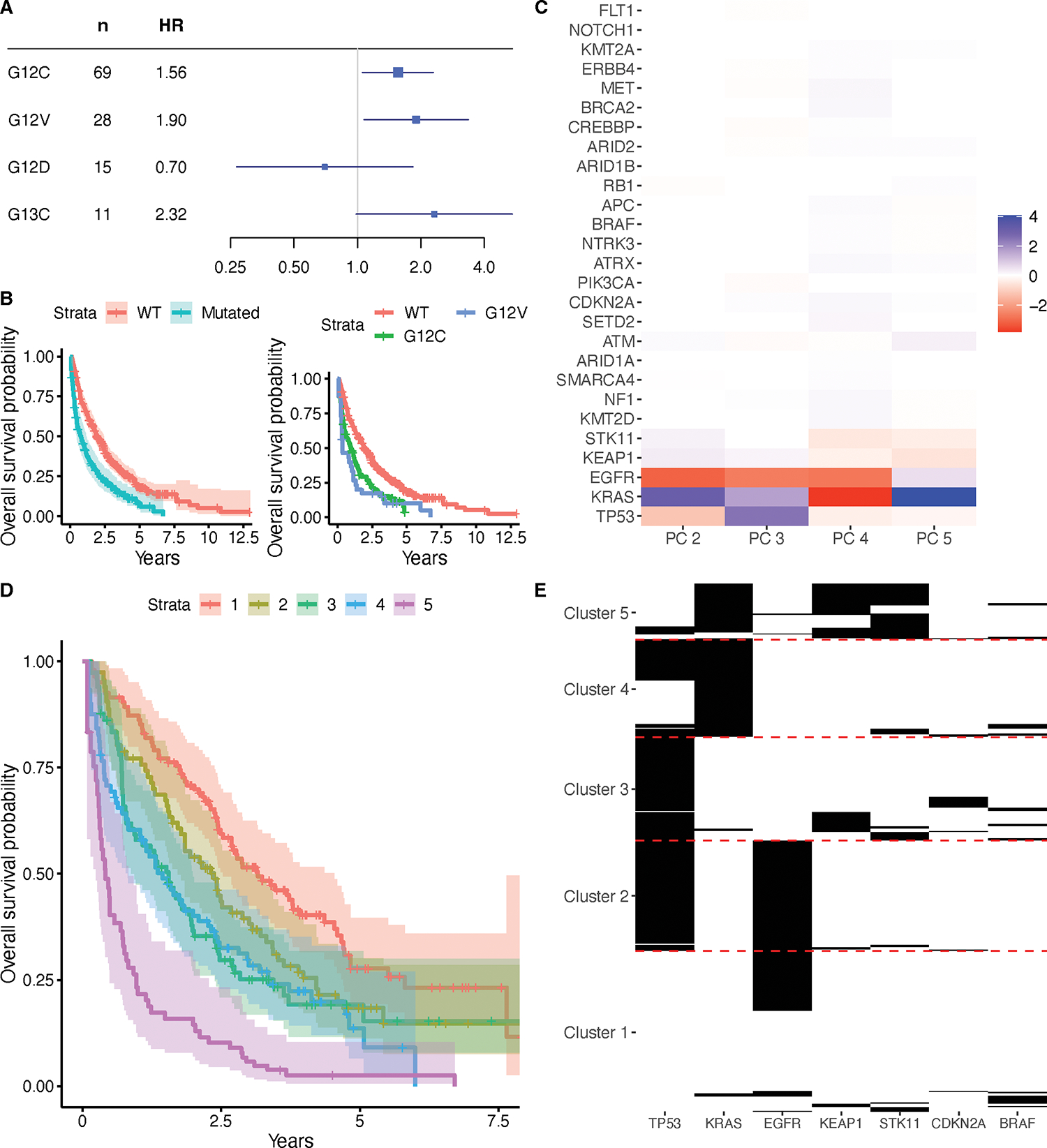
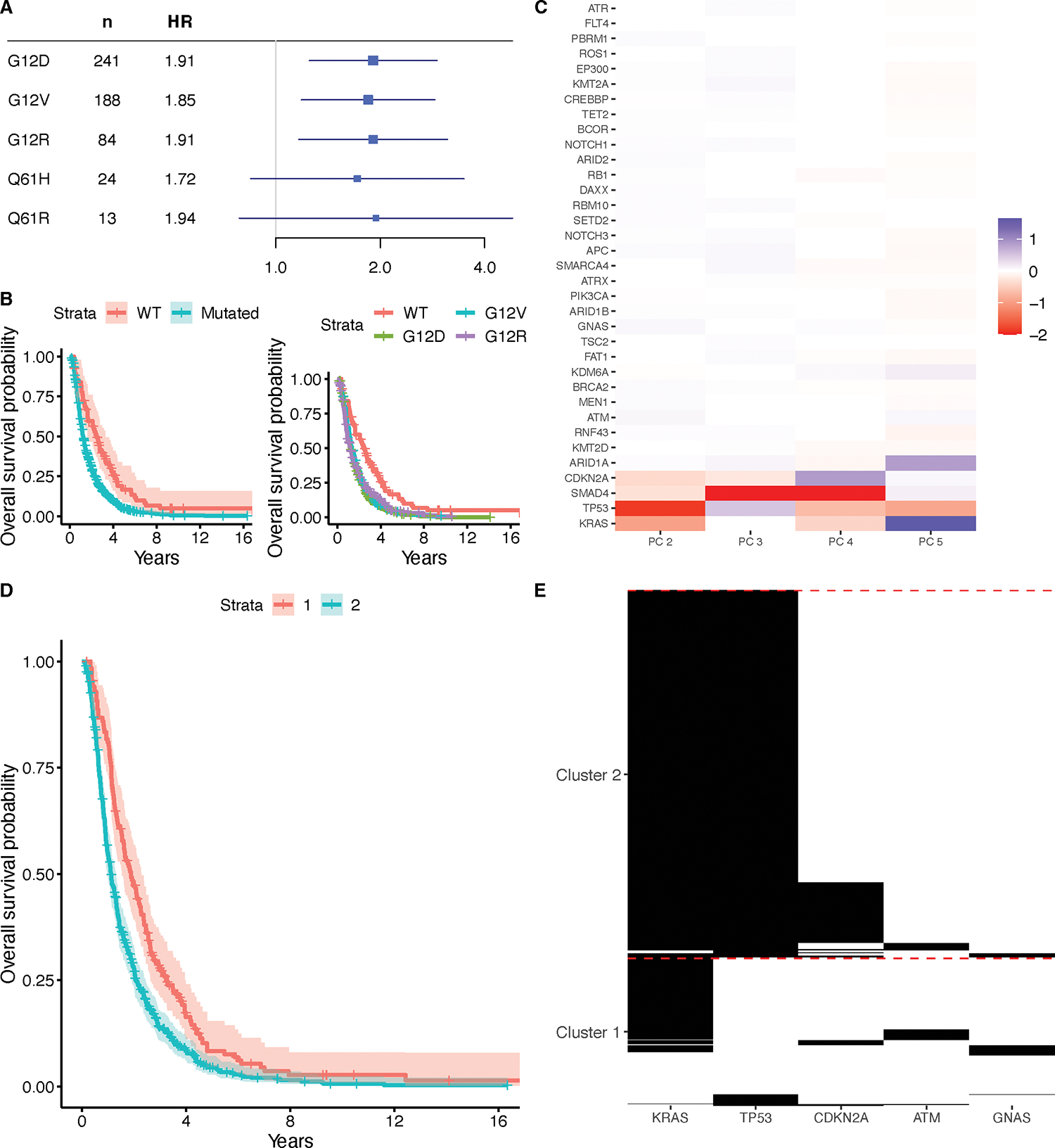
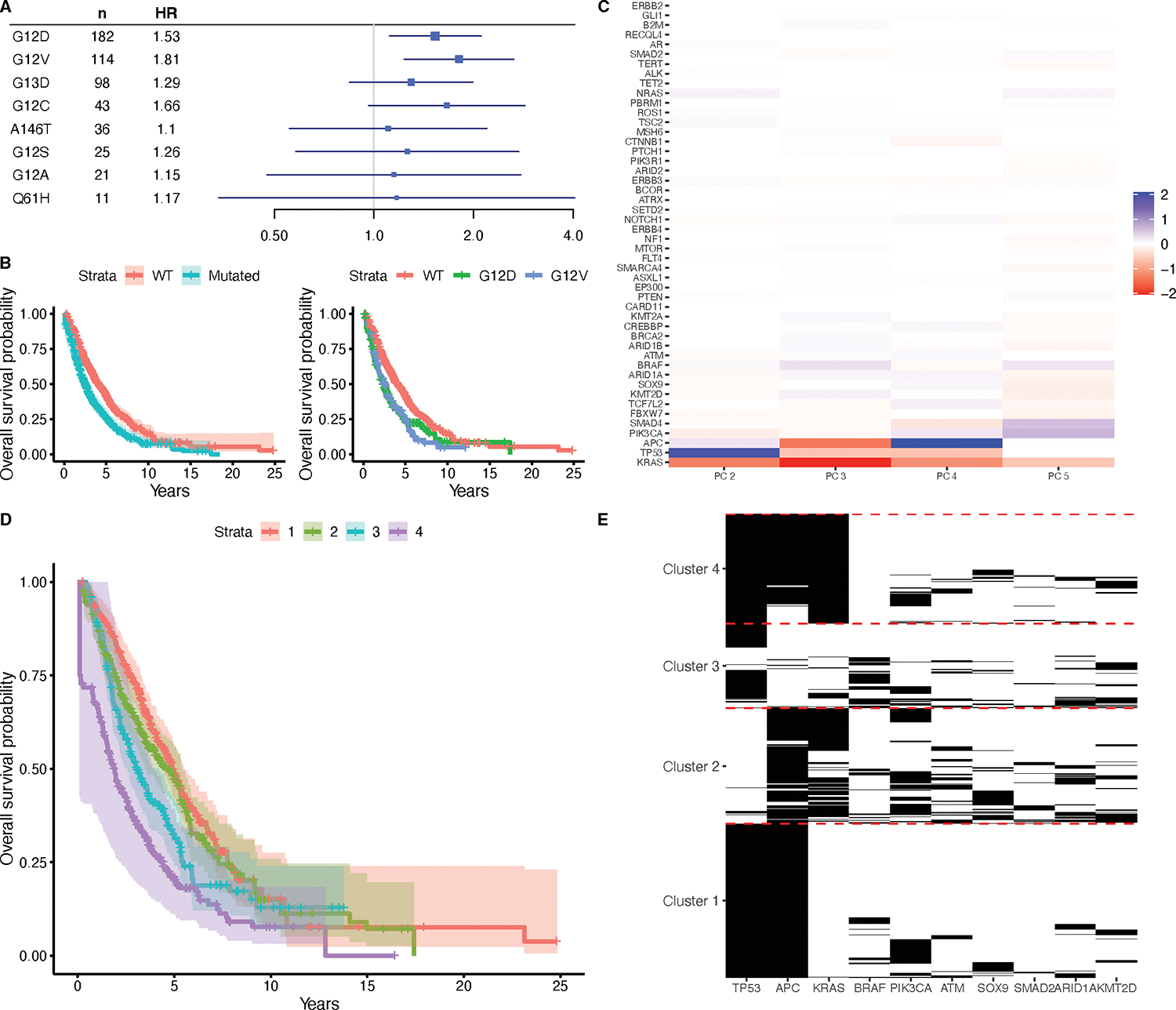
We analyze genomic and clinical data from the AACR Project GENIE Biopharma Collaborative for samples from lung, colorectal, and pancreatic cancers. For each of these cancer types, we report epidemiological associations for different KRAS alleles, apply principal component analysis (PCA) to discover groups of genes co-mutated with KRAS, and identify distinct clusters of patient profiles with implications for survival.
KRAS mutations were associated with inferior survival in lung, colon, and pancreas, although the specific mutations implicated varied by disease. Tissue- and allele-specific associations with smoking, sex, age, and race were found. Tissue-specific genetic interactions with KRAS were identified by PCA, which were clustered to produce five, four, and two patient profiles in lung, colon, and pancreas. Membership in these profiles was associated with survival in all three cancer types.
KRAS mutations have tissue- and allele-specific associations with inferior survival, clinical covariates, and genetic interactions.
Our results provide greater insight into the tissue- and allele-specific associations with KRAS mutations and identify clusters of patients that are associated with survival and clinical attributes from combinations of genetic interactions with KRAS mutations.
KRAS 是癌症中最常见的突变致癌基因之一,先前的研究表明,在许多癌症情况下,KRAS 与生存相关。临床观察和小鼠实验的证据进一步表明,这些关联是等位基因和组织特异性的。这些发现促使我们使用临床数据来理解不同等位基因和组织中的基因相互作用和临床协变量。
我们分析了 AACR 项目 GENIE 生物制药合作组织中来自肺癌、结直肠癌和胰腺癌样本的基因组和临床数据。对于这三种癌症类型,我们报告了不同 KRAS 等位基因的流行病学关联,应用主成分分析(PCA)发现与 KRAS 共同突变的基因组,并确定对生存有影响的不同患者特征聚类。
KRAS 突变与肺癌、结肠癌和胰腺癌的预后不良相关,尽管具体的突变涉及不同的疾病。发现了与吸烟、性别、年龄和种族有关的组织和等位基因特异性关联。通过 PCA 确定了与 KRAS 的组织特异性遗传相互作用,并将其聚类为肺癌、结肠癌和胰腺癌分别产生五个、四个和两个患者特征聚类。这些特征聚类的成员与这三种癌症的生存相关。
KRAS 突变与预后不良、临床协变量和遗传相互作用具有组织和等位基因特异性关联。
我们的结果提供了对 KRAS 突变的组织和等位基因特异性关联的更深入了解,并确定了与生存和临床特征相关的患者聚类,这些特征是与 KRAS 突变的遗传相互作用组合产生的。