Cancer Early Detection Advanced Research Center, Knight Cancer Institute, Oregon Health & Science University, Portland, OR 97239, USA.
Division of Hematology & Oncology, Oregon Health & Science University, Portland, OR 97239, USA.
Nutrients. 2023 Oct 31;15(21):4628. doi: 10.3390/nu15214628.
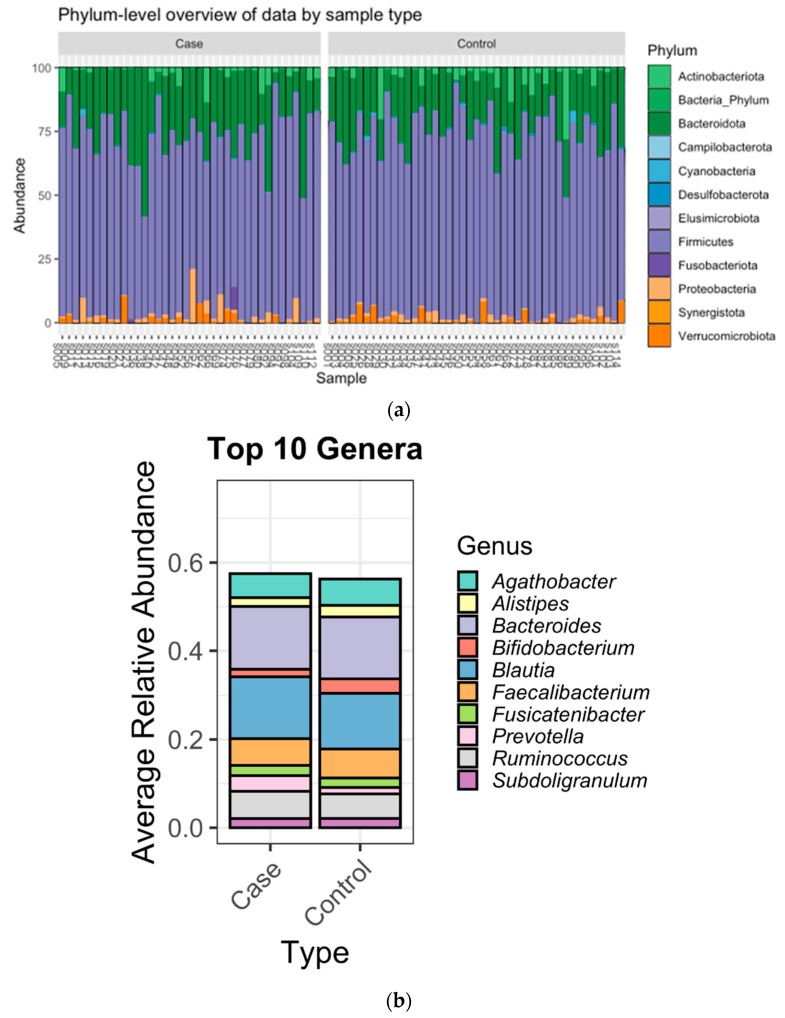
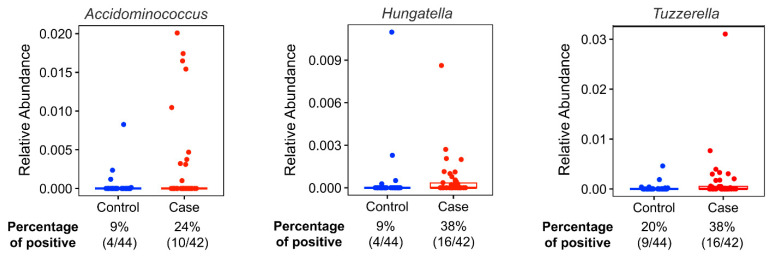
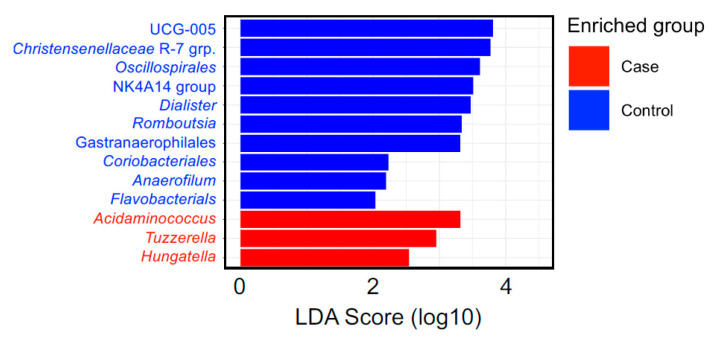
Breast cancer (BCa) has many well-known risk factors, including age, genetics, lifestyle, and diet; however, the influence of the gut microbiome on BCa remains an emerging area of investigation. This study explores the connection between the gut microbiome, dietary habits, and BCa risk. We enrolled newly diagnosed BCa patients and age-matched cancer-free controls in a case-control study. Comprehensive patient data was collected, including dietary habits assessed through the National Cancer Institute Diet History Questionnaire (DHQ). 16S rRNA amplicon sequencing was used to analyze gut microbiome composition and assess alpha and beta diversity. Microbiome analysis revealed differences in the gut microbiome composition between cases and controls, with reduced microbial diversity in BCa patients. The abundance of three specific microbial genera-Acidaminococus, Tyzzerella, and Hungatella-was enriched in the fecal samples taken from BCa patients. These genera were associated with distinct dietary patterns, revealing significant associations between the presence of these genera in the microbiome and specific HEI2015 components, such as vegetables and dairy for Hungatella, and whole fruits for Acidaminococus. Demographic characteristics were well-balanced between groups, with a significantly higher body mass index and lower physical activity observed in cases, underscoring the role of weight management in BCa risk. Associations between significant microbial genera identified from BCa cases and dietary intakes were identified, which highlights the potential of the gut microbiome as a source of biomarkers for BCa risk assessment. This study calls attention to the complex interplay between the gut microbiome, lifestyle factors including diet, and BCa risk.
乳腺癌(BCa)有许多众所周知的危险因素,包括年龄、遗传、生活方式和饮食;然而,肠道微生物组对 BCa 的影响仍是一个新兴的研究领域。本研究探讨了肠道微生物组、饮食习惯和 BCa 风险之间的联系。我们在病例对照研究中招募了新诊断的 BCa 患者和年龄匹配的无癌对照。收集了全面的患者数据,包括通过国家癌症研究所饮食史问卷(DHQ)评估的饮食习惯。使用 16S rRNA 扩增子测序分析肠道微生物组组成并评估 alpha 和 beta 多样性。微生物组分析显示病例和对照组之间肠道微生物组组成存在差异,BCa 患者的微生物多样性降低。三种特定微生物属-Acidaminococus、Tyzzerella 和 Hungatella-的丰度在 BCa 患者的粪便样本中富集。这些属与特定的饮食模式相关,表明微生物组中这些属的存在与特定的 HEI2015 成分之间存在显著关联,例如 Hungatella 与蔬菜和乳制品相关,而 Acidaminococus 与全水果相关。两组间的人口统计学特征平衡良好,病例组的体重指数显著较高,身体活动水平较低,这突显了体重管理在 BCa 风险中的作用。从 BCa 病例中鉴定出的与饮食摄入相关的显著微生物属之间存在关联,这突出了肠道微生物组作为 BCa 风险评估生物标志物的潜在价值。本研究引起了对肠道微生物组、包括饮食在内的生活方式因素与 BCa 风险之间复杂相互作用的关注。