Faculty of Natural Sciences, Institute of Biology, Biotechnology and Environmental Protection, University of Silesia, 40-007, Katowice, Poland.
Toxicology Research Group, Łukasiewicz Research Network, Institute of Industrial Organic Chemistry Branch Pszczyna, Doświadczalna 27, 43-200, Pszczyna, Poland.
J Appl Genet. 2024 Feb;65(1):13-30. doi: 10.1007/s13353-023-00800-9. Epub 2023 Nov 14.
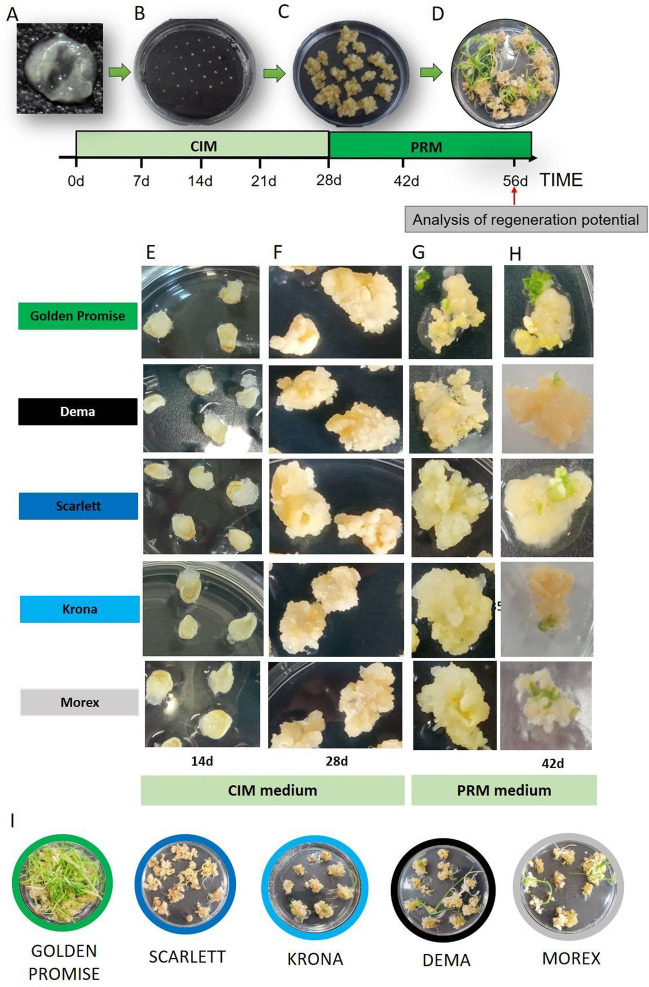
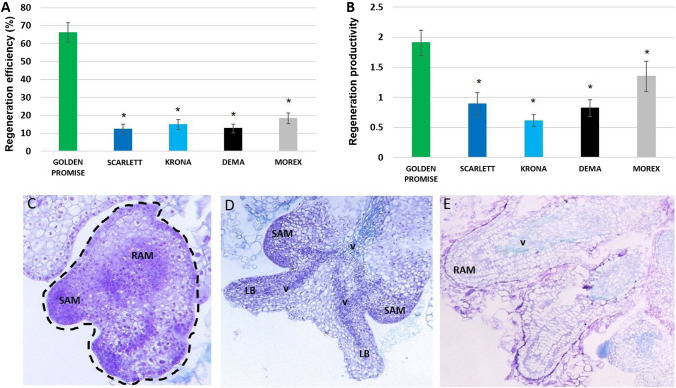
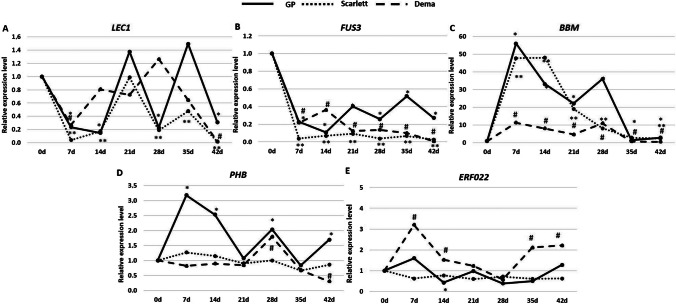
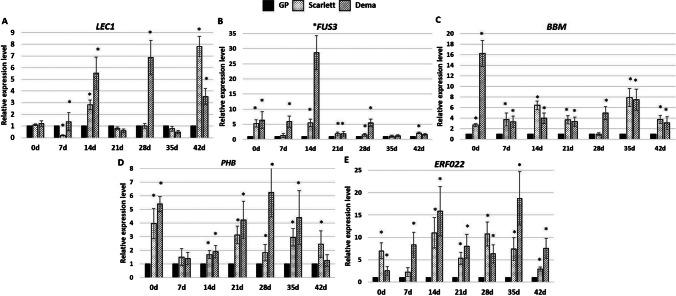
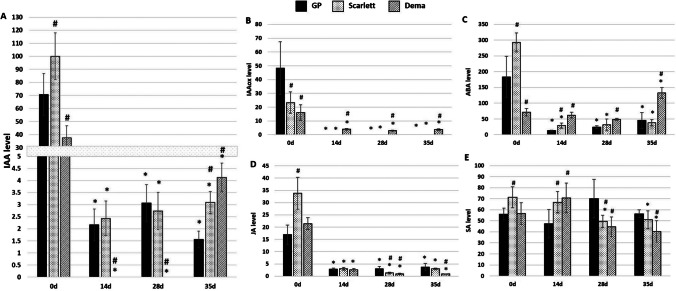
Genotype-limited plant regeneration is one of the main obstacles to the broader use of genetic transformation in barley breeding. Thus, developing new approaches that might improve responses of in vitro recalcitrant genotypes remains at the center of barley biotechnology. Here, we analyzed different barley genotypes, including "Golden Promise," a genotype commonly used in the genetic transformation, and four malting barley cultivars of poor regenerative potential. The expression of hormone-related transcription factor (TF) genes with documented roles in plant regeneration was analyzed in genotypes with various plant-regenerating capacities. The results indicated differential expression of auxin-related TF genes between the barley genotypes in both the explants and the derived cultures. In support of the role of auxin in barley regeneration, distinct differences in the accumulation of free and oxidized auxin were observed in explants and explant-derived callus cultures of barley genotypes. Following the assumption that modifying gene expression might improve plant regeneration in barley, we treated the barley explants with trichostatin A (TSA), which affects histone acetylation. The effects of TSA were genotype-dependent as TSA treatment improved plant regeneration in two barley cultivars. TSA-induced changes in plant regeneration were associated with the increased expression of auxin biosynthesis-involved TFs. The study demonstrated that explant treatment with chromatin modifiers such as TSA might provide a new and effective epigenetic approach to improving plant regeneration in recalcitrant barley genotypes.
基因型限制的植物再生是遗传转化在大麦育种中广泛应用的主要障碍之一。因此,开发新的方法来提高体外抗性基因型的反应仍然是大麦生物技术的核心。在这里,我们分析了不同的大麦基因型,包括“金承诺”,这是遗传转化中常用的基因型,以及四个再生能力差的麦芽大麦品种。具有已知在植物再生中作用的激素相关转录因子(TF)基因的表达在具有不同植物再生能力的基因型中进行了分析。结果表明,在不同的大麦基因型中,激素相关 TF 基因在外植体和衍生培养物中的表达存在差异。支持生长素在大麦再生中的作用,在外植体和大麦基因型的外植体衍生愈伤组织中观察到游离和氧化生长素的积累存在明显差异。基于修饰基因表达可能改善大麦再生的假设,我们用曲古抑菌素 A(TSA)处理大麦外植体,它影响组蛋白乙酰化。TSA 的作用依赖于基因型,因为 TSA 处理可改善两种大麦品种的植物再生。TSA 诱导的植物再生变化与生长素生物合成相关 TF 的表达增加有关。该研究表明,外植体用染色质修饰剂(如 TSA)处理可能为改善抗性大麦基因型的植物再生提供一种新的有效表观遗传方法。