Lisius Grace, Duttagupta Radha, Ahmed Asim A, Hensley Matthew, Al-Yousif Nameer, Lu Michael, Bain William, Shah Faraaz, Blauwkamp Timothy A, Bercovici Sivan, Schaefer Caitlin, Qin Shulin, Wang Xiaohong, Zhang Yingze, Mitchell Kevin J, Hughes Ellen K, Jacobs Jana L, Naqvi Asma, Haidar Ghady, Mellors John W, Methé Barbara, McVerry Bryan J, Morris Alison, Kitsios Georgios D
Division of Pulmonary, Allergy, Critical Care and Sleep Medicine, University of Pittsburgh, Pittsburgh, PA 15213, USA.
Karius Inc, Redwood City, CA 94065, USA.
iScience. 2023 Oct 11;26(11):108093. doi: 10.1016/j.isci.2023.108093. eCollection 2023 Nov 17.
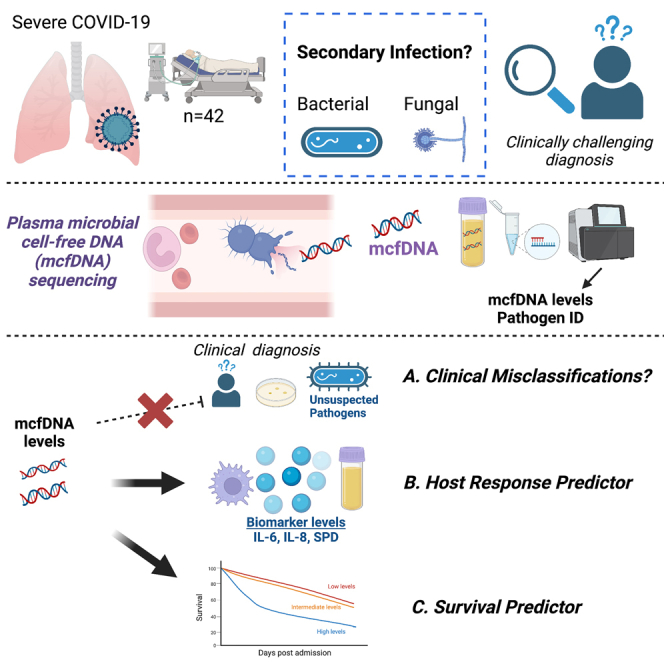
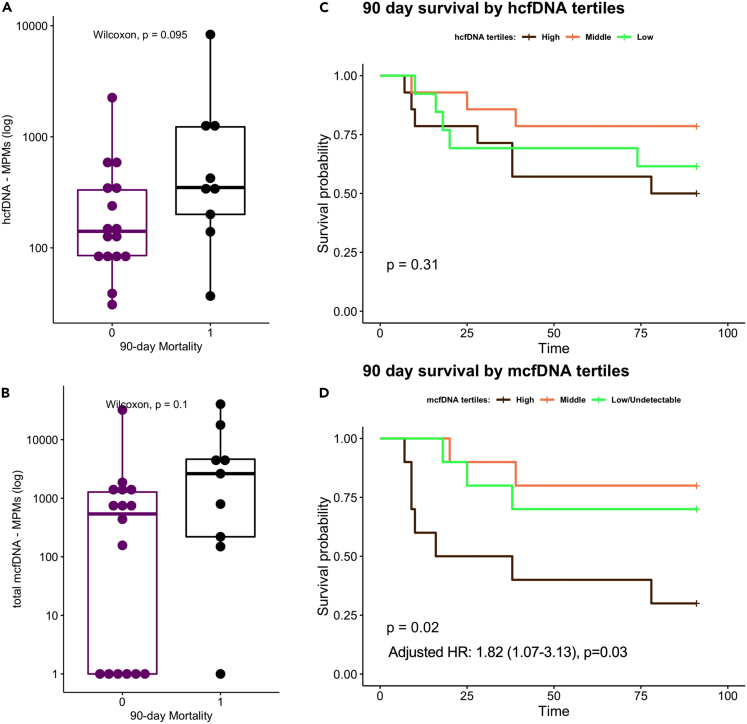
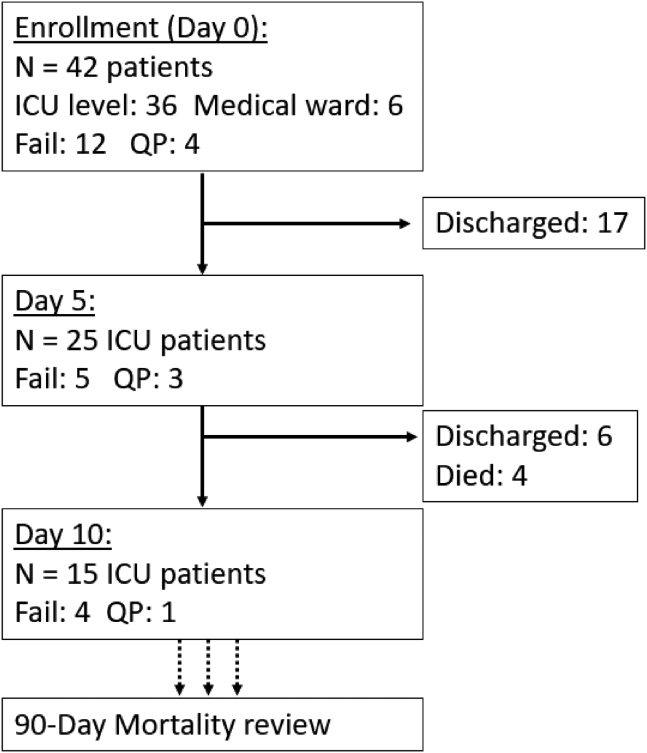
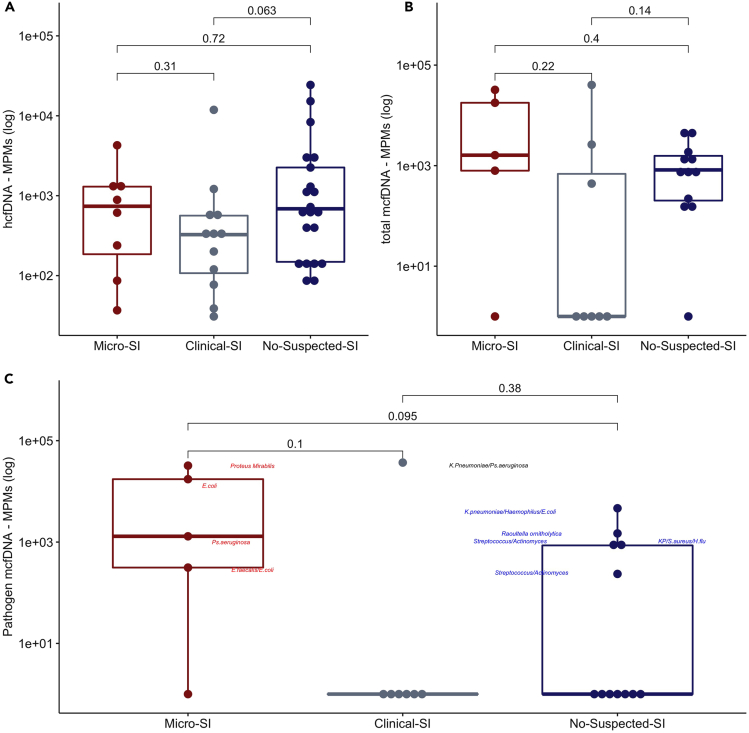
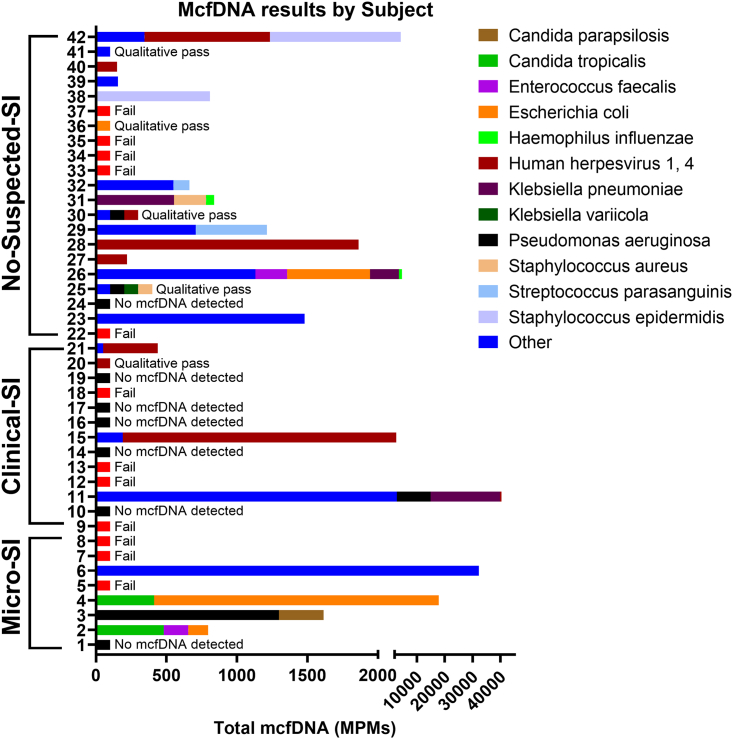
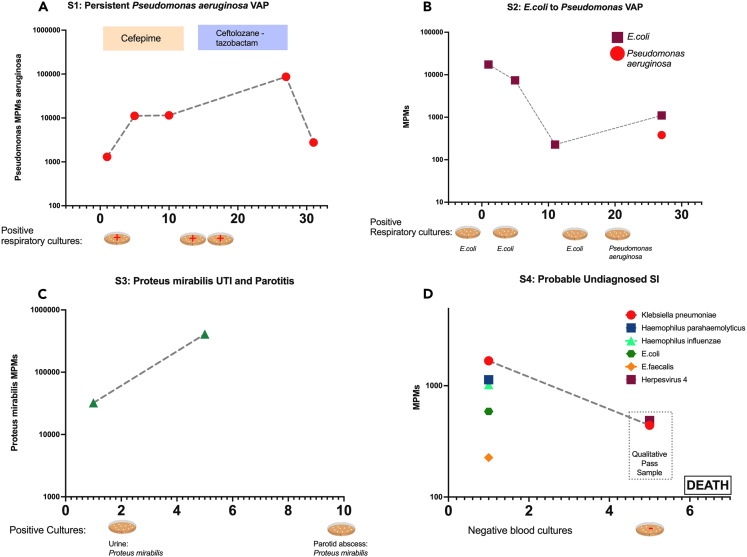
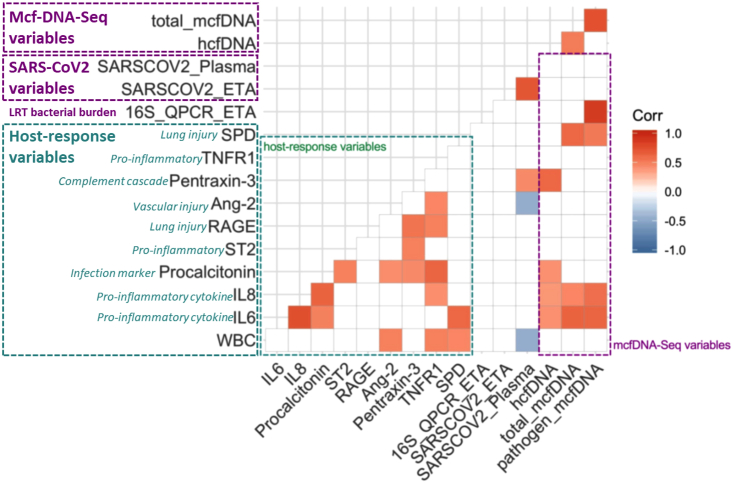
Secondary infection (SI) diagnosis in severe COVID-19 remains challenging. We correlated metagenomic sequencing of plasma microbial cell-free DNA (mcfDNA-Seq) with clinical SI assessment, immune response, and outcomes. We classified 42 COVID-19 inpatients as microbiologically confirmed-SI (Micro-SI, n = 8), clinically diagnosed-SI (Clinical-SI, n = 13, i.e., empiric antimicrobials), or no-clinical-suspicion-for-SI (No-Suspected-SI, n = 21). McfDNA-Seq was successful in 73% of samples. McfDNA detection was higher in Micro-SI (94%) compared to Clinical-SI (57%, p = 0.03), and unexpectedly high in No-Suspected-SI (83%), similar to Micro-SI. We detected culture-concordant mcfDNA species in 81% of Micro-SI samples. McfDNA correlated with LRT 16S rRNA bacterial burden (r = 0.74, p = 0.02), and biomarkers (white blood cell count, IL-6, IL-8, SPD, all p < 0.05). McfDNA levels were predictive of worse 90-day survival (hazard ratio 1.30 [1.02-1.64] for each log mcfDNA, p = 0.03). High mcfDNA levels in COVID-19 patients without clinical SI suspicion may suggest SI under-diagnosis. McfDNA-Seq offers a non-invasive diagnostic tool for pathogen identification, with prognostic value on clinical outcomes.
严重新型冠状病毒肺炎(COVID-19)的继发感染(SI)诊断仍然具有挑战性。我们将血浆微生物游离DNA宏基因组测序(mcfDNA-Seq)与临床SI评估、免疫反应及预后进行了关联分析。我们将42例COVID-19住院患者分为微生物学确诊的SI(微生物学SI,n = 8)、临床诊断的SI(临床SI,n = 13,即经验性使用抗菌药物)或无临床SI怀疑(无怀疑SI,n = 21)。mcfDNA-Seq在73%的样本中成功完成。微生物学SI组的mcfDNA检测率(94%)高于临床SI组(57%,p = 0.03),而无怀疑SI组(83%)的检测率意外地高,与微生物学SI组相似。我们在81%的微生物学SI样本中检测到与培养结果一致的mcfDNA物种。mcfDNA与下呼吸道16S rRNA细菌负荷相关(r = 0.74,p = 0.02),也与生物标志物(白细胞计数、IL-6、IL-8、SPD,均p < 0.05)相关。mcfDNA水平可预测90天生存率较差(每增加一个对数mcfDNA的风险比为1.30 [1.02 - 1.64],p = 0.03)。在无临床SI怀疑的COVID-19患者中mcfDNA水平较高可能提示SI诊断不足。mcfDNA-Seq为病原体鉴定提供了一种非侵入性诊断工具,对临床预后具有预测价值。