Zace Drieda, Semeraro Federico, Schnaubelt Sebastian, Montomoli Jonathan, Ristagno Giuseppe, Fijačko Nino, Gamberini Lorenzo, Bignami Elena G, Greif Robert, Monsieurs Koenraad G, Scapigliati Andrea
Department of Systems Medicine, University of Rome Tor Vergata, Rome, Italy.
Department of Anaesthesia, Intensive Care and Prehospital Emergency, Maggiore Hospital Carlo Alberto Pizzardi, Bologna, Italy.
Resusc Plus. 2025 May 3;24:100973. doi: 10.1016/j.resplu.2025.100973. eCollection 2025 Jul.
Artificial intelligence (AI) is increasingly applied in medicine, with growing interest in its potential to improve outcomes in cardiac arrest (CA). However, the scope and characteristics of current AI applications in resuscitation remain unclear.
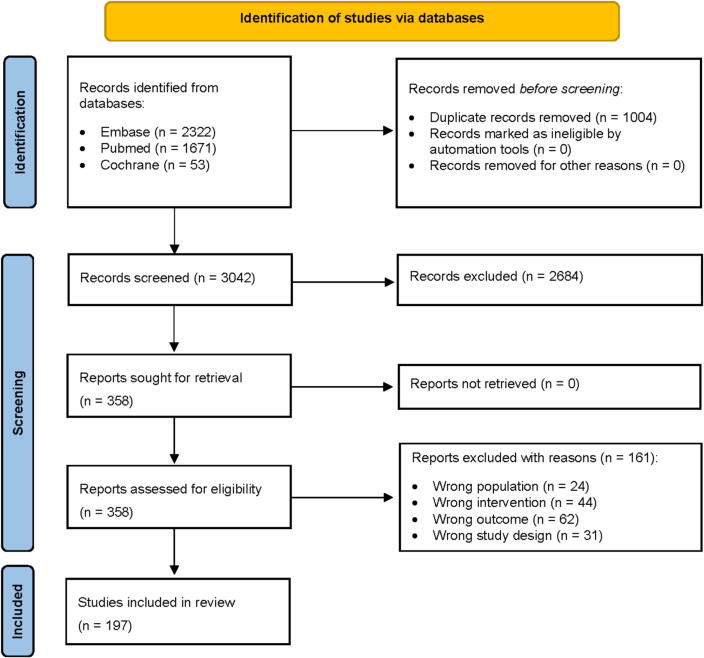
This scoping review aims to map the existing literature on AI applications in CA and resuscitation and identify research gaps for further investigation. PRISMA-ScR framework and ILCOR guidelines were followed. A systematic literature search across PubMed, EMBASE, and Cochrane identified AI applications in resuscitation. Articles were screened and classified by AI methodology, study design, outcomes, and implementation settings. AI-assisted data extraction was manually validated for accuracy.
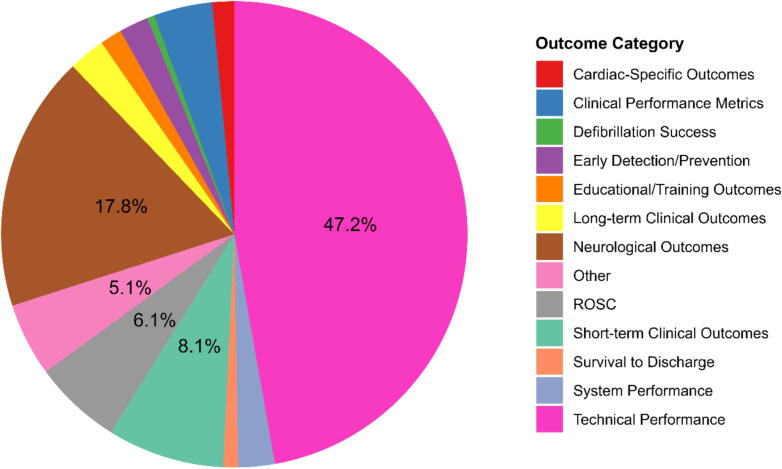
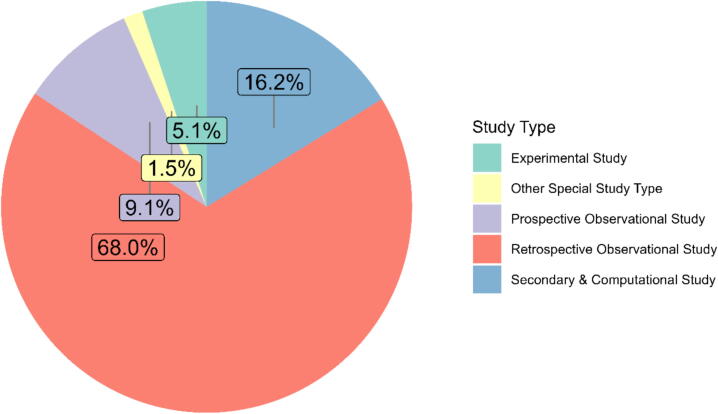
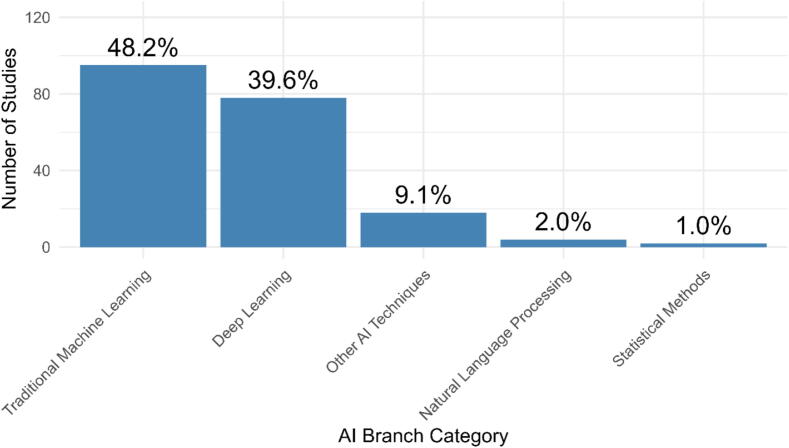
Out of 4046 records, 197 studies met inclusion criteria. Most were retrospective (90%), with only 16 prospective studies and 2 randomised controlled trials. AI was predominantly applied in prediction of CA, rhythm classification, and post-resuscitation outcome prognostication. Machine learning was the most commonly used method (50% of studies), followed by deep learning and, less frequently, natural language processing. Reported performance was generally high, with AUROC values often exceeding 0.85; however, external validation was rare and real-world implementation limited.
While AI applications in resuscitation demonstrate encouraging performance in prediction and decision support tasks, clear evidence of improved patient outcomes or routine clinical use remains limited. Future research should focus on prospective validation, equity in data sources, explainability, and seamless integration of AI tools into clinical workflows.
人工智能(AI)在医学中的应用日益广泛,人们对其改善心脏骤停(CA)预后的潜力兴趣与日俱增。然而,目前AI在复苏领域应用的范围和特点仍不明确。
本范围综述旨在梳理关于AI在CA及复苏中应用的现有文献,并确定有待进一步研究的差距。遵循PRISMA-ScR框架和国际复苏联络委员会(ILCOR)指南。通过对PubMed、EMBASE和Cochrane进行系统文献检索,确定复苏中的AI应用。文章根据AI方法、研究设计、结果和实施环境进行筛选和分类。人工验证AI辅助数据提取的准确性。
在4046条记录中,197项研究符合纳入标准。大多数研究为回顾性研究(90%),只有16项前瞻性研究和2项随机对照试验。AI主要应用于CA预测、心律分类和复苏后结局预后评估。机器学习是最常用的方法(50%的研究),其次是深度学习,自然语言处理的应用较少。报告的性能普遍较高,曲线下面积(AUROC)值通常超过0.85;然而,外部验证很少,实际应用也很有限。
虽然AI在复苏中的应用在预测和决策支持任务中表现出令人鼓舞的性能,但关于改善患者结局或常规临床应用的确切证据仍然有限。未来的研究应集中在前瞻性验证、数据源的公平性、可解释性以及将AI工具无缝集成到临床工作流程中。