Graduate Institute of Nanomedicine and Medical Engineering, College of Biomedical Engineering, Taipei Medical University, Taipei, 11031, Taiwan.
International PhD Program in Biomedical Engineering, College of Biomedical Engineering, Taipei Medical University, Taipei, 11031, Taiwan.
J Nanobiotechnology. 2023 Nov 15;21(1):428. doi: 10.1186/s12951-023-02208-3.
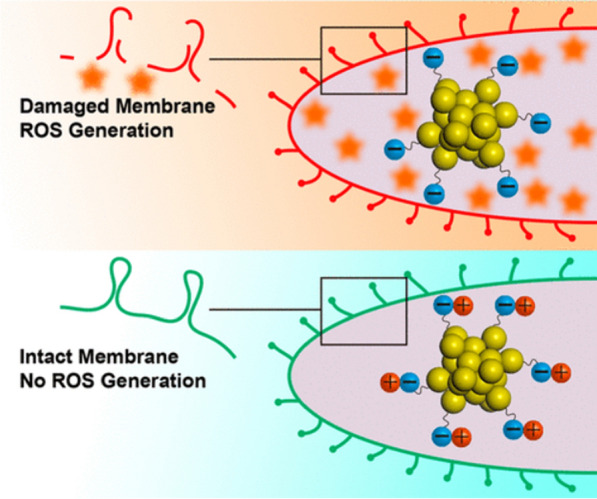
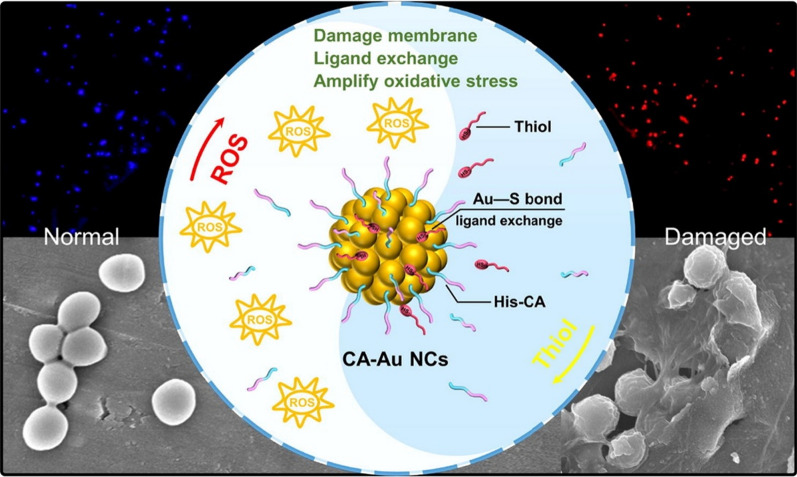
Nanomaterials, specifically metal nanoclusters (NCs), are gaining attention as a promising class of antibacterial agents. Metal NCs exhibit antibacterial properties due to their ultrasmall size, extensive surface area, and well-controlled surface ligands. The antibacterial mechanisms of metal NCs are influenced by two primary factors: size and surface charge. In this review, we summarize the impacts of size and surface charge of metal NCs on the antibacterial mechanisms, their interactions with bacteria, and the factors that influence their antibacterial effects against both gram-negative and gram-positive bacteria. Additionally, we highlight the mechanisms that occur when NCs are negatively or positively charged, and provide examples of their applications as antibacterial agents. A better understanding of relationships between antibacterial activity and the properties of metal NCs will aid in the design and synthesis of nanomaterials for the development of effective antibacterial agents against bacterial infections. Based on the remarkable achievements in the design of metal NCs, this review also presents conclusions on current challenges and future perspectives of metal NCs for both fundamental investigations and practical antibacterial applications.
纳米材料,特别是金属纳米团簇(NCs),作为一类有前途的抗菌剂引起了人们的关注。金属 NCs 由于其超小的尺寸、广泛的表面积和可控制的表面配体而表现出抗菌性能。金属 NCs 的抗菌机制受两个主要因素的影响:尺寸和表面电荷。在这篇综述中,我们总结了金属 NCs 的尺寸和表面电荷对其抗菌机制、与细菌的相互作用以及影响其对革兰氏阴性和革兰氏阳性菌的抗菌效果的因素的影响。此外,我们还强调了 NCs 带负电荷或正电荷时发生的机制,并提供了它们作为抗菌剂应用的实例。更好地理解抗菌活性与金属 NCs 性质之间的关系将有助于设计和合成纳米材料,以开发针对细菌感染的有效抗菌剂。基于金属 NCs 设计方面的显著成就,本综述还介绍了金属 NCs 在基础研究和实际抗菌应用方面的当前挑战和未来展望的结论。