Ranpara Anand, Stefaniak Aleksandr B, Fernandez Elizabeth, Bowers Lauren N, Arnold Elizabeth D, LeBouf Ryan F
Department of Physiology and Pharmacology, School of Medicine, West Virginia University, Health Science Center, Morgantown, West Virginia, USA.
Respiratory Health Division, National Institute for Occupational Safety and Health, Morgantown, West Virginia, USA.
Aerosol Sci Technol. 2023 Mar;57(5):450-466. doi: 10.1080/02786826.2023.2190786.
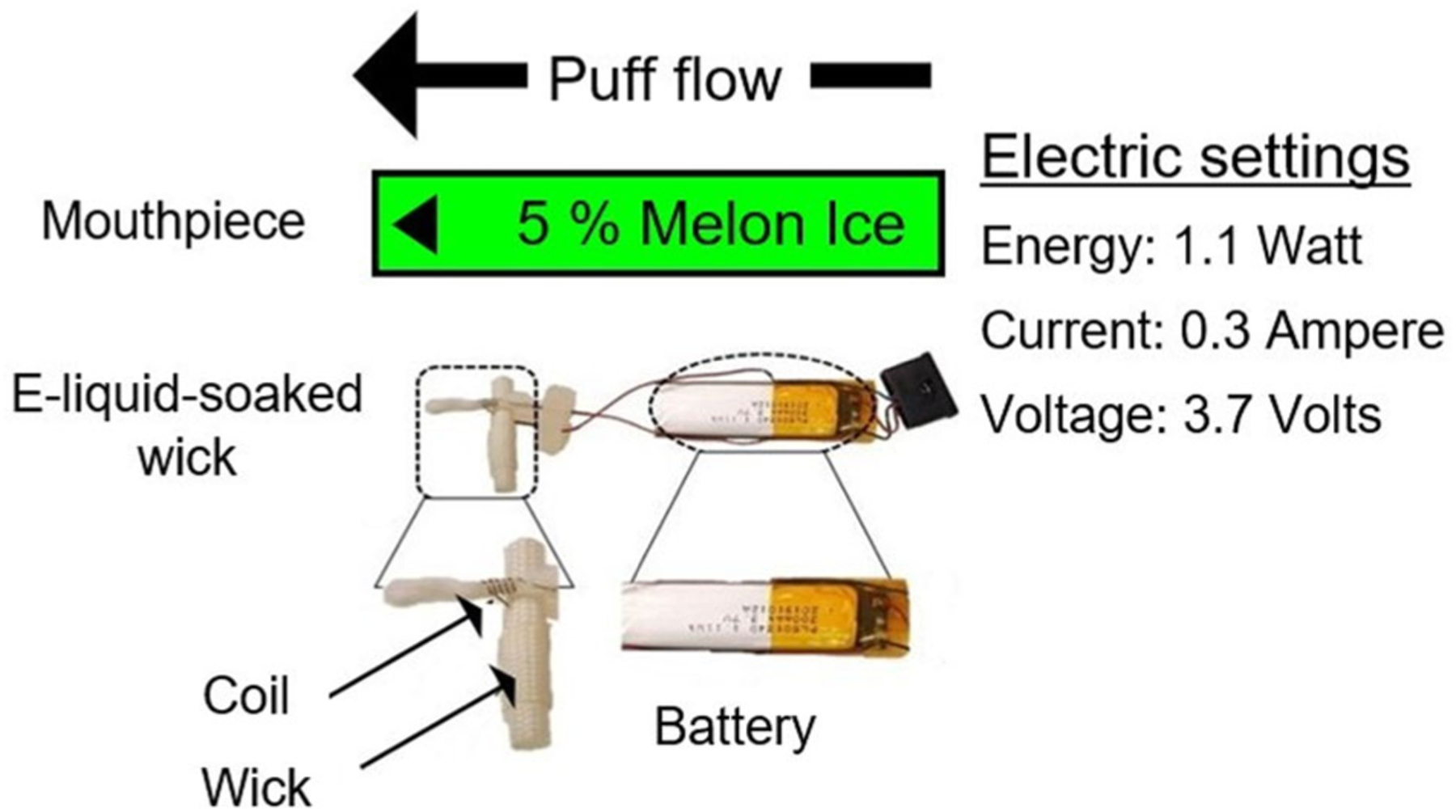
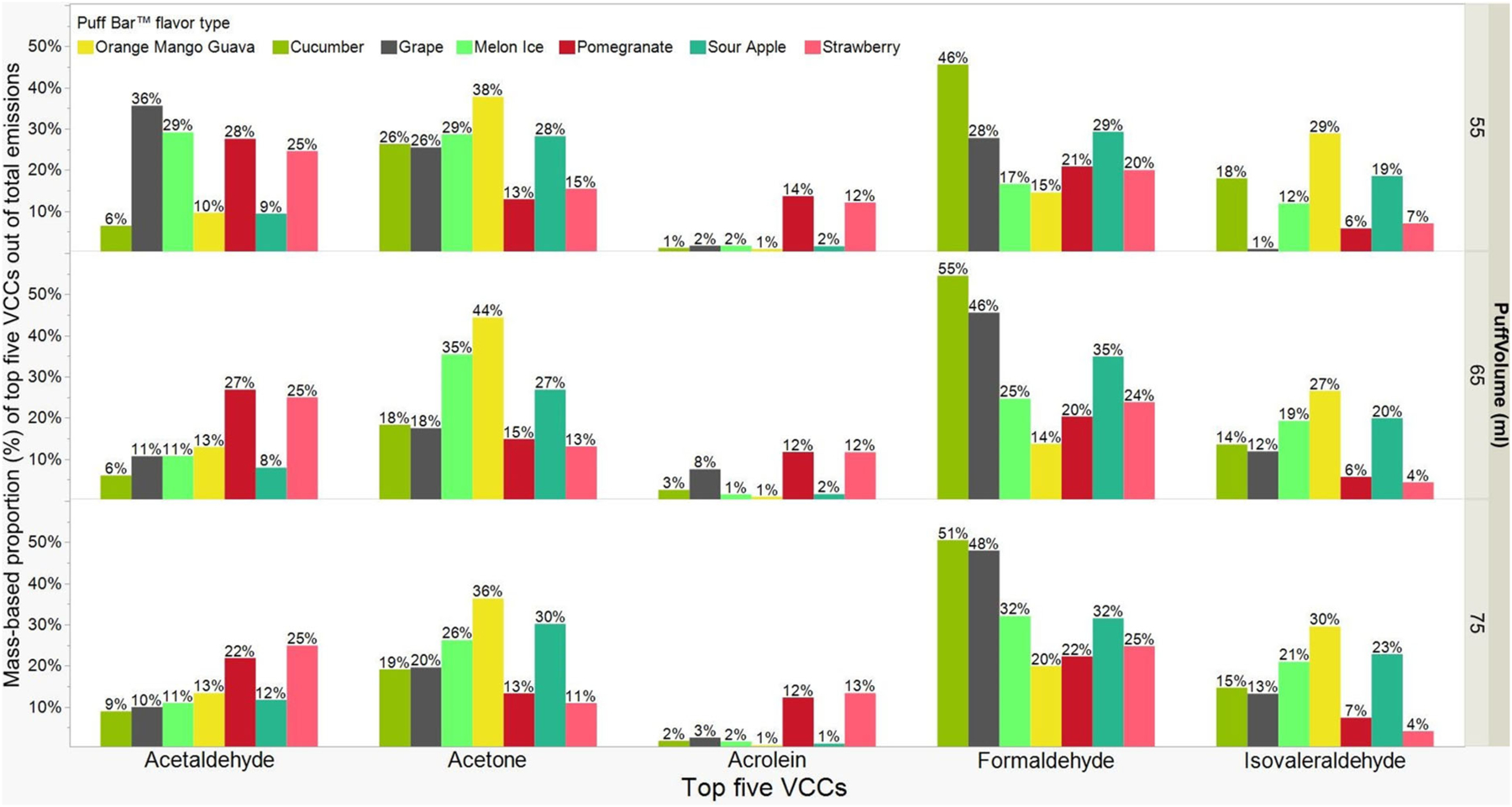
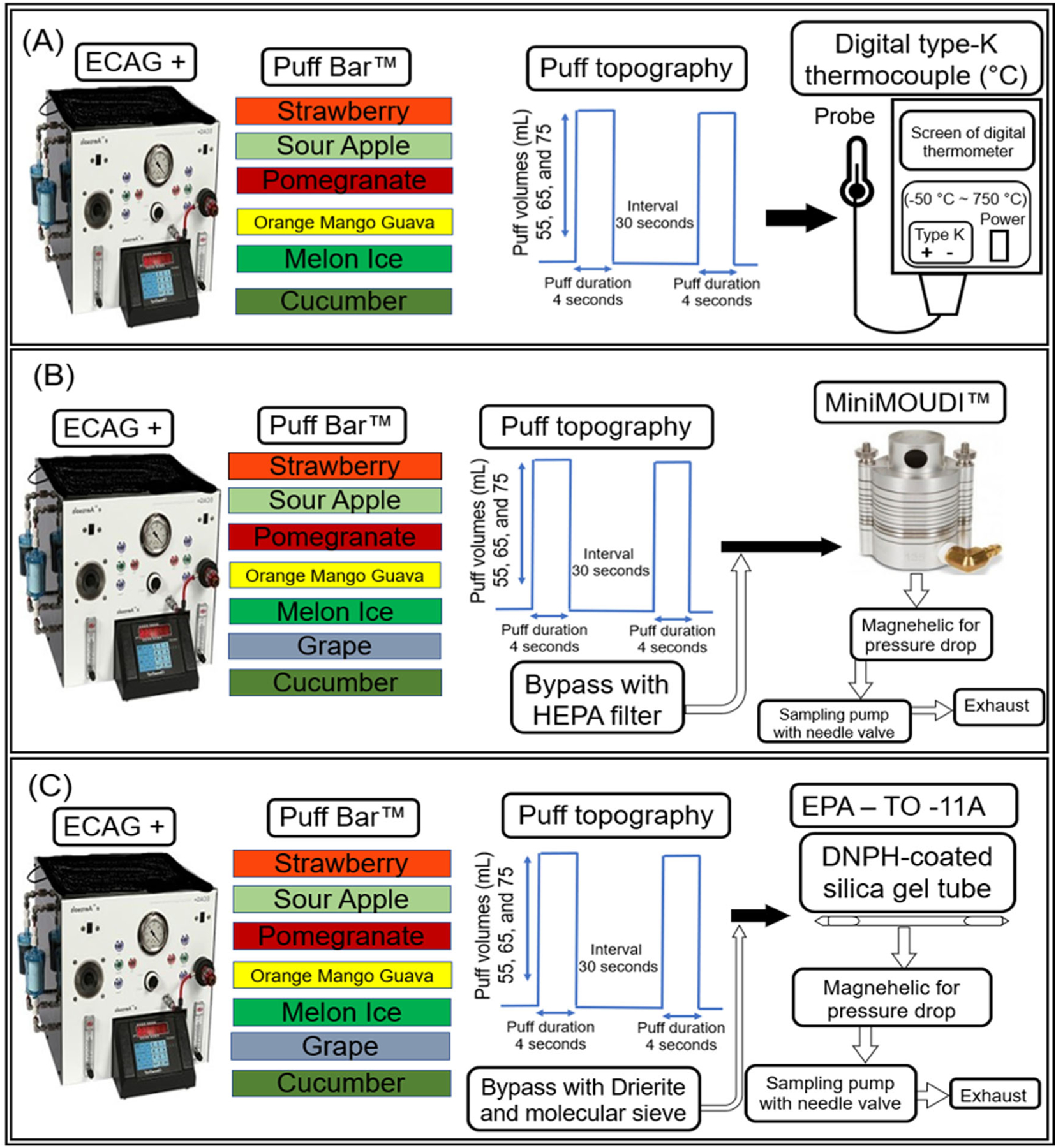
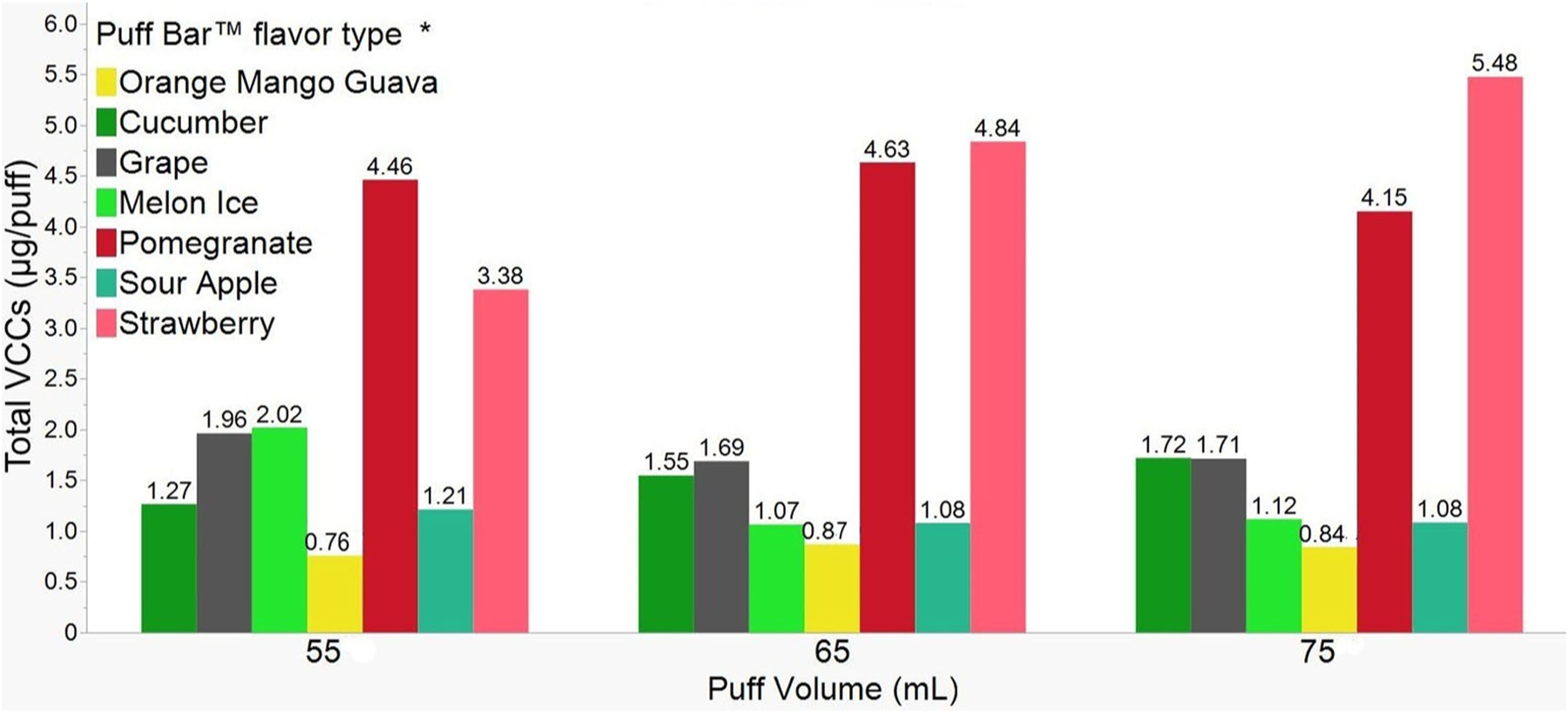
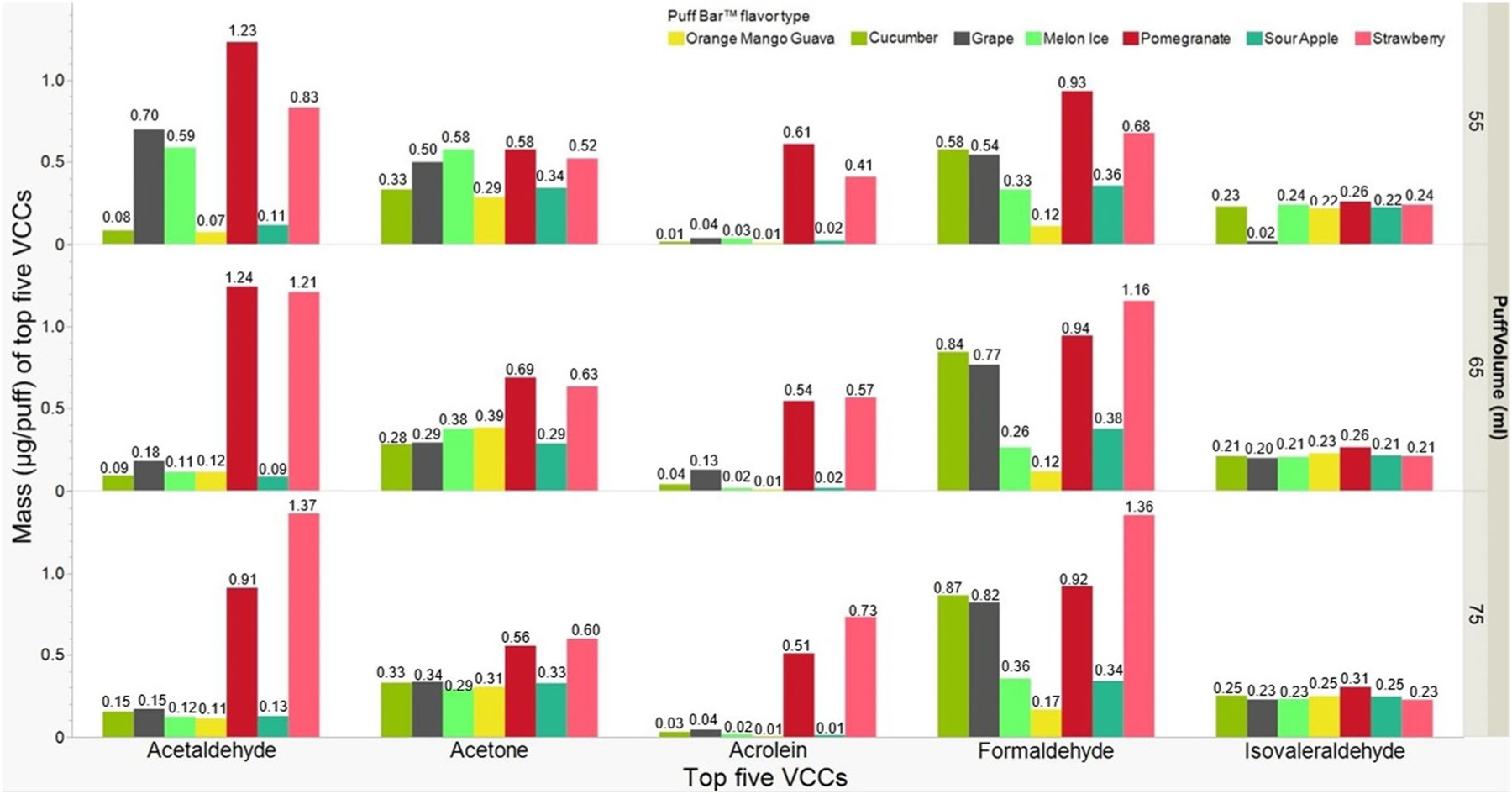
Puff Bar, one of the latest designs of e-cigarettes, heats a mixture of liquid using a battery-powered coil at certain temperatures to emit aerosol. This study presents a mass-based characterization of emissions from seven flavors of Puff Bar devices by aerosolizing with three puff topographies [(puff volume: 55 < 65 < 75-mL) within 4-seconds at 30-seconds interval]. We evaluated the effects of puff topographies on heating temperatures; characterized particles using a cascade impactor; and measured volatile carbonyl compounds (VCCs). Modeled dosimetry and calculated mass median aerodynamic diameters (MMADs) were used to estimate regional, total respiratory deposition of the inhaled aerosol and exhaled fractions that could pose secondhand exposure risk. Temperatures of Puff Bar e-liquids increased with increasing puff volumes: 55mL (116.6 °C), 65 mL (128.3 °C), and 75mL (168.9 °C). Flavor types significantly influenced MMADs, total mass of particles, and VCCs (μg/puff: 2.15-2.30) in Puff Bar emissions (p < 0.05). Increasing puff volume (mL:55 < 65 < 75) significantly increased total mass (mg/puff: 4.6 < 5.6 < 6.2) of particles without substantially changing MMADs (1μm:1.020.99~0.98). Aerosol emissions were estimated to deposit in the pulmonary region of e-cigarette user (41-44%), which could have toxicological importance. More than 2/3 (67-77%) of inhaled particles were estimated to be exhaled by users, which could affect bystanders. The VCCs measured contained carcinogens-formaldehyde (29.6%) and acetaldehyde (16.4%)-as well as respiratory irritants: acetone (23.9%), isovaleraldehyde (14.5%), and acrolein (4.9%). As Puff Bar emissions contain respirable particles and harmful chemicals, efforts should be made to minimize exposures, especially in indoor settings where people (including vulnerable populations) spend most of their life-time.
泡泡吧(Puff Bar)是电子烟的最新设计之一,它通过电池供电的线圈在特定温度下加热液体混合物以产生气溶胶。本研究通过三种抽吸模式(抽吸间隔30秒,4秒内抽吸体积分别为55 < 65 < 75毫升)对七种口味的泡泡吧电子烟装置的排放进行了基于质量的表征。我们评估了抽吸模式对加热温度的影响;使用串联撞击器对颗粒进行表征;并测量了挥发性羰基化合物(VCCs)。通过模拟剂量学和计算质量中值空气动力学直径(MMADs)来估计吸入气溶胶在区域和整个呼吸道的沉积以及呼出部分,这些呼出部分可能构成二手暴露风险。泡泡吧电子烟液的温度随着抽吸体积的增加而升高:55毫升(116.6℃)、65毫升(128.3℃)和75毫升(168.9℃)。口味类型对泡泡吧排放物中的MMADs、颗粒总质量和VCCs(微克/抽吸:2.15 - 2.30)有显著影响(p < 0.05)。抽吸体积增加(毫升:55 < 65 < 75)显著增加了颗粒的总质量(毫克/抽吸:4.6 < 5.6 < 6.2),但MMADs基本不变(约1微米:1.020.990.98)。据估计,气溶胶排放物会沉积在电子烟使用者的肺部区域(41 - 44%),这可能具有毒理学意义。据估计,超过2/3(67 - 77%)的吸入颗粒会被使用者呼出,这可能会影响旁观者。所测量的VCCs中含有致癌物甲醛(29.6%)和乙醛(16.4%),以及呼吸道刺激物:丙酮(23.9%)、异戊醛(14.5%)和丙烯醛(4.9%)。由于泡泡吧排放物含有可吸入颗粒和有害化学物质,应努力尽量减少暴露,尤其是在人们(包括弱势群体)大部分时间都待在室内的环境中。