Li Yujie, Cao Hui, Qiu Dewen, Wang Nan, Wang Yan, Wen Tingting, Wang Jianjun, Zhu Hong
Department of Clinical Laboratory, Kunshan Hospital Affiliated to Jiangsu University, Suzhou, 215300, Jiangsu, People's Republic of China.
Department of Food and Nutrition Safety, Jiangsu Provincial Center for Disease Control and Prevention, Nanjing, 210009, Jiangsu, People's Republic of China.
Cancer Cell Int. 2023 Nov 16;23(1):272. doi: 10.1186/s12935-023-03131-1.
Helicobacter pylori (H. pylori) infection is a major risk factor for gastric diseases, including gastritis and gastric cancer. Heat shock protein 60 (HSP60) is a chaperone protein involved in various cellular processes and has been implicated in the immune response to bacterial infections. Extracellular vesicles (EVs) containing various protein components play important roles in cell communication. In the present study, a systematic proteomic analysis of EVs obtained from H. pylori infected cells was performed and the EV-derived HSP60 function was studied.
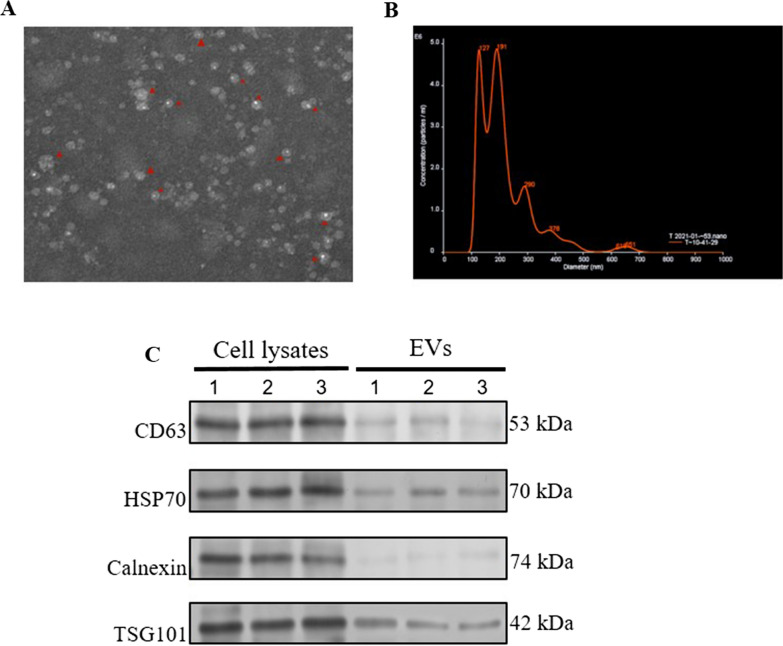
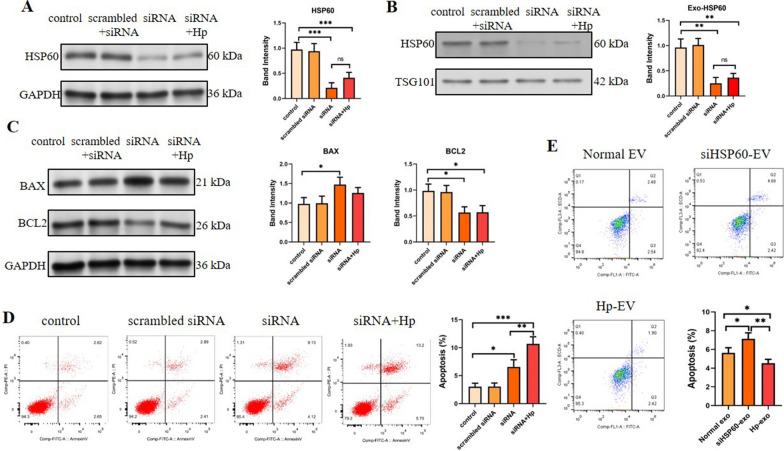
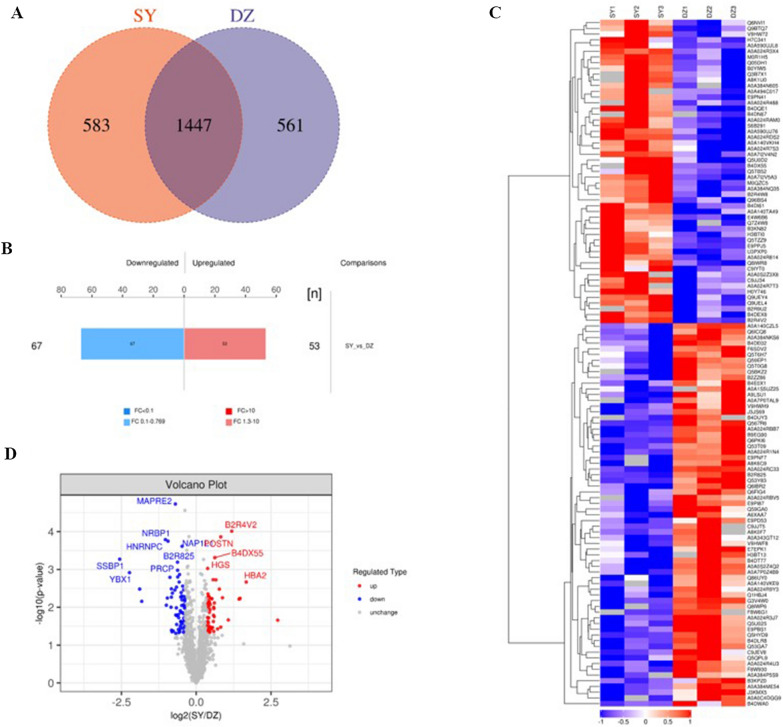
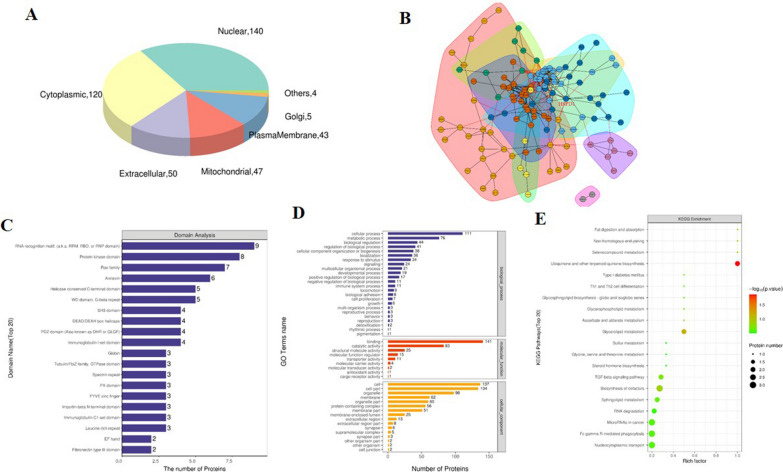
EVs were evaluated by nanoparticle tracking analysis, transmission electron microscopy and western blotting. The recognized protein components were quantified by label-free proteomics and subjected to bioinformatics assays. The expression of HSP60 in EVs, host cells and gastric cancers infected by H. pylori was determined by western blotting and immunohistochemical, respectively. In addition, the apoptotic regulation mechanisms of HSP60 in H. pylori infection were analyzed by western blotting and flow cytometry.
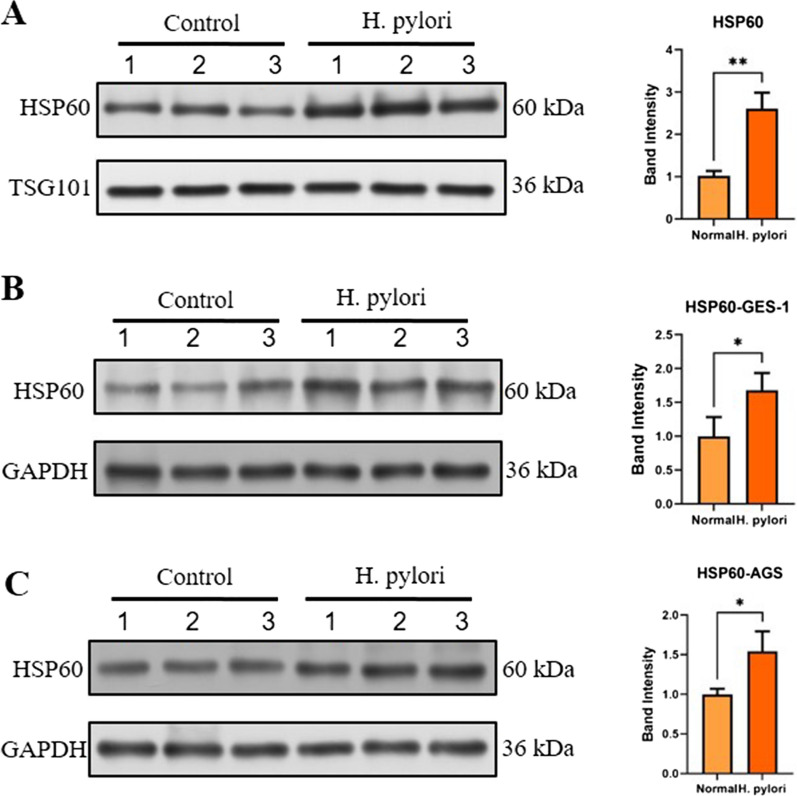
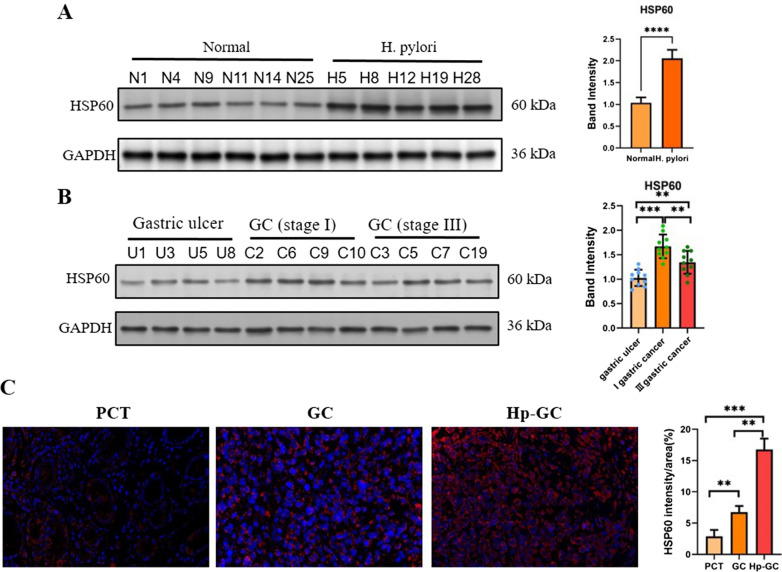
A total of 120 important differential proteins were identified in the EVs from H. pylori-infected cells and subjected to Gene Ontology analysis. Among them, CD63, HSP-70 and TSG101 were verified via western blotting. Moreover, HSP60 expression was significantly increased in the EVs from H. pylori-infected GES-1 cells. H. pylori infection promoted an abnormal increase in HSP60 expression in GES-1 cells, AGS cells, gastric mucosa and gastric cancer. In addition, knockdown of HSP60 suppressed the apoptosis of infected cells and the expression of Bcl2, and promoted the upregulation of Bax.
This study provides a comprehensive proteomic profile of EVs from H. pylori-infected cells, shedding light on the potential role of HSP60 in H. pylori infection. The findings underscore the significance of EV-derived HSP60 in the pathophysiology of H. pylori-associated diseases.
幽门螺杆菌(H. pylori)感染是包括胃炎和胃癌在内的胃部疾病的主要危险因素。热休克蛋白60(HSP60)是一种参与多种细胞过程的伴侣蛋白,并且与细菌感染的免疫反应有关。含有各种蛋白质成分的细胞外囊泡(EVs)在细胞通讯中发挥重要作用。在本研究中,对从幽门螺杆菌感染细胞中获得的细胞外囊泡进行了系统的蛋白质组学分析,并研究了细胞外囊泡衍生的HSP60的功能。
通过纳米颗粒跟踪分析、透射电子显微镜和蛋白质印迹法对细胞外囊泡进行评估。通过无标记蛋白质组学对识别出的蛋白质成分进行定量,并进行生物信息学分析。分别通过蛋白质印迹法和免疫组织化学法测定幽门螺杆菌感染的细胞外囊泡、宿主细胞和胃癌中HSP60的表达。此外,通过蛋白质印迹法和流式细胞术分析HSP60在幽门螺杆菌感染中的凋亡调节机制。
在幽门螺杆菌感染细胞的细胞外囊泡中总共鉴定出120种重要的差异蛋白,并进行了基因本体分析。其中,通过蛋白质印迹法验证了CD63、HSP-70和TSG101。此外,幽门螺杆菌感染的GES-1细胞的细胞外囊泡中HSP60表达显著增加。幽门螺杆菌感染促进了GES-1细胞、AGS细胞、胃黏膜和胃癌中HSP60表达的异常增加。此外,敲低HSP60可抑制感染细胞的凋亡和Bcl2的表达,并促进Bax的上调。
本研究提供了幽门螺杆菌感染细胞的细胞外囊泡的全面蛋白质组概况,揭示了HSP60在幽门螺杆菌感染中的潜在作用。这些发现强调了细胞外囊泡衍生的HSP60在幽门螺杆菌相关疾病病理生理学中的重要性。