Department of Traumatology, Hand- and Reconstructive Surgery, University Medical Center, Rostock, Germany.
Department of Internal Medicine II, Klinikum Südstadt Rostock, Rostock, Germany.
Eur J Trauma Emerg Surg. 2023 Dec;49(6):2373-2379. doi: 10.1007/s00068-023-02401-x. Epub 2023 Nov 17.
Patients with tibial plateau fractures (TPF) are at risk of long-term hampered bipedal locomotion. A retrospective single-center study using patient-related outcome measures and a sophisticated assessment of walking abilities was conducted.
Adults receiving surgical treatment of an isolated TPF between January 2012 and December 2016 received the KOOS questionnaire together with the invitation for an extensive follow-up examination on the clinical outcome including standardized assessment of the walking abilities (loadsol system). Outcome was assessed relative to the severity of the injury or time to follow-up. Fractures were classified according to AO/OTA and Luo, respectively.
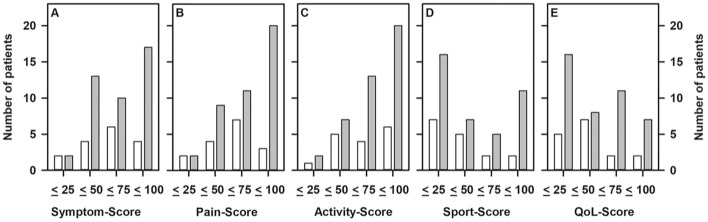
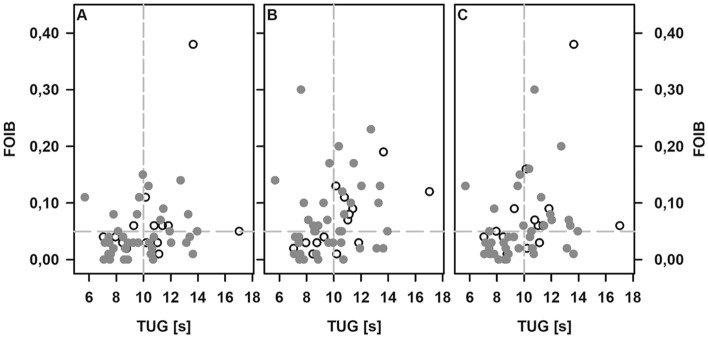
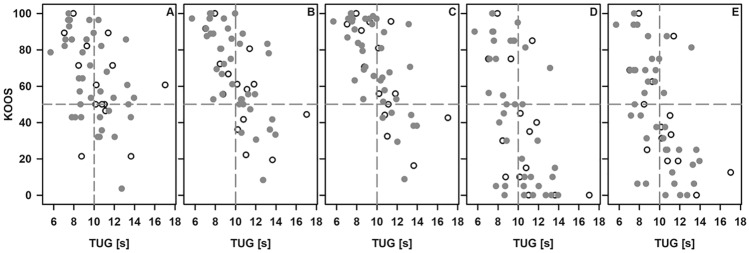
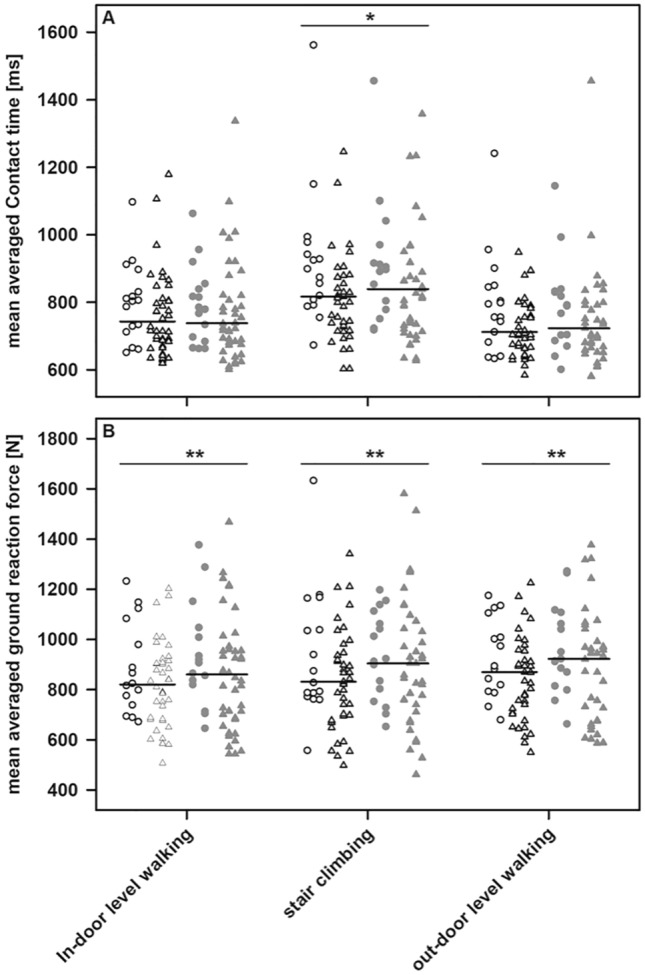
58 out of 132 eligible patients filled in the questionnaire and participated at a median follow-up of 3.05 years after injury. For the categories "pain", "mobility", and "daily life activities", all patients were rather satisfied and this was virtually not related to the time between fracture and assessment. Relevant limitations were reported for "sports and recreational activities" and "quality of life". Loading of the previously fractured leg was most evidently changed on stairs and outdoor walking. Outcome was not related to either fracture type severity or time from injury.
Outcome after an isolated TPF is neither related to fracture type, severity of the fracture nor time from injury. Simple gait analysis techniques relying on different tasks appear to yield a more sophisticated image on functional deficits after TPF than classical exam of ground-level walking and correlate quite well with validated patient-related outcome measures as the KOOS.
胫骨平台骨折(TPF)患者存在长期双足步行活动受限的风险。本研究采用患者相关结局评估和复杂的步行能力评估,对单中心回顾性研究进行了分析。
2012 年 1 月至 2016 年 12 月,接受手术治疗的成人孤立性 TPF 患者,在收到 KOOS 问卷的同时,也收到了参加广泛随访检查的邀请,以评估临床结局,包括行走能力的标准化评估(loadsol 系统)。结果与损伤严重程度或随访时间相关。骨折分别根据 AO/OTA 和 Luo 进行分类。
在符合条件的 132 名患者中,有 58 名填写了问卷并在受伤后中位数 3.05 年接受了随访。在“疼痛”、“活动能力”和“日常生活活动”这几个类别中,所有患者都相当满意,而这与骨折和评估之间的时间几乎没有关系。在“运动和娱乐活动”和“生活质量”方面,报告了相关的限制。负重能力在楼梯和户外行走方面变化最为明显。结果与骨折类型严重程度或受伤时间均无相关性。
孤立性 TPF 的预后与骨折类型、骨折严重程度或受伤时间均无相关性。依赖于不同任务的简单步态分析技术,似乎比传统的地面行走检查更能全面地反映 TPF 后的功能缺陷,与 KOOS 等经过验证的患者相关结局评估具有较好的相关性。