Department of Neurology, Neuroscience, Osaka University Graduate School of Medicine, Suita, Osaka, Japan.
Department of Clinical Research, National Hospital Organization Osaka-Minami Medical Center, Kawachinagano, Osaka, Japan.
Sci Adv. 2023 Nov 24;9(47):eadg3193. doi: 10.1126/sciadv.adg3193. Epub 2023 Nov 22.
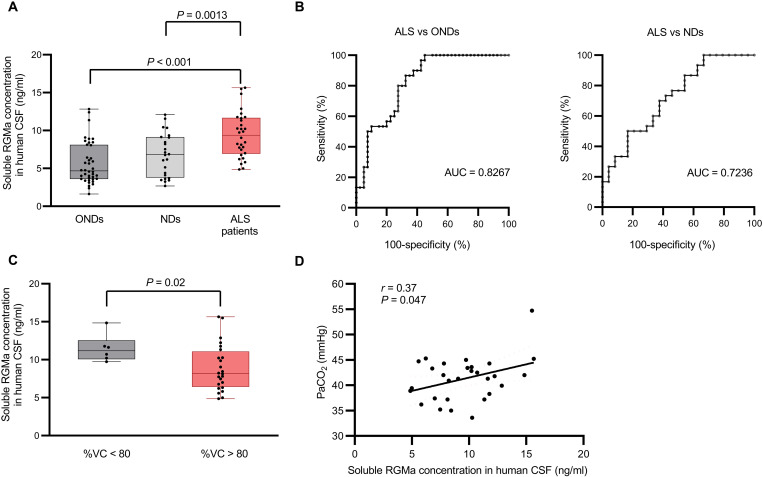
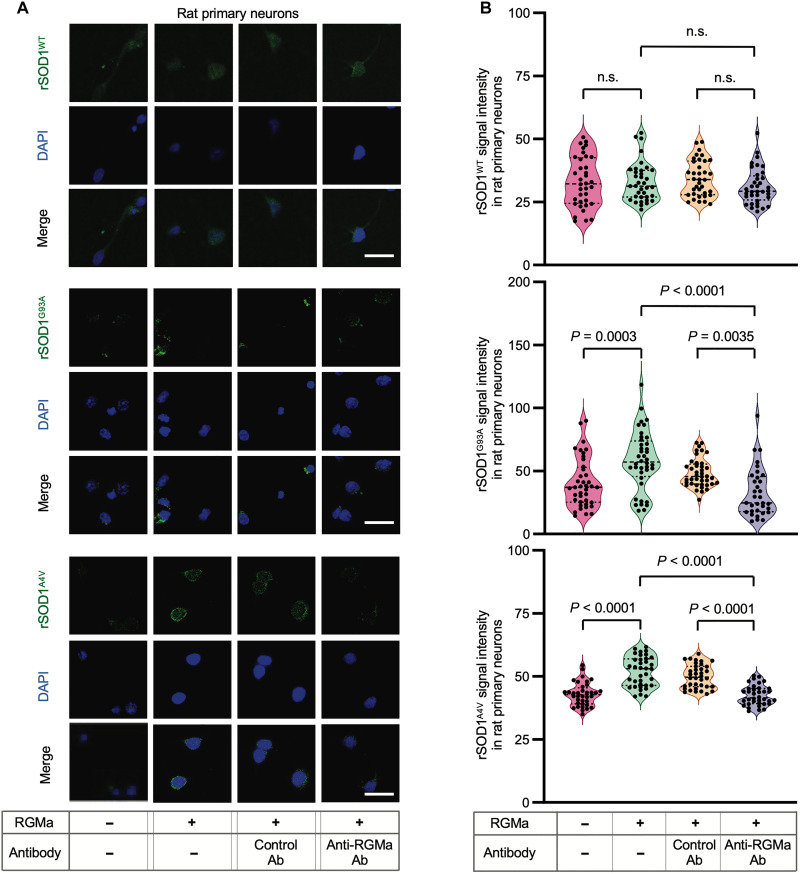
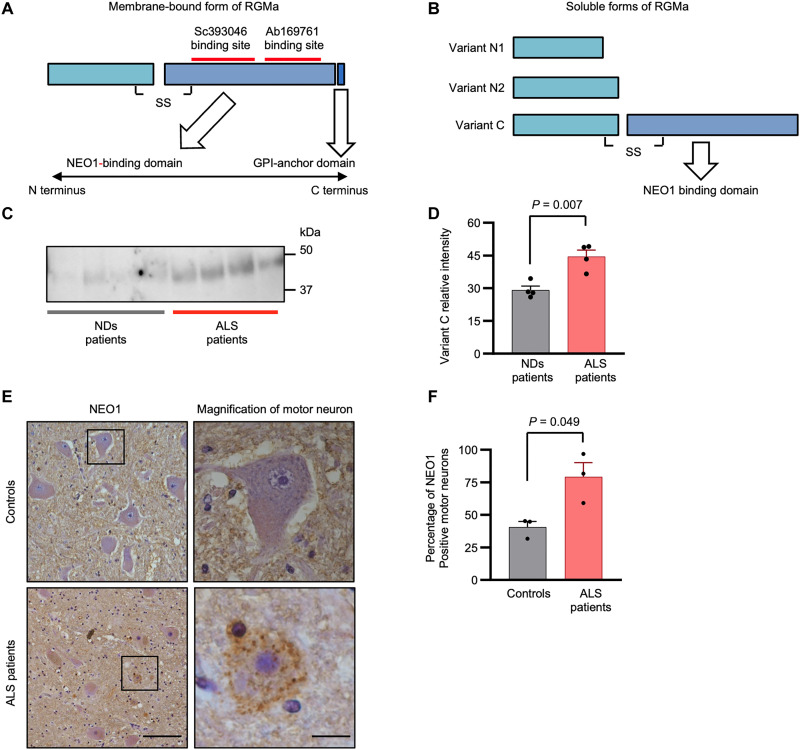
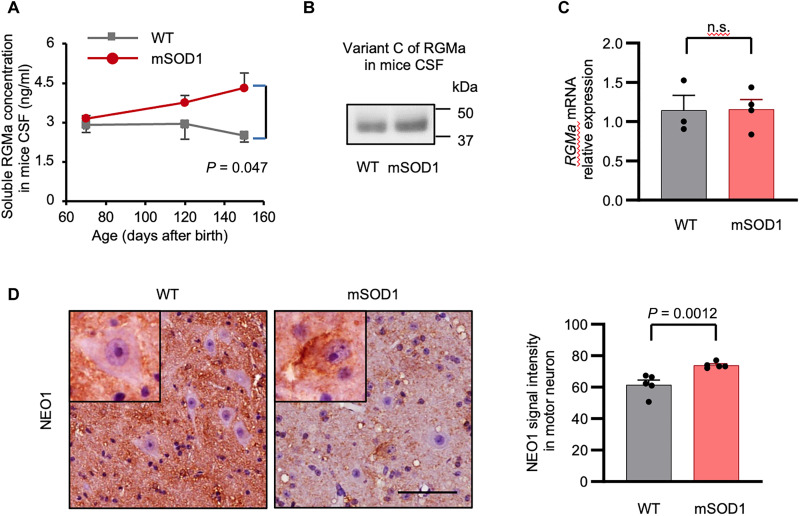
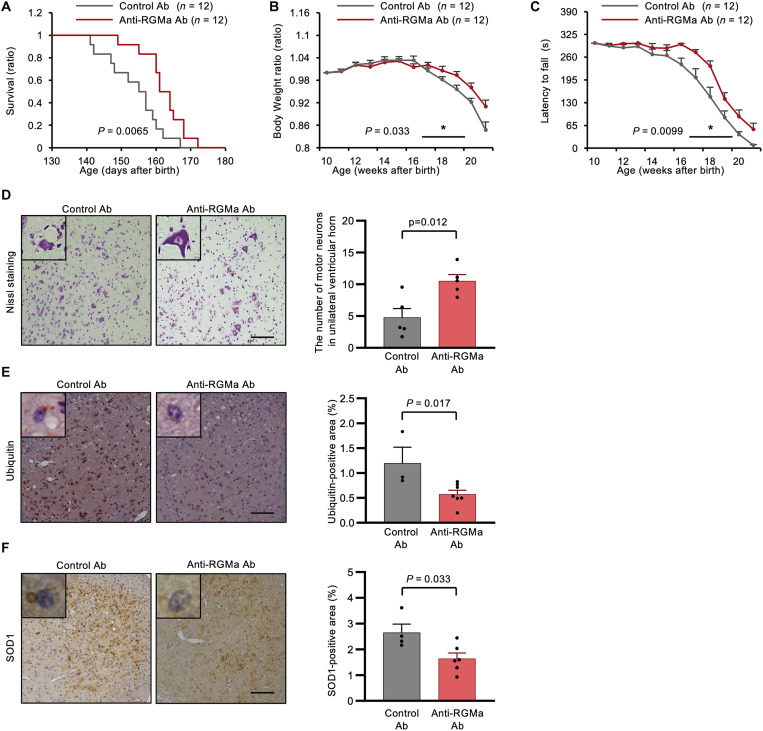
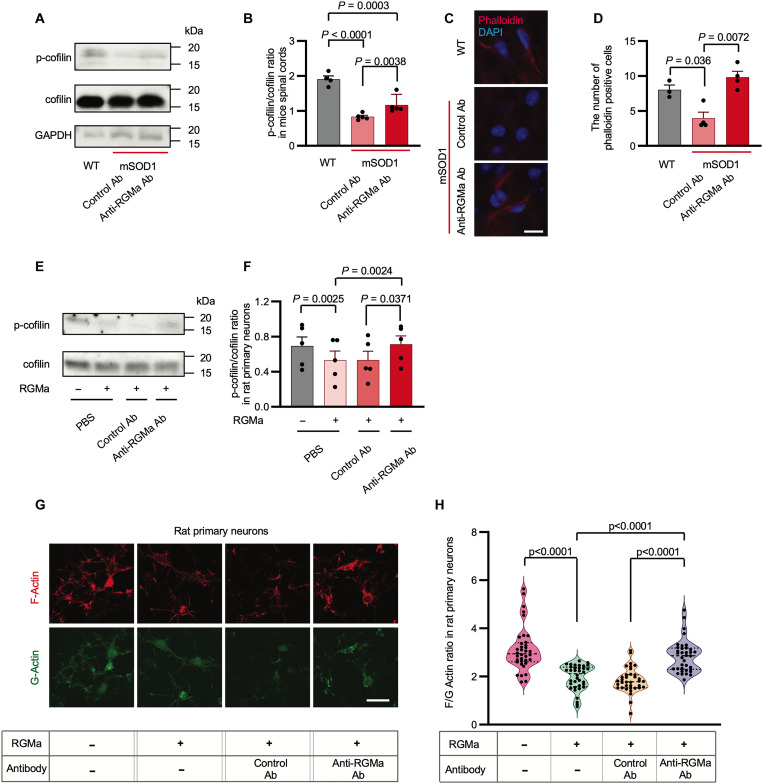
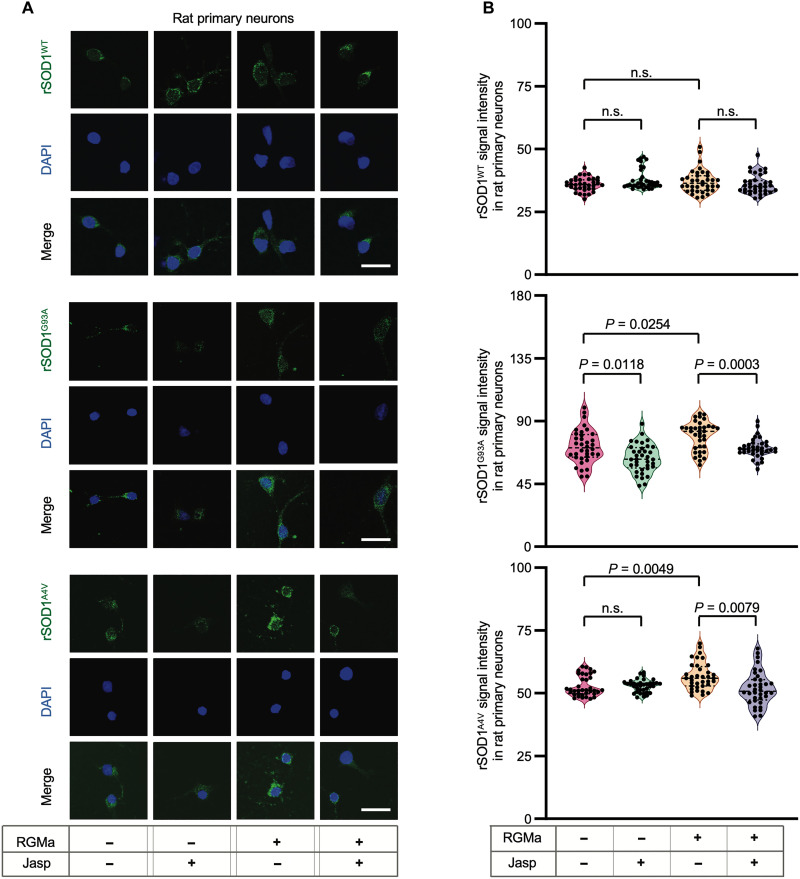
Repulsive guidance molecule A (RGMa) was originally identified as a neuronal growth cone-collapsing factor. Previous reports have demonstrated the multifunctional roles of RGMa mediated by neogenin1. However, the pathogenic involvement of RGMa in amyotrophic lateral sclerosis (ALS) remains unclear. Here, we demonstrated that RGMa concentration was elevated in the cerebrospinal fluid of both patients with ALS and transgenic mice overexpressing the mutant human superoxide dismutase1 (mSOD1 mice). Treatment with humanized anti-RGMa monoclonal antibody ameliorated the clinical symptoms in mSOD1 mice. Histochemical analysis revealed that the anti-RGMa antibody significantly decreased mutant SOD1 protein accumulation in the motor neurons of mSOD1 mice via inhibition of actin depolymerization. In vitro analysis revealed that the anti-RGMa antibody inhibited the cellular uptake of the mutant SOD1 protein, presumably by reinforcing the neuronal actin barrier. Collectively, these data suggest that RGMa leads to the collapse of the neuronal actin barrier and promotes aberrant protein deposition, resulting in exacerbation of the ALS pathology.
repulsive guidance molecule A (RGMa) 最初被鉴定为一种神经元生长锥塌陷因子。先前的报告表明,neogenin1 介导的 RGMa 具有多种功能。然而,RGMa 在肌萎缩侧索硬化症(ALS)中的致病作用尚不清楚。在这里,我们证明了 ALS 患者和过表达突变型人超氧化物歧化酶 1(mSOD1 小鼠)的转基因小鼠的脑脊液中 RGMa 浓度升高。用人类化抗 RGMa 单克隆抗体治疗可改善 mSOD1 小鼠的临床症状。组织化学分析表明,抗 RGMa 抗体通过抑制肌动蛋白解聚显著减少 mSOD1 小鼠运动神经元中突变型 SOD1 蛋白的积累。体外分析表明,抗 RGMa 抗体抑制了突变型 SOD1 蛋白的细胞摄取,推测是通过增强神经元肌动蛋白屏障。总之,这些数据表明 RGMa 导致神经元肌动蛋白屏障崩溃,并促进异常蛋白沉积,从而加剧 ALS 病理学。