Metabolomics Core Laboratory, Healthy Aging Research Center, Chang Gung University, Taoyuan City, 33302, Taiwan.
Division of Internal Medicine, Chang Gung Memorial Hospital, Taipei, 105, Taiwan.
BMC Geriatr. 2023 Nov 22;23(1):769. doi: 10.1186/s12877-023-04485-x.
Sarcopenia is defined as the disease of muscle loss and dysfunction. The prevalence of sarcopenia is strongly age-dependent. It could bring about disability, hospitalization, and mortality. The purpose of this study was to identify plasma metabolites associated with possible sarcopenia and muscle function to improve disease monitoring and understand the mechanism of muscle strength and function decline.
The participants were a group of healthy older adult who live in retirement homes in Asia (Taiwan) and can manage their daily lives without assistance. The participants were enrolled and divided into four groups: control (Con, n = 57); low physical function (LPF, n = 104); sarcopenia (S, n = 63); and severe sarcopenia (SS, n = 65) according to Asian countries that used Asian Working Group for Sarcopenia (AWGS) criteria. The plasma metabolites were used and the results were calculated as the difference between the control and other groups.
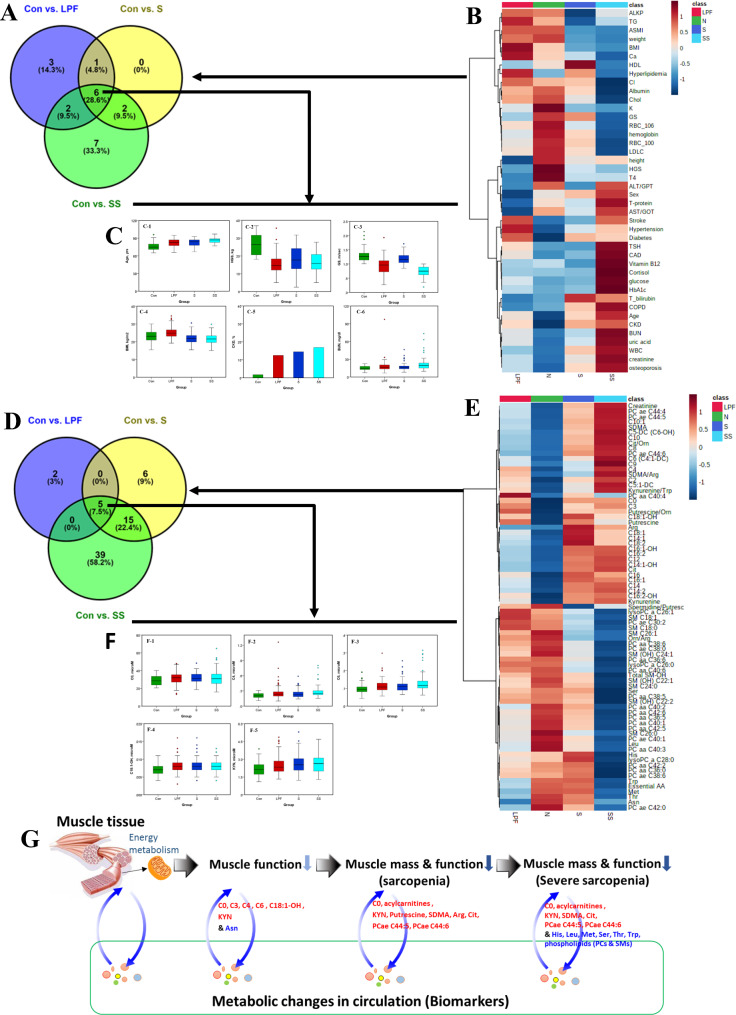
Clinical parameters, age, gender, body mass index (BMI), hand grip strength (HGS), gait speed (GS), blood urea nitrogen (BUN), hemoglobin, and hematocrit were significantly different between the control and LPF groups. Metabolite patterns of LPF, S, and SS were explored in our study. Plasma kynurenine (KYN) and acylcarnitines (C0, C4, C6, and C18:1-OH) were identified with higher concentrations in older Taiwanese adults with possible sarcopenia and S compared to the Con group. After multivariable adjustment, the data indicate that age, BMI, and butyrylcarnitine (C4) are more important factors to identify individuals with low physical function and sarcopenia.
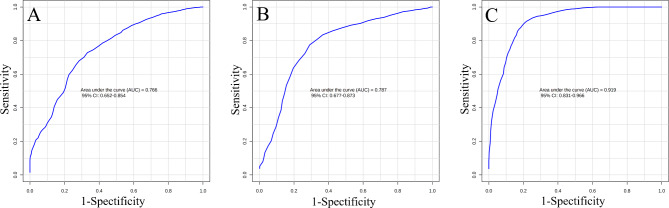
This metabolomic study raises the importance of acylcarnitines on muscle mass and function. It suggests that age, BMI, BUN, KYN, and C4/Cr can be important evaluation markers for LPF (AUC: 0.766), S (AUC: 0.787), and SS (AUC: 0.919).
肌少症定义为肌肉减少和功能障碍的疾病。肌少症的患病率与年龄密切相关。它会导致残疾、住院和死亡。本研究的目的是确定与可能的肌少症和肌肉功能相关的血浆代谢物,以改善疾病监测并了解肌肉力量和功能下降的机制。
参与者为居住在亚洲(中国台湾)养老院、能够自理日常生活的健康老年人。根据亚洲国家使用的亚洲肌少症工作组(AWGS)标准,将参与者分为对照组(Con,n=57)、低体力功能组(LPF,n=104)、肌少症组(S,n=63)和严重肌少症组(SS,n=65)。使用血浆代谢物,并将结果计算为对照组与其他组之间的差异。
临床参数、年龄、性别、体重指数(BMI)、握力(HGS)、步速(GS)、血尿素氮(BUN)、血红蛋白和血细胞比容在对照组和 LPF 组之间存在显著差异。在我们的研究中,探讨了 LPF、S 和 SS 组的代谢物模式。与对照组相比,台湾老年人群中可能存在肌少症和 S 的血浆犬尿氨酸(KYN)和酰基辅酶 A(C0、C4、C6 和 C18:1-OH)浓度较高。在多变量调整后,数据表明年龄、BMI 和丁酰基辅酶 A(C4)是识别低体力功能和肌少症个体的更重要因素。
这项代谢组学研究提高了酰基辅酶 A 对肌肉质量和功能的重要性。它表明年龄、BMI、BUN、KYN 和 C4/Cr 可以作为低体力功能(AUC:0.766)、S(AUC:0.787)和 SS(AUC:0.919)的重要评估标志物。