Mechanical Engineering and Materials Science, Washington University, St. Louis, USA.
Radiology and Imaging Sciences, Indiana University School of Medicine, Evansville, IN, USA.
Sci Rep. 2023 Nov 23;13(1):20583. doi: 10.1038/s41598-023-47900-4.
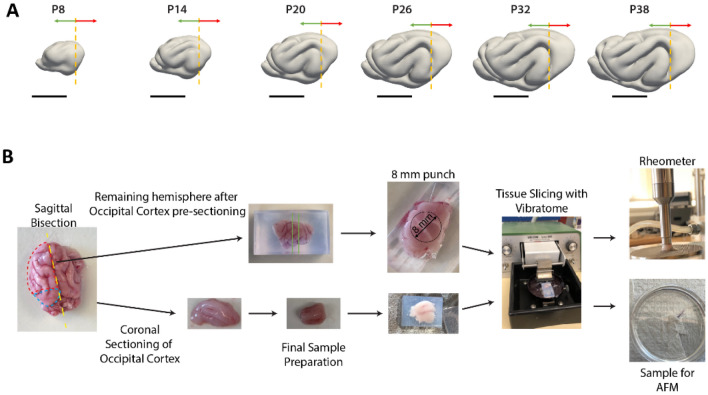
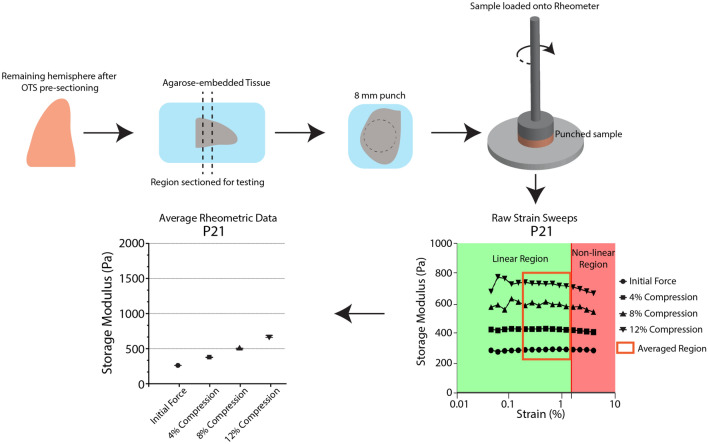
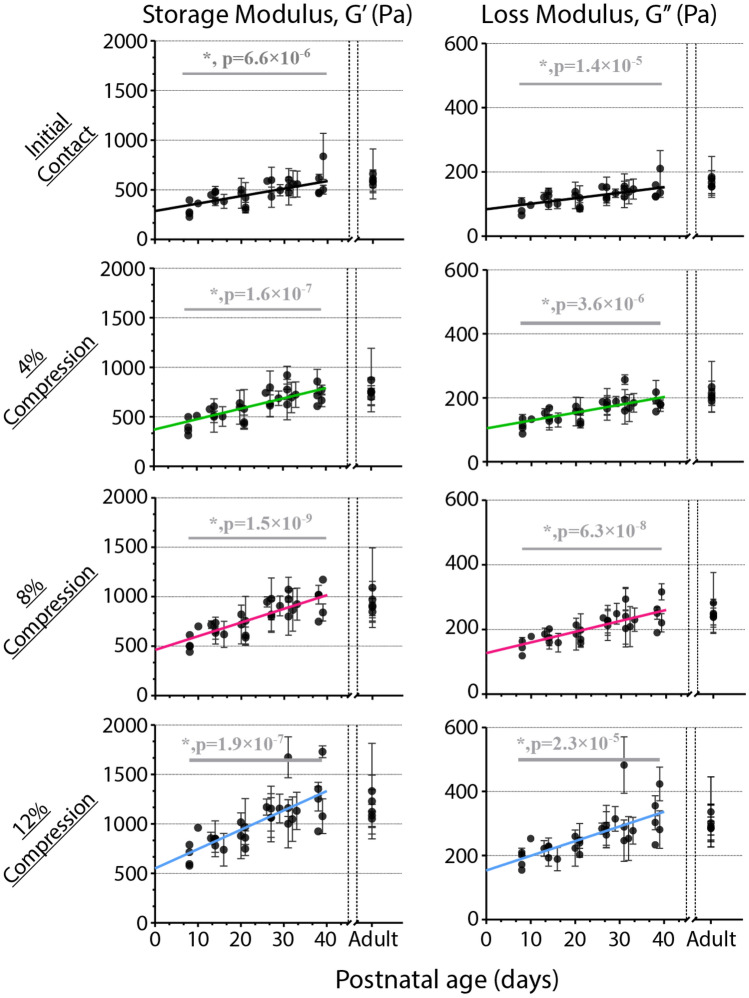
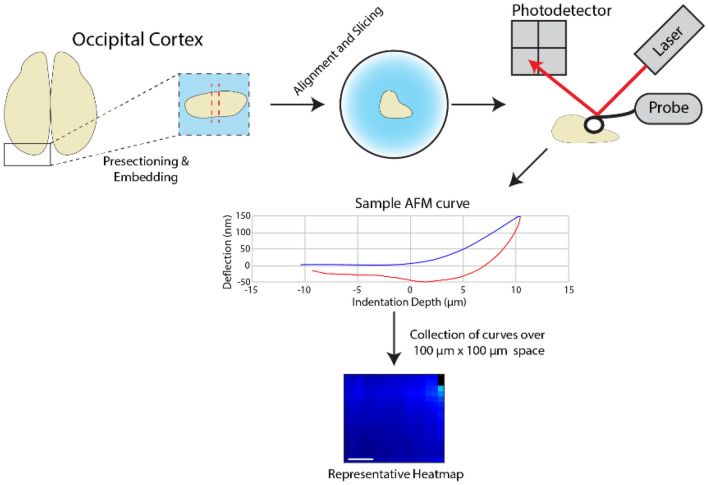
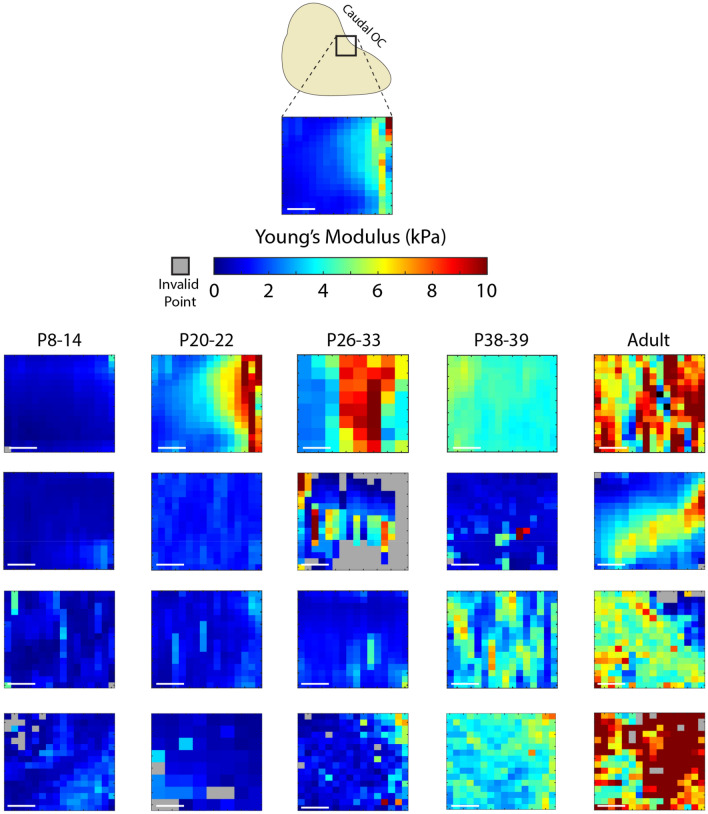
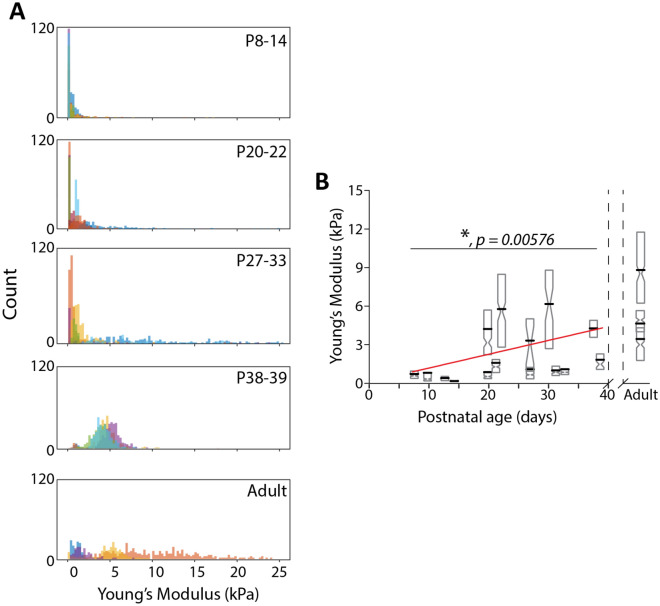
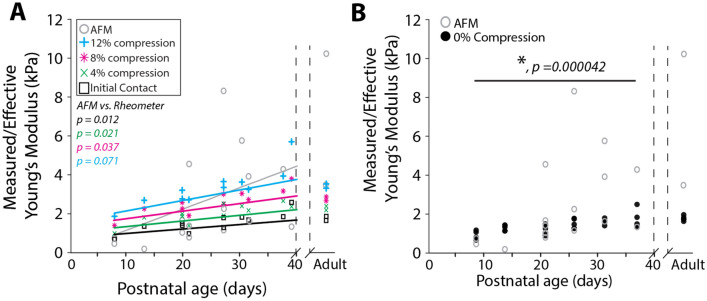
Cortical folding is an important process during brain development, and aberrant folding is linked to disorders such as autism and schizophrenia. Changes in cell numbers, size, and morphology have been proposed to exert forces that control the folding process, but these changes may also influence the mechanical properties of developing brain tissue. Currently, the changes in tissue stiffness during brain folding are unknown. Here, we report stiffness in the developing ferret brain across multiple length scales, emphasizing changes in folding cortical tissue. Using rheometry to measure the bulk properties of brain tissue, we found that overall brain stiffness increases with age over the period of cortical folding. Using atomic force microscopy to target the cortical plate, we found that the occipital cortex increases in stiffness as well as stiffness heterogeneity over the course of development and folding. These findings can help to elucidate the mechanics of the cortical folding process by clarifying the concurrent evolution of tissue properties.
皮质折叠是大脑发育过程中的一个重要过程,异常折叠与自闭症和精神分裂症等疾病有关。细胞数量、大小和形态的变化被认为会产生控制折叠过程的力,但这些变化也可能影响发育中脑组织的机械性能。目前,尚不清楚脑折叠过程中组织硬度的变化。在这里,我们报告了在多个长度尺度上发育中的雪貂大脑的硬度,重点是折叠皮质组织的变化。我们使用流变仪测量脑组织的整体特性,发现皮质折叠期间大脑整体硬度随年龄增长而增加。我们使用原子力显微镜针对皮质板进行测量,发现枕叶皮质在发育和折叠过程中硬度以及硬度异质性都增加了。这些发现可以通过阐明组织特性的协同演变来帮助阐明皮质折叠过程的力学原理。