Pasteurien College, Suzhou Medical College, Soochow University, Suzhou, 215123, China.
Key Laboratory of Alkene-Carbon Fibers-Based Technology & Application for Detection of Major Infectious Diseases, Soochow University, Suzhou, 215123, China.
Nat Commun. 2023 Nov 24;14(1):7706. doi: 10.1038/s41467-023-43528-0.
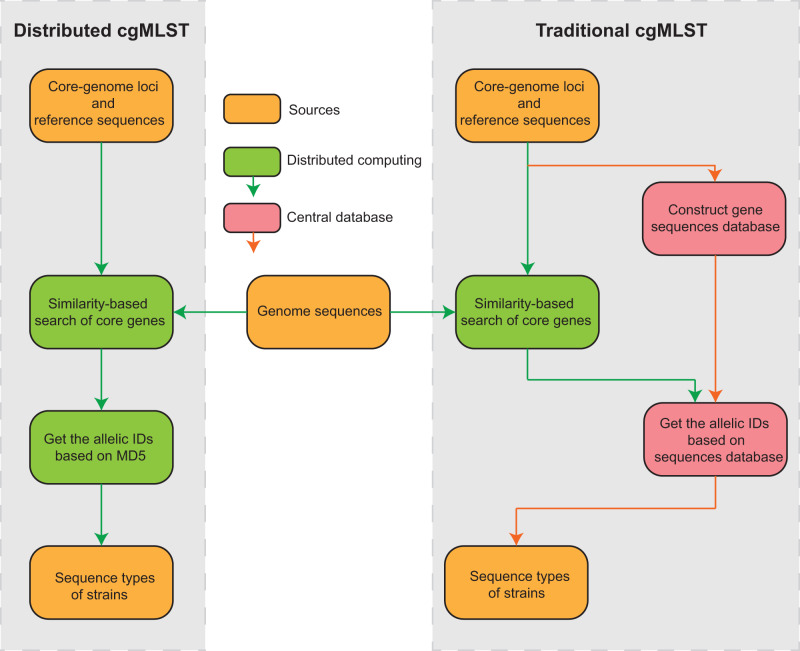
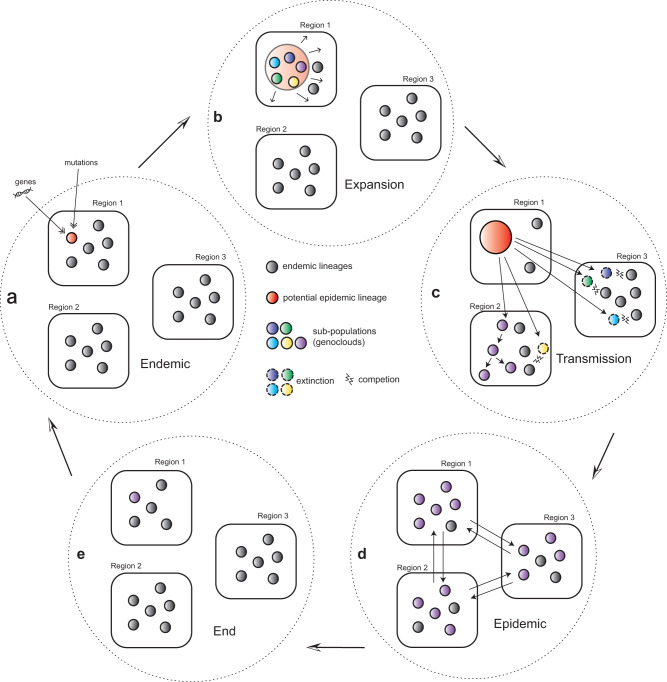
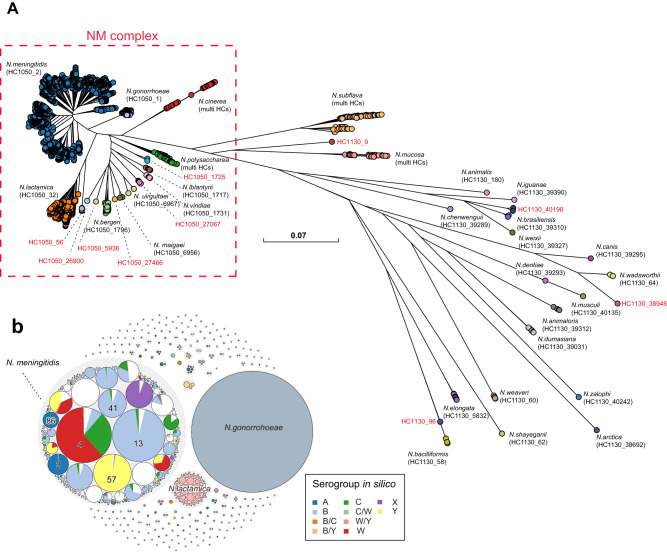
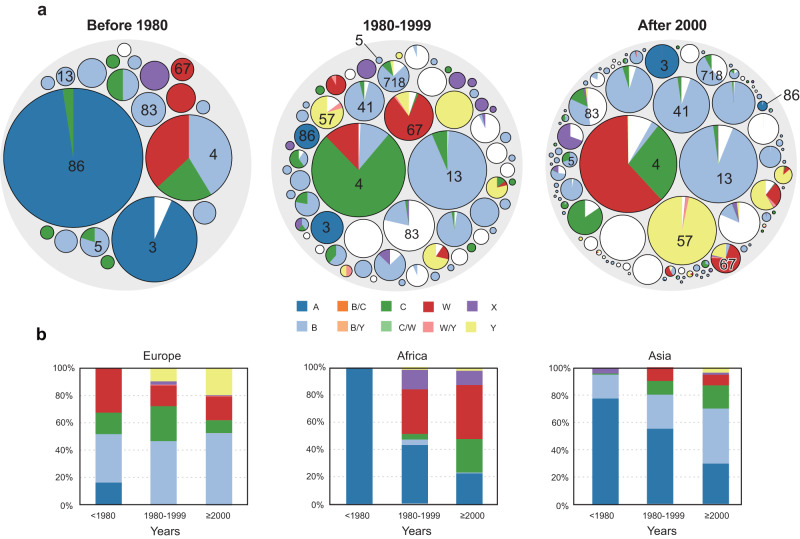
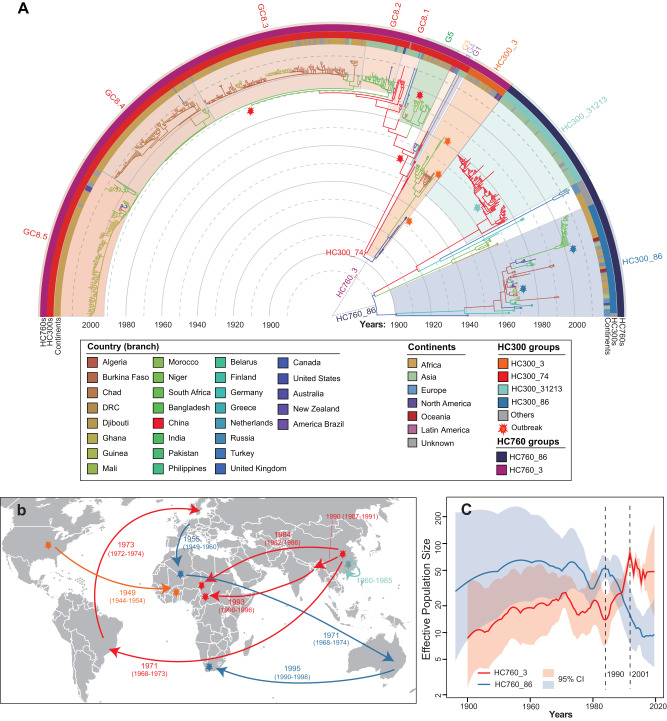
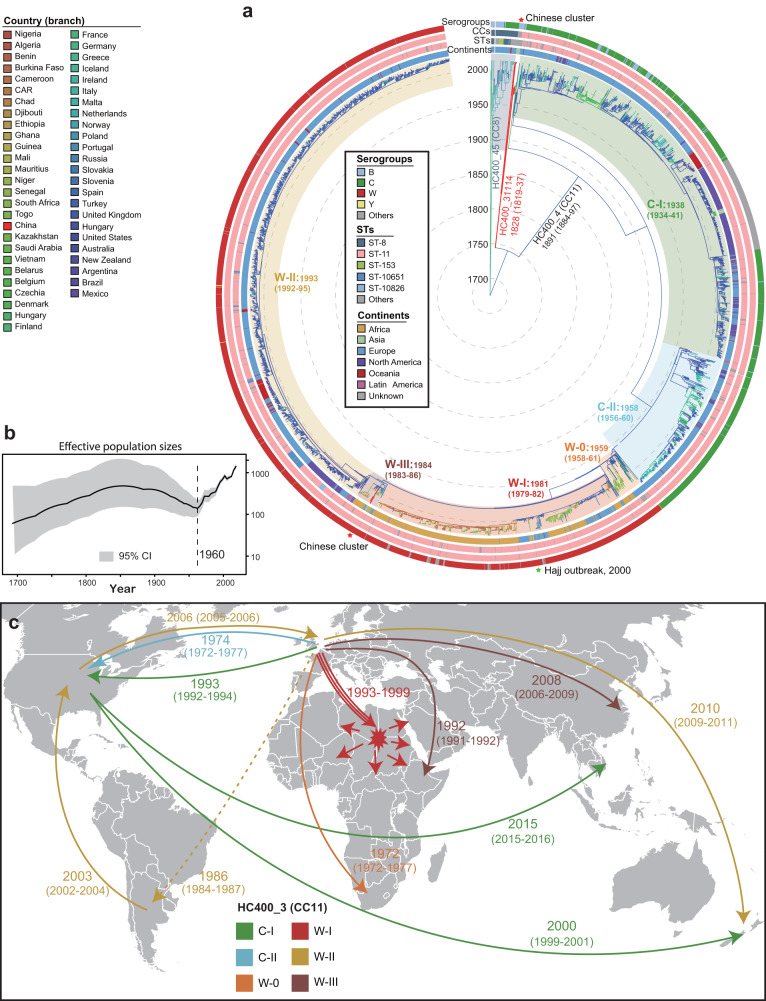
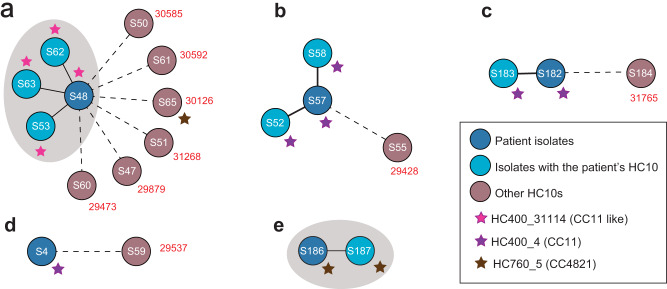
Core genome multilocus sequence typing (cgMLST) is commonly used to classify bacterial strains into different types, for taxonomical and epidemiological applications. However, cgMLST schemes require central databases for the nomenclature of new alleles and sequence types, which must be synchronized worldwide and involve increasingly intensive calculation and storage demands. Here, we describe a distributed cgMLST (dcgMLST) scheme that does not require a central database of allelic sequences and apply it to study evolutionary patterns of epidemic and endemic strains of the genus Neisseria. We classify 69,994 worldwide Neisseria strains into multi-level clusters that assign species, lineages, and local disease outbreaks. We divide Neisseria meningitidis into 168 endemic lineages and three epidemic lineages responsible for at least 9 epidemics in the past century. According to our analyses, the epidemic and endemic lineages experienced very different population dynamics in the past 100 years. Epidemic lineages repetitively emerged from endemic lineages, disseminated worldwide, and apparently disappeared rapidly afterward. We propose a stepwise model for the evolutionary trajectory of epidemic lineages in Neisseria, and expect that the development of similar dcgMLST schemes will facilitate epidemiological studies of other bacterial pathogens.
核心基因组多位点序列分型(cgMLST)常用于将细菌菌株分类为不同类型,用于分类学和流行病学应用。然而,cgMLST 方案需要中央数据库来命名新的等位基因和序列类型,这必须在全球范围内同步,并涉及日益密集的计算和存储需求。在这里,我们描述了一种分布式 cgMLST(dcgMLST)方案,该方案不需要等位基因序列的中央数据库,并将其应用于研究流行性和地方性奈瑟菌属菌株的进化模式。我们将 69994 株全球奈瑟氏菌菌株分类为多层次聚类,这些聚类将物种、谱系和地方性疾病爆发进行分类。我们将脑膜炎奈瑟菌分为 168 个地方性谱系和 3 个流行谱系,这些谱系在过去一个世纪中至少引发了 9 次流行。根据我们的分析,流行谱系和地方性谱系在过去 100 年中经历了非常不同的种群动态。流行谱系从地方性谱系中反复出现,在全球范围内传播,并迅速消失。我们提出了奈瑟氏菌流行谱系进化轨迹的分步模型,并期望类似的 dcgMLST 方案的发展将促进其他细菌病原体的流行病学研究。