
塑料的另一面:用于脑部给药系统的生物基纳米颗粒
The Other Side of Plastics: Bioplastic-Based Nanoparticles for Drug Delivery Systems in the Brain.
作者信息
Lamparelli Erwin Pavel, Marino Marianna, Szychlinska Marta Anna, Della Rocca Natalia, Ciardulli Maria Camilla, Scala Pasqualina, D'Auria Raffaella, Testa Antonino, Viggiano Andrea, Cappello Francesco, Meccariello Rosaria, Della Porta Giovanna, Santoro Antonietta
机构信息
Department of Medicine, Surgery and Dentistry, University of Salerno, 84081 Baronissi, Italy.
Faculty of Medicine and Surgery, Kore University of Enna, Cittadella Universitaria, 94100 Enna, Italy.
出版信息
Pharmaceutics. 2023 Oct 28;15(11):2549. doi: 10.3390/pharmaceutics15112549.
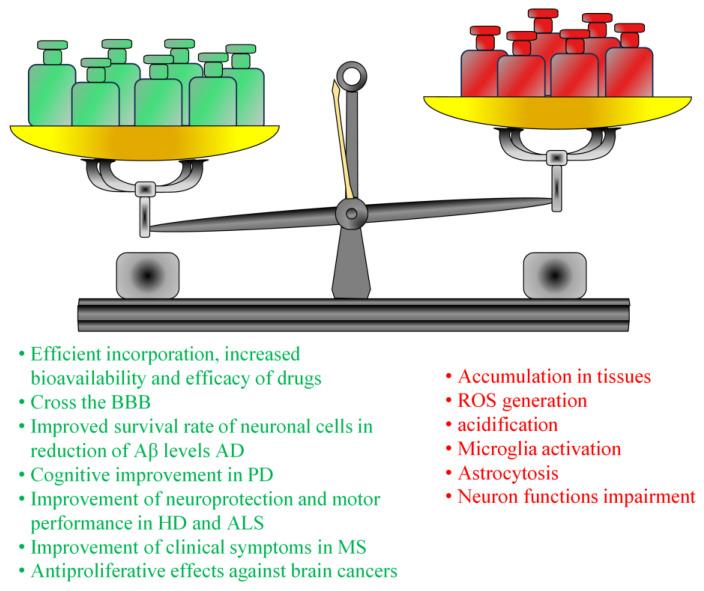
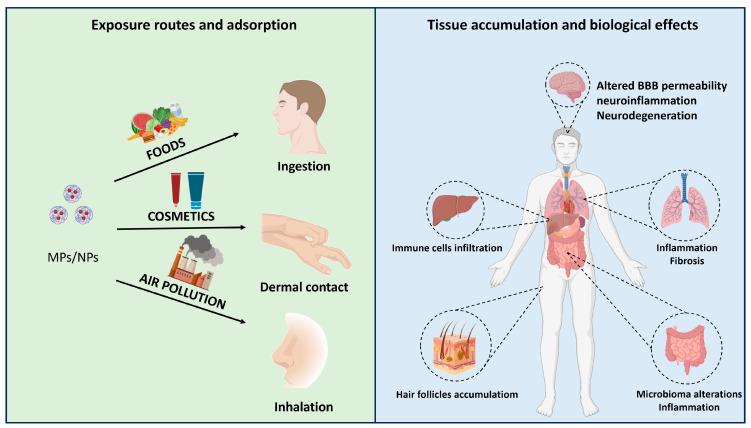
Plastics have changed human lives, finding a broad range of applications from packaging to medical devices. However, plastics can degrade into microscopic forms known as micro- and nanoplastics, which have raised concerns about their accumulation in the environment but mainly about the potential risk to human health. Recently, biodegradable plastic materials have been introduced on the market. These polymers are biodegradable but also bioresorbable and, indeed, are fundamental tools for drug formulations, thanks to their transient ability to pass through biological barriers and concentrate in specific tissues. However, this "other side" of bioplastics raises concerns about their toxic potential, in the form of micro- and nanoparticles, due to easier and faster tissue accumulation, with unknown long-term biological effects. This review aims to provide an update on bioplastic-based particles by analyzing the advantages and drawbacks of their potential use as components of innovative formulations for brain diseases. However, a critical analysis of the literature indicates the need for further studies to assess the safety of bioplastic micro- and nanoparticles despite they appear as promising tools for several nanomedicine applications.
塑料改变了人类生活,其应用范围广泛,涵盖从包装到医疗设备等诸多领域。然而,塑料会降解成被称为微塑料和纳米塑料的微观形态,这引发了人们对它们在环境中积累的担忧,尤其是对人类健康的潜在风险。最近,可生物降解的塑料材料已投放市场。这些聚合物不仅可生物降解,还具有生物可吸收性,实际上,由于它们能够短暂地穿过生物屏障并在特定组织中富集,因此是药物制剂的重要工具。然而,生物塑料的这一“另一面”引发了人们对其潜在毒性的担忧,即它们可能以微塑料和纳米颗粒的形式存在,由于更容易且更快地在组织中积累,会产生未知的长期生物学影响。本综述旨在通过分析基于生物塑料的颗粒作为脑部疾病创新制剂成分的潜在用途的优缺点,来提供相关最新信息。然而,对文献的批判性分析表明,尽管基于生物塑料的微塑料和纳米颗粒在几种纳米医学应用中似乎是很有前景的工具,但仍需要进一步研究来评估它们的安全性。


 Zotero 插件