Ko Jihoon, Song Jiyoung, Choi Nakwon, Kim Hong Nam
Department of BioNano Technology, Gachon University, Seongnam-si, Gyeonggi-do, 13120, Republic of Korea.
Brain Science Institute, Korea Institute of Science and Technology (KIST), Seoul, 02792, Republic of Korea.
Adv Healthc Mater. 2024 Mar;13(7):e2303161. doi: 10.1002/adhm.202303161. Epub 2023 Dec 10.
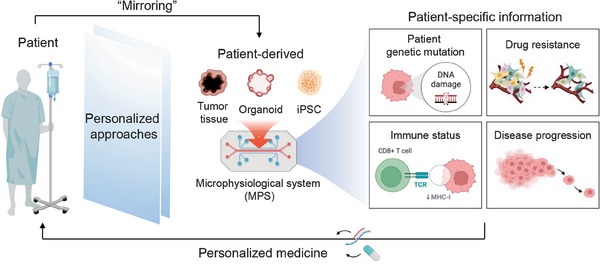
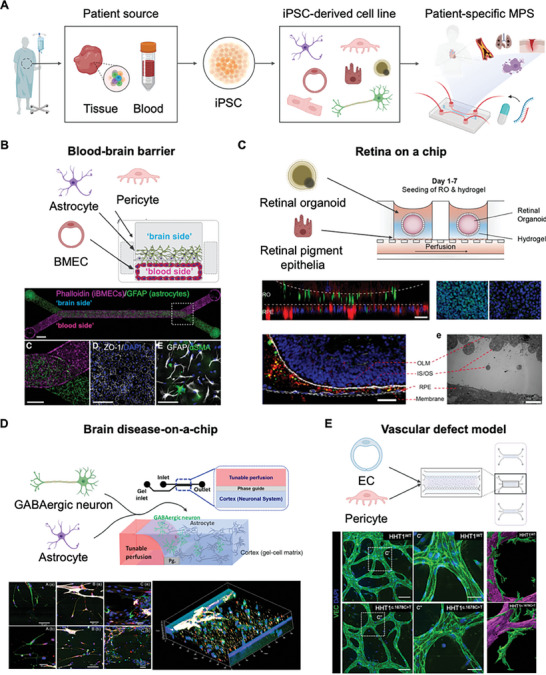
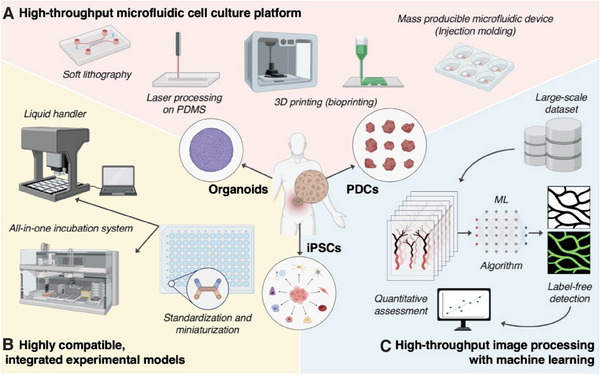
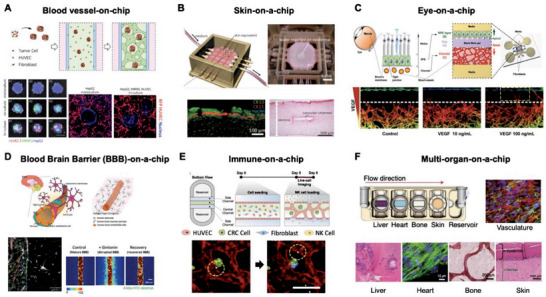
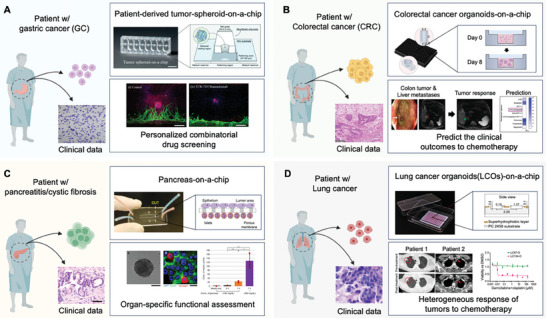
Patient-derived microphysiological systems (P-MPS) have emerged as powerful tools in precision medicine that provide valuable insight into individual patient characteristics. This review discusses the development of P-MPS as an integration of patient-derived samples, including patient-derived cells, organoids, and induced pluripotent stem cells, into well-defined MPSs. Emphasizing the necessity of P-MPS development, its significance as a nonclinical assessment approach that bridges the gap between traditional in vitro models and clinical outcomes is highlighted. Additionally, guidance is provided for engineering approaches to develop microfluidic devices and high-content analysis for P-MPSs, enabling high biological relevance and high-throughput experimentation. The practical implications of the P-MPS are further examined by exploring the clinically relevant outcomes obtained from various types of patient-derived samples. The construction and analysis of these diverse samples within the P-MPS have resulted in physiologically relevant data, paving the way for the development of personalized treatment strategies. This study describes the significance of the P-MPS in precision medicine, as well as its unique capacity to offer valuable insights into individual patient characteristics.
患者来源的微生理系统(P-MPS)已成为精准医学中的强大工具,能够为个体患者特征提供有价值的见解。本综述讨论了P-MPS的发展,即将包括患者来源的细胞、类器官和诱导多能干细胞在内的患者来源样本整合到定义明确的微生理系统中。强调了P-MPS发展的必要性,突出了其作为一种非临床评估方法的重要性,这种方法弥合了传统体外模型与临床结果之间的差距。此外,还为开发用于P-MPS的微流控装置和高内涵分析的工程方法提供了指导,从而实现高生物学相关性和高通量实验。通过探索从各种类型的患者来源样本中获得的临床相关结果,进一步研究了P-MPS的实际意义。在P-MPS中构建和分析这些不同的样本已产生了生理相关数据,为个性化治疗策略的发展铺平了道路。本研究描述了P-MPS在精准医学中的重要性,以及其为个体患者特征提供有价值见解的独特能力。