Sorbonne Université, CNRS, Laboratoire de Biodiversité et Biotechnologies Microbiennes, LBBM, Observatoire Océanologique, 66650, Banyuls-sur-mer, France.
Pierre Fabre Dermo-Cosmétique et Personal Care, Centre de Recherche & Développement Pierre Fabre, 31000, Toulouse, France.
Environ Sci Pollut Res Int. 2023 Dec;30(60):125931-125946. doi: 10.1007/s11356-023-31063-w. Epub 2023 Nov 27.
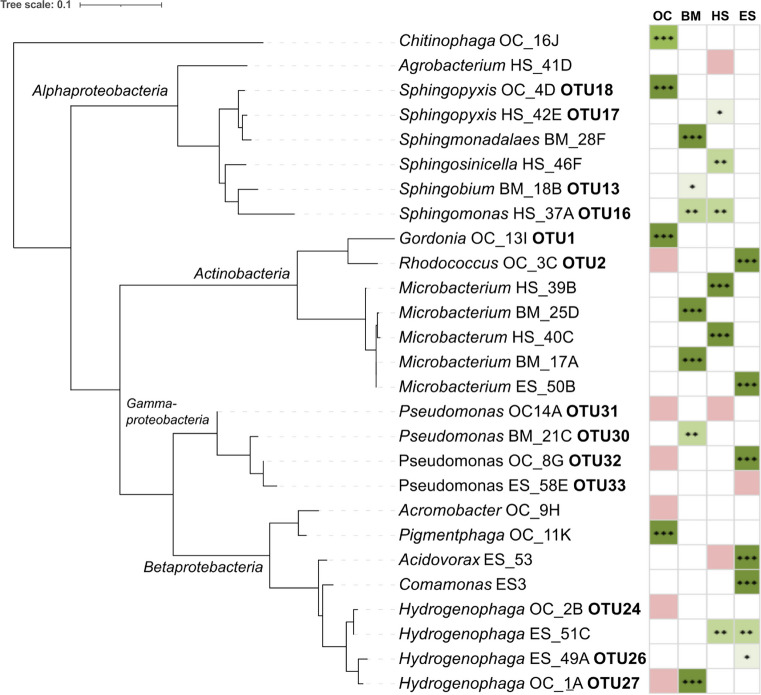
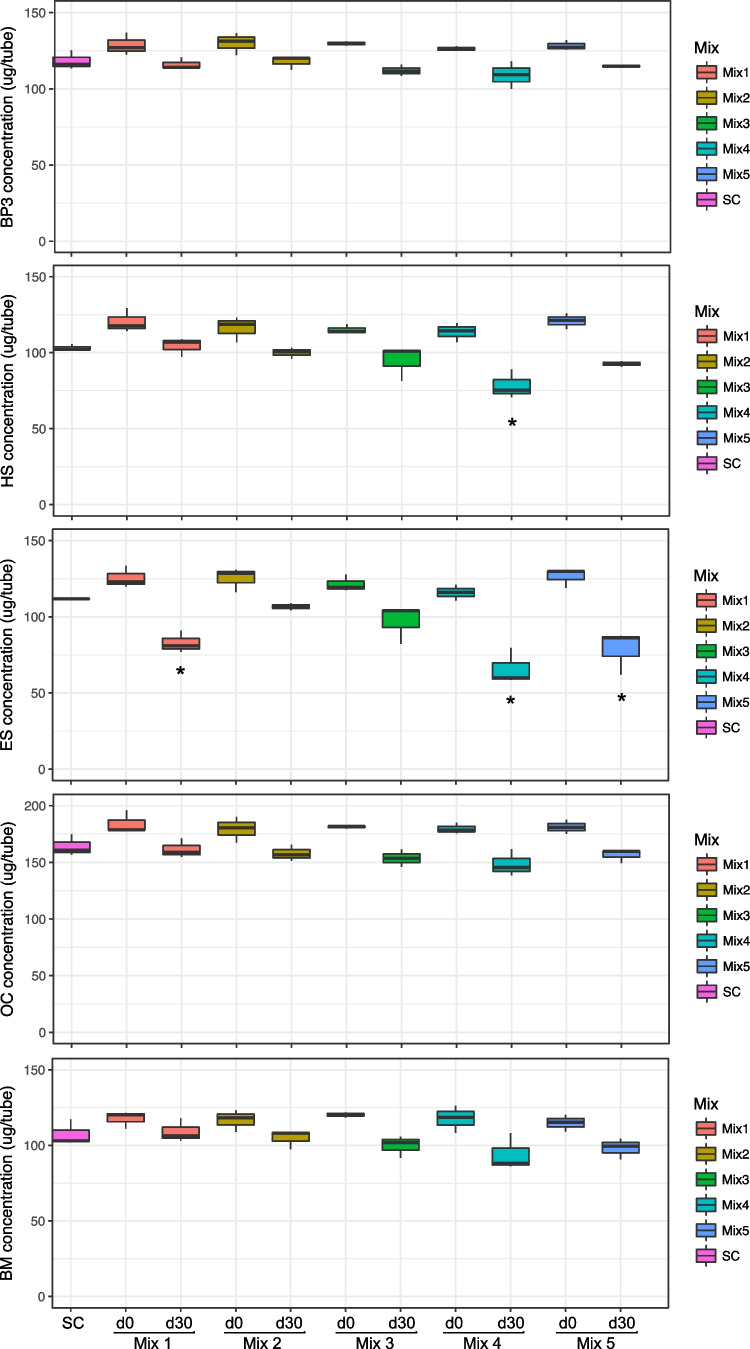
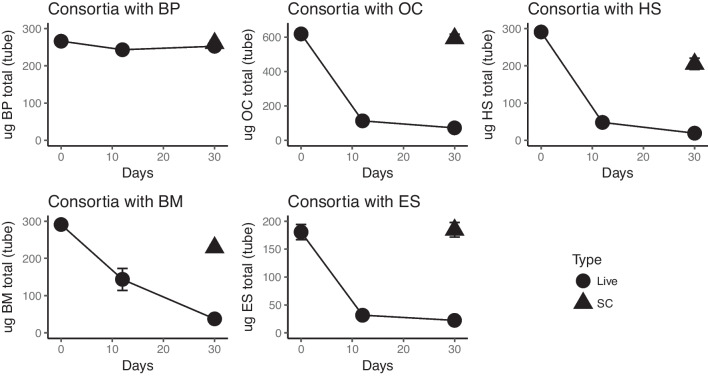
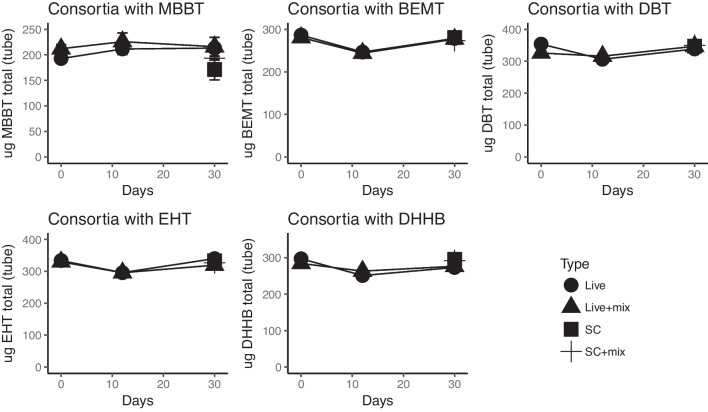
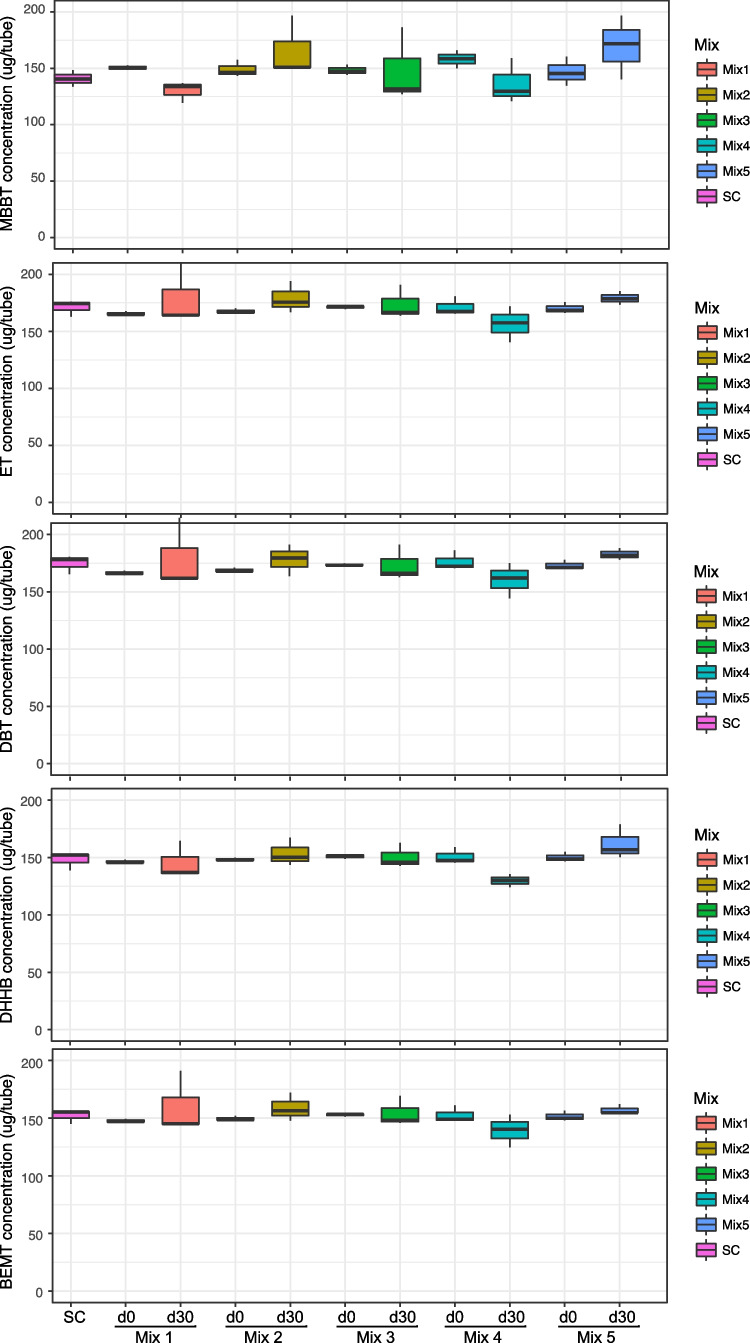
Organic UV filters are important ingredients in many personal care products, including sunscreens. Evaluating the biodegradability of organic UV filters is key to estimate their recalcitrance and environmental fate and thus central to their overall environmental risk assessment. In order to further understand the degradation process, the aim was to investigate whether specific consortia could degrade certain UV filters. Several bacterial strains were isolated from enrichment cultures actively degrading octocrylene (OC), butyl methoxydibenzoylmethane (BM), homosalate (HS), and 2-ethylhexyl salicylate (ES) and were utilized to construct an in-house consortium. This synthetic consortium contained 27 bacterial strains and degraded OC, BM, HS, and ES 60-80% after 12 days, but not benzophenone-3 (BP3), methoxyphenyl triazine (BEMT), methylene bis-benzotriazolyl tetramethylbutylphenol (MBBT), diethylhexyl butamido triazone (DBT), ethylhexyl triazone (EHT), or diethylamino hydroxybenzoyl hexyl benzoate (DHHB). Furthermore, several commercial microbial mixtures from Greencell were tested to assess their degradation activity toward the same organic UV filters. ES and HS were degraded by some of the commercial consortia, but to a lesser extent. The rest of the tested UV filters were not degraded by any of the commercial bacterial mixes. These results confirm that some organic UV filters are recalcitrant to biodegradation, while others are degraded by a specific set of microorganisms.
有机紫外线吸收剂是许多个人护理产品(包括防晒霜)的重要成分。评估有机紫外线吸收剂的生物降解性对于估计其抗降解性和环境归宿至关重要,也是其整体环境风险评估的核心。为了进一步了解降解过程,本研究旨在研究特定的微生物群落是否可以降解某些紫外线吸收剂。从主动降解辛基二苯甲酰甲烷(OC)、丁基甲氧基二苯甲酰基甲烷(BM)、水杨酸异辛酯(HS)和 2-乙基己基水杨酸酯(ES)的富集培养物中分离出几种细菌菌株,并利用这些菌株构建了一个内部的微生物群落。该合成微生物群落包含 27 种细菌菌株,在 12 天后可将 OC、BM、HS 和 ES 降解 60-80%,但不能降解二苯酮-3(BP3)、甲氧基二苯甲酮(BEMT)、亚甲基双-苯并三唑基四甲基丁基酚(MBBT)、二乙基己基丁酰胺基三嗪酮(DBT)、乙基己基三嗪酮(EHT)或二乙基氨基羟基苯甲酸己酯(DHHB)。此外,还测试了来自 Greencell 的几种商业微生物混合物,以评估它们对相同有机紫外线吸收剂的降解活性。一些商业混合物可以降解 ES 和 HS,但程度较小。其余测试的紫外线吸收剂则没有被任何商业细菌混合物降解。这些结果证实,一些有机紫外线吸收剂难以生物降解,而其他一些则被特定的微生物群降解。