Tsusaka Takeshi, Najar Mohd Altaf, Schwarz Benjamin, Bohrnsen Eric, Oses-Prieto Juan A, Lee Christina, Burlingame Alma L, Bosio Catharine M, Burslem George M, Goldberg Emily L
Department of Physiology, University of California, San Francisco; San Francisco, CA, 94158, USA.
Department of Biochemistry and Biophysics, Perelman School of Medicine, University of Pennsylvania; Philadelphia, PA, 19104, USA.
bioRxiv. 2023 Nov 17:2023.11.17.567549. doi: 10.1101/2023.11.17.567549.
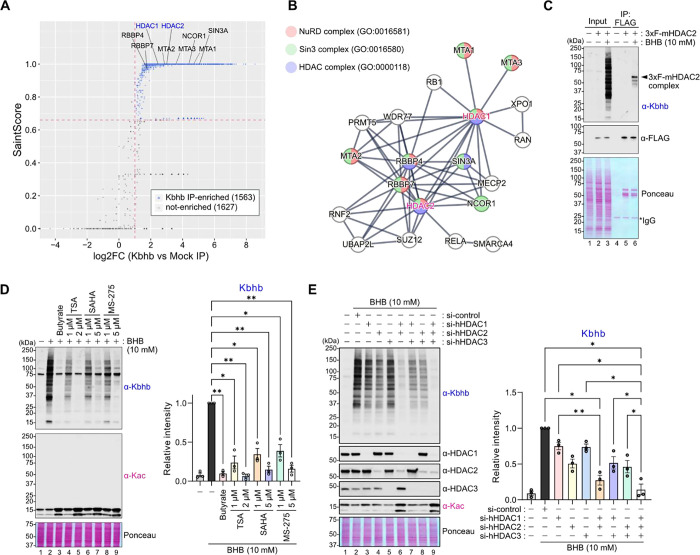
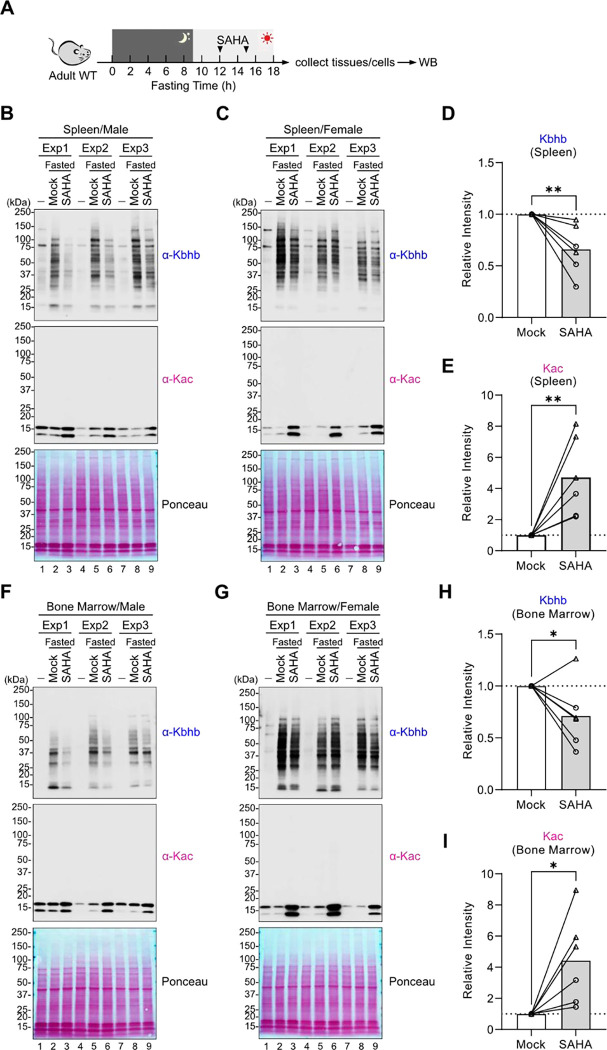
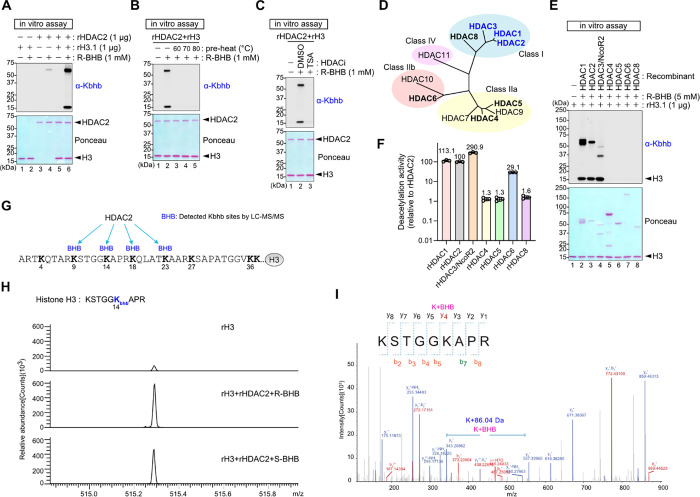
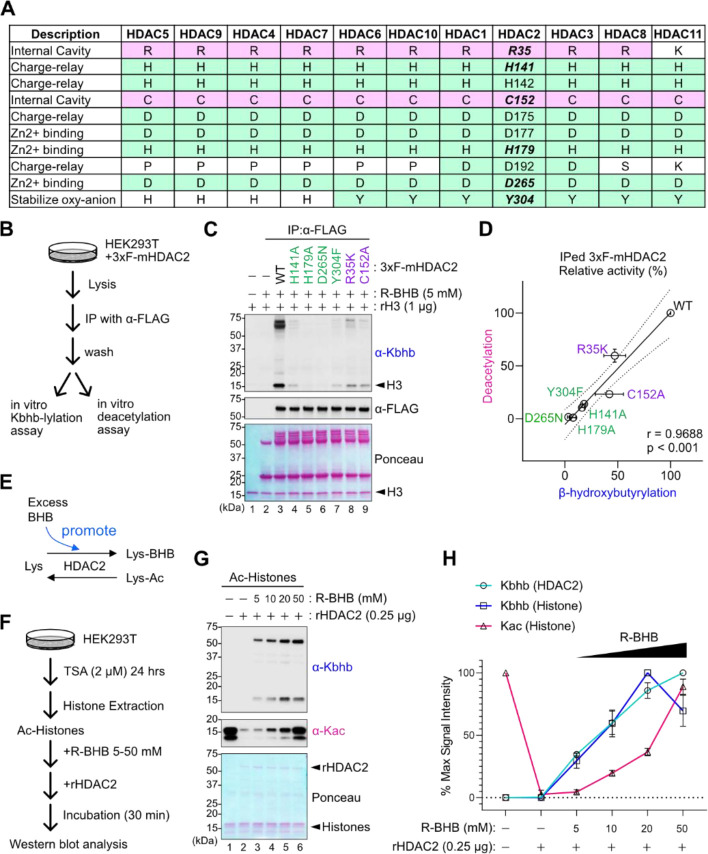
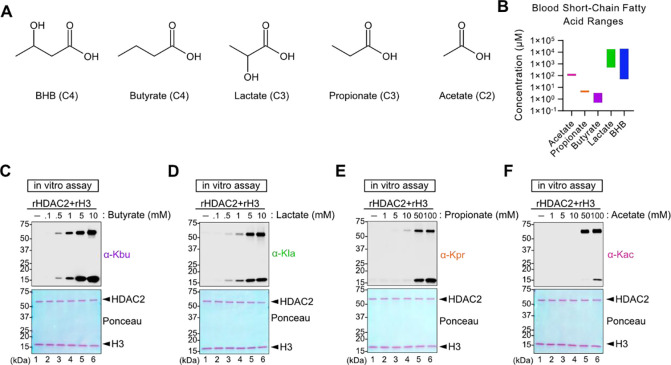
Starvation and low carbohydrate diets lead to the accumulation of the ketone body, β-hydroxybutyrate (BHB), whose blood concentrations increase more than 10-fold into the millimolar range. In addition to providing a carbon source, BHB accumulation triggers lysine β-hydroxybutyrylation (Kbhb) of proteins via unknown mechanisms. As with other lysine acylation events, Kbhb marks can be removed by histone deacetylases (HDACs). Here, we report that class I HDACs unexpectedly catalyze protein lysine modification with β-hydroxybutyrate (BHB). Mutational analyses of the HDAC2 active site reveal a shared reliance on key amino acids for classical deacetylation and non-canonical HDAC-catalyzed β-hydroxybutyrylation. Also consistent with reverse HDAC activity, Kbhb formation is driven by mass action and substrate availability. This reverse HDAC activity is not limited to BHB but also extends to multiple short-chain fatty acids. The reversible activity of class I HDACs described here represents a novel mechanism of PTM deposition relevant to metabolically-sensitive proteome modifications.
饥饿和低碳水化合物饮食会导致酮体β-羟基丁酸(BHB)的积累,其血液浓度会增加10倍以上,进入毫摩尔范围。除了提供碳源外,BHB的积累还会通过未知机制触发蛋白质的赖氨酸β-羟基丁酰化(Kbhb)。与其他赖氨酸酰化事件一样,Kbhb标记可以被组蛋白脱乙酰酶(HDAC)去除。在此,我们报告I类HDAC意外地催化蛋白质赖氨酸与β-羟基丁酸(BHB)的修饰。HDAC2活性位点的突变分析揭示了经典脱乙酰化和非经典HDAC催化的β-羟基丁酰化对关键氨基酸的共同依赖。同样与HDAC的反向活性一致,Kbhb的形成受质量作用和底物可用性驱动。这种反向HDAC活性不仅限于BHB,还扩展到多种短链脂肪酸。本文所述的I类HDAC的可逆活性代表了一种与代谢敏感的蛋白质组修饰相关的新型翻译后修饰沉积机制。