Circulation. 2024 Jan 9;149(2):e168-e200. doi: 10.1161/CIR.0000000000001163. Epub 2023 Nov 28.
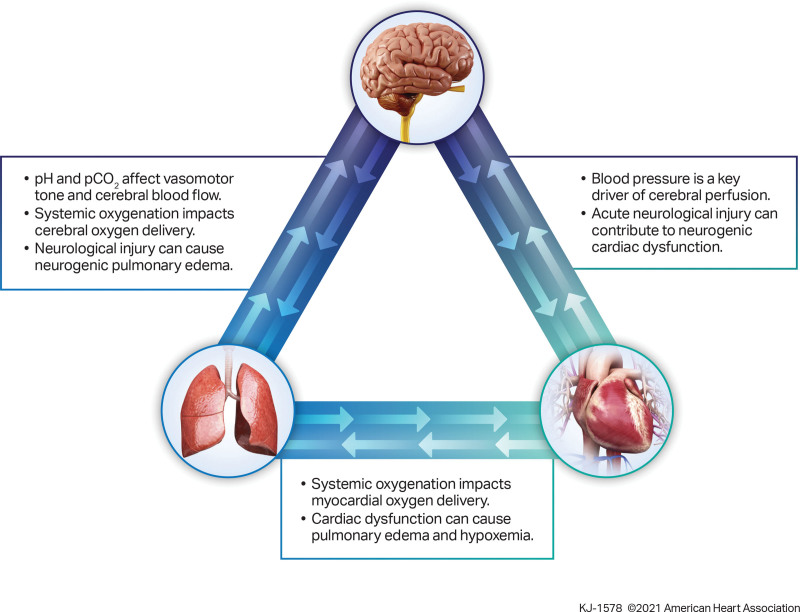
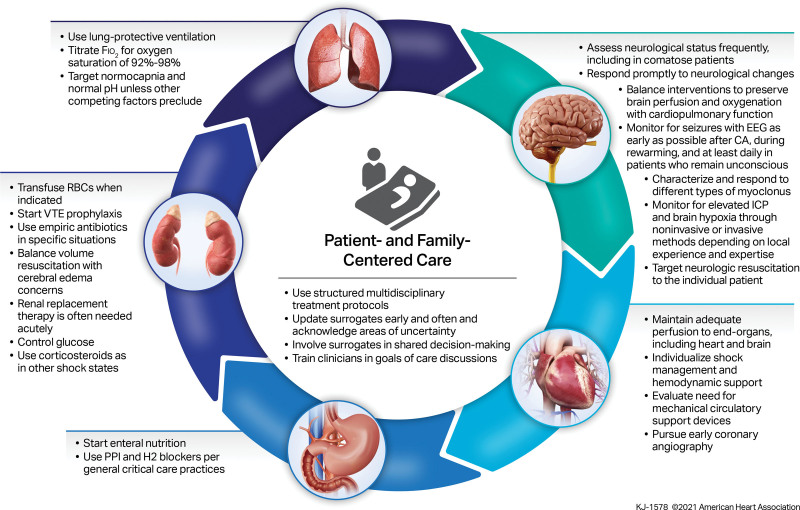
The critical care management of patients after cardiac arrest is burdened by a lack of high-quality clinical studies and the resultant lack of high-certainty evidence. This results in limited practice guideline recommendations, which may lead to uncertainty and variability in management. Critical care management is crucial in patients after cardiac arrest and affects outcome. Although guidelines address some relevant topics (including temperature control and neurological prognostication of comatose survivors, 2 topics for which there are more robust clinical studies), many important subject areas have limited or nonexistent clinical studies, leading to the absence of guidelines or low-certainty evidence. The American Heart Association Emergency Cardiovascular Care Committee and the Neurocritical Care Society collaborated to address this gap by organizing an expert consensus panel and conference. Twenty-four experienced practitioners (including physicians, nurses, pharmacists, and a respiratory therapist) from multiple medical specialties, levels, institutions, and countries made up the panel. Topics were identified and prioritized by the panel and arranged by organ system to facilitate discussion, debate, and consensus building. Statements related to postarrest management were generated, and 80% agreement was required to approve a statement. Voting was anonymous and web based. Topics addressed include neurological, cardiac, pulmonary, hematological, infectious, gastrointestinal, endocrine, and general critical care management. Areas of uncertainty, areas for which no consensus was reached, and future research directions are also included. Until high-quality studies that inform practice guidelines in these areas are available, the expert panel consensus statements that are provided can advise clinicians on the critical care management of patients after cardiac arrest.
心脏骤停后患者的重症监护管理受到高质量临床研究缺乏和由此导致的高确定性证据缺乏的困扰。这导致实践指南建议有限,可能导致管理的不确定性和变异性。重症监护管理对心脏骤停后患者至关重要,影响预后。尽管指南涉及一些相关主题(包括昏迷幸存者的体温控制和神经预后,这是两个有更可靠临床研究的主题),但许多重要的主题领域缺乏或不存在临床研究,导致没有指南或低确定性证据。美国心脏协会急救心血管护理委员会和神经重症监护学会通过组织一个专家共识小组和会议来解决这一差距。来自多个医学专业、级别、机构和国家的 24 名经验丰富的从业者(包括医生、护士、药剂师和呼吸治疗师)组成了专家组。小组确定并确定了优先事项,并按器官系统进行安排,以方便讨论、辩论和达成共识。与心脏骤停后管理相关的陈述被生成,需要 80%的同意才能批准一项陈述。投票是匿名和基于网络的。讨论的主题包括神经、心脏、肺、血液、感染、胃肠道、内分泌和一般重症监护管理。还包括不确定性领域、未达成共识的领域和未来的研究方向。在这些领域的高质量研究提供实践指南之前,提供的专家小组共识陈述可以为心脏骤停后患者的重症监护管理提供临床医生的建议。