• 文献检索
  • 文档翻译
  • 深度研究
  • 学术资讯
  • Suppr Zotero 插件Zotero 插件
  • 邀请有礼
  • 套餐&价格
  • 历史记录
应用&插件
Suppr Zotero 插件Zotero 插件浏览器插件Mac 客户端Windows 客户端微信小程序
定价
高级版会员购买积分包购买API积分包
服务
文献检索文档翻译深度研究API 文档MCP 服务
关于我们
关于 Suppr公司介绍联系我们用户协议隐私条款
关注我们

Suppr 超能文献

核心技术专利:CN118964589B侵权必究
粤ICP备2023148730 号-1Suppr @ 2026

文献检索

告别复杂PubMed语法,用中文像聊天一样搜索,搜遍4000万医学文献。AI智能推荐,让科研检索更轻松。

立即免费搜索

文件翻译

保留排版,准确专业,支持PDF/Word/PPT等文件格式,支持 12+语言互译。

免费翻译文档

深度研究

AI帮你快速写综述,25分钟生成高质量综述,智能提取关键信息,辅助科研写作。

立即免费体验

心脏骤停后患者的重症监护管理:美国心脏协会和神经重症监护学会的科学声明。

Critical Care Management of Patients After Cardiac Arrest: A Scientific Statement from the American Heart Association and Neurocritical Care Society.

机构信息

Stanford -University, Stanford, USA.

University of Pennsylvania, Philadelphia, USA.

出版信息

Neurocrit Care. 2024 Feb;40(1):1-37. doi: 10.1007/s12028-023-01871-6. Epub 2023 Dec 1.

DOI:10.1007/s12028-023-01871-6
PMID:38040992
原文链接:https://pmc.ncbi.nlm.nih.gov/articles/PMC10861627/
Abstract

The critical care management of patients after cardiac arrest is burdened by a lack of high-quality clinical studies and the resultant lack of high-certainty evidence. This results in limited practice guideline recommendations, which may lead to uncertainty and variability in management. Critical care management is crucial in patients after cardiac arrest and affects outcome. Although guidelines address some relevant topics (including temperature control and neurological prognostication of comatose survivors, 2 topics for which there are more robust clinical studies), many important subject areas have limited or nonexistent clinical studies, leading to the absence of guidelines or low-certainty evidence. The American Heart Association Emergency Cardiovascular Care Committee and the Neurocritical Care Society collaborated to address this gap by organizing an expert consensus panel and conference. Twenty-four experienced practitioners (including physicians, nurses, pharmacists, and a respiratory therapist) from multiple medical specialties, levels, institutions, and countries made up the panel. Topics were identified and prioritized by the panel and arranged by organ system to facilitate discussion, debate, and consensus building. Statements related to postarrest management were generated, and 80% agreement was required to approve a statement. Voting was anonymous and web based. Topics addressed include neurological, cardiac, pulmonary, hematological, infectious, gastrointestinal, endocrine, and general critical care management. Areas of uncertainty, areas for which no consensus was reached, and future research directions are also included. Until high-quality studies that inform practice guidelines in these areas are available, the expert panel consensus statements that are provided can advise clinicians on the critical care management of patients after cardiac arrest.

摘要

心肺复苏后患者的重症监护管理因缺乏高质量的临床研究和由此产生的低确定性证据而受到困扰。这导致实践指南建议有限,可能导致管理中的不确定性和变异性。重症监护管理对心肺复苏后患者至关重要,并影响结局。尽管指南涉及一些相关主题(包括昏迷幸存者的体温控制和神经预后预测,这是两个有更可靠临床研究的主题),但许多重要的主题领域的临床研究有限或不存在,导致缺乏指南或低确定性证据。美国心脏协会急救心血管护理委员会和神经重症监护学会合作,通过组织一个专家共识小组和会议来解决这一差距。来自多个医学专业、级别、机构和国家的 24 名经验丰富的从业者(包括医生、护士、药剂师和呼吸治疗师)组成了小组。小组确定并优先考虑了主题,并按器官系统排列,以方便讨论、辩论和达成共识。与复苏后管理相关的陈述被生成,需要 80%的同意才能批准一项陈述。投票是匿名和基于网络的。讨论的主题包括神经、心脏、肺、血液、感染、胃肠、内分泌和一般重症监护管理。还包括不确定的领域、未达成共识的领域和未来的研究方向。在这些领域提供实践指南的高质量研究可用之前,提供的专家小组共识陈述可以为临床医生提供有关心肺复苏后患者重症监护管理的建议。
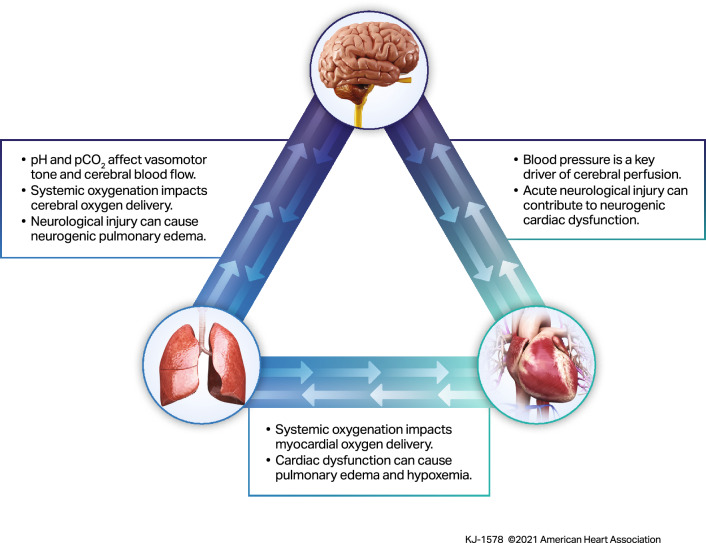
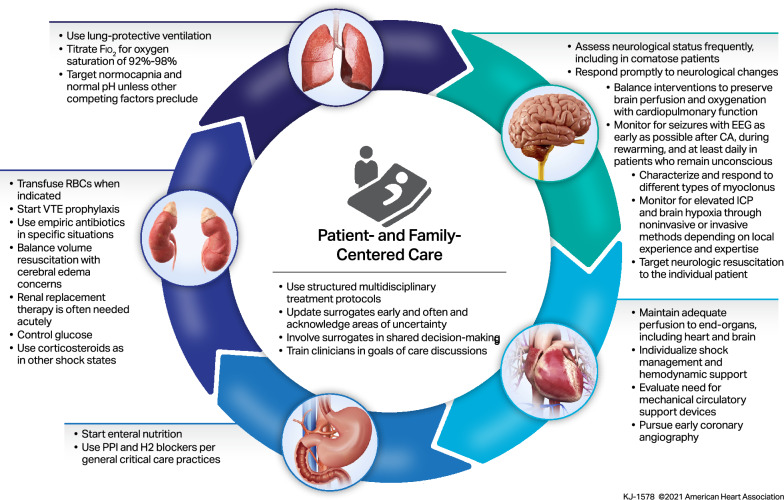
https://cdn.ncbi.nlm.nih.gov/pmc/blobs/63fd/10861627/7f38cca7e675/12028_2023_1871_Fig2_HTML.jpg
https://cdn.ncbi.nlm.nih.gov/pmc/blobs/63fd/10861627/448880e8cd70/12028_2023_1871_Fig1_HTML.jpg
https://cdn.ncbi.nlm.nih.gov/pmc/blobs/63fd/10861627/7f38cca7e675/12028_2023_1871_Fig2_HTML.jpg
https://cdn.ncbi.nlm.nih.gov/pmc/blobs/63fd/10861627/448880e8cd70/12028_2023_1871_Fig1_HTML.jpg
https://cdn.ncbi.nlm.nih.gov/pmc/blobs/63fd/10861627/7f38cca7e675/12028_2023_1871_Fig2_HTML.jpg

相似文献

1
Critical Care Management of Patients After Cardiac Arrest: A Scientific Statement from the American Heart Association and Neurocritical Care Society.心脏骤停后患者的重症监护管理:美国心脏协会和神经重症监护学会的科学声明。
Neurocrit Care. 2024 Feb;40(1):1-37. doi: 10.1007/s12028-023-01871-6. Epub 2023 Dec 1.
2
Critical Care Management of Patients After Cardiac Arrest: A Scientific Statement From the American Heart Association and Neurocritical Care Society.心脏骤停后患者的重症监护管理:美国心脏协会和神经重症监护学会的科学声明。
Circulation. 2024 Jan 9;149(2):e168-e200. doi: 10.1161/CIR.0000000000001163. Epub 2023 Nov 28.
3
Temperature Management After Cardiac Arrest: An Advisory Statement by the Advanced Life Support Task Force of the International Liaison Committee on Resuscitation and the American Heart Association Emergency Cardiovascular Care Committee and the Council on Cardiopulmonary, Critical Care, Perioperative and Resuscitation.心脏骤停后的体温管理:复苏国际联络委员会高级生命支持工作组、美国心脏协会急救心血管护理委员会以及心肺、危重病、围术期和复苏理事会的咨询声明。
Circulation. 2015 Dec 22;132(25):2448-56. doi: 10.1161/CIR.0000000000000313. Epub 2015 Oct 4.
4
Temperature Management After Cardiac Arrest: An Advisory Statement by the Advanced Life Support Task Force of the International Liaison Committee on Resuscitation and the American Heart Association Emergency Cardiovascular Care Committee and the Council on Cardiopulmonary, Critical Care, Perioperative and Resuscitation.心脏骤停后的体温管理:复苏国际联络委员会高级生命支持工作组、美国心脏协会急救心血管护理委员会以及心肺、危重病、围术期和复苏理事会的咨询声明。
Resuscitation. 2016 Jan;98:97-104. doi: 10.1016/j.resuscitation.2015.09.396. Epub 2015 Oct 9.
5
Primary outcomes for resuscitation science studies: a consensus statement from the American Heart Association.复苏科学研究的主要结局指标:美国心脏协会的共识声明。
Circulation. 2011 Nov 8;124(19):2158-77. doi: 10.1161/CIR.0b013e3182340239. Epub 2011 Oct 3.
6
2005 American Heart Association (AHA) guidelines for cardiopulmonary resuscitation (CPR) and emergency cardiovascular care (ECC) of pediatric and neonatal patients: pediatric basic life support.2005年美国心脏协会(AHA)关于儿科和新生儿患者心肺复苏(CPR)及紧急心血管护理(ECC)的指南:儿科基础生命支持
Pediatrics. 2006 May;117(5):e989-1004. doi: 10.1542/peds.2006-0219.
7
Cardiac Arrest and Cardiopulmonary Resuscitation Outcome Reports: Update of the Utstein Resuscitation Registry Templates for Out-of-Hospital Cardiac Arrest: A Statement for Healthcare Professionals From a Task Force of the International Liaison Committee on Resuscitation (American Heart Association, European Resuscitation Council, Australian and New Zealand Council on Resuscitation, Heart and Stroke Foundation of Canada, InterAmerican Heart Foundation, Resuscitation Council of Southern Africa, Resuscitation Council of Asia); and the American Heart Association Emergency Cardiovascular Care Committee and the Council on Cardiopulmonary, Critical Care, Perioperative and Resuscitation.心脏骤停与心肺复苏结果报告:院外心脏骤停Utstein复苏登记模板更新:国际复苏联合委员会(美国心脏协会、欧洲复苏委员会、澳大利亚和新西兰复苏委员会、加拿大心脏与中风基金会、泛美心脏基金会、南非复苏委员会、亚洲复苏委员会)特别工作组给医疗专业人员的声明;以及美国心脏协会急救心血管护理委员会和心肺、重症监护、围手术期与复苏委员会
Resuscitation. 2015 Nov;96:328-40. doi: 10.1016/j.resuscitation.2014.11.002. Epub 2014 Nov 11.
8
Cardiac arrest and cardiopulmonary resuscitation outcome reports: update of the Utstein Resuscitation Registry Templates for Out-of-Hospital Cardiac Arrest: a statement for healthcare professionals from a task force of the International Liaison Committee on Resuscitation (American Heart Association, European Resuscitation Council, Australian and New Zealand Council on Resuscitation, Heart and Stroke Foundation of Canada, InterAmerican Heart Foundation, Resuscitation Council of Southern Africa, Resuscitation Council of Asia); and the American Heart Association Emergency Cardiovascular Care Committee and the Council on Cardiopulmonary, Critical Care, Perioperative and Resuscitation.心脏骤停和心肺复苏结果报告:院外心脏骤停复苏登记模板的更新:急救复苏国际联络委员会(美国心脏协会、欧洲复苏委员会、澳大利亚和新西兰复苏理事会、加拿大心脏和中风基金会、泛美心脏基金会、南非复苏理事会、亚洲复苏理事会)医疗专业人员工作组的声明;以及美国心脏协会紧急心血管护理委员会和心肺、危重病、围手术期和复苏理事会。
Circulation. 2015 Sep 29;132(13):1286-300. doi: 10.1161/CIR.0000000000000144. Epub 2014 Nov 11.
9
The International Liaison Committee on Resuscitation (ILCOR) consensus on science with treatment recommendations for pediatric and neonatal patients: pediatric basic and advanced life support.国际复苏联合委员会(ILCOR)关于儿科和新生儿患者的科学共识及治疗建议:儿科基础与高级生命支持
Pediatrics. 2006 May;117(5):e955-77. doi: 10.1542/peds.2006-0206. Epub 2006 Apr 17.
10
Delphi Analysis of Science Gaps in the 2015 American Heart Association Cardiac Arrest Guidelines.德尔菲分析 2015 年美国心脏协会心脏骤停指南中的科学空白
J Am Heart Assoc. 2018 Jun 30;7(13):e008571. doi: 10.1161/JAHA.118.008571.

引用本文的文献

1
Comprehensive pre- and in-hospital near-infrared-spectroscopy (NIRS) monitoring after return of spontaneous circulation predicts neurological outcome following out-of-hospital cardiac arrest: a prospective observational study and literature review.自主循环恢复后进行全面的院前和院内近红外光谱(NIRS)监测可预测院外心脏骤停后的神经功能转归:一项前瞻性观察性研究及文献综述
Front Med (Lausanne). 2025 Aug 15;12:1590908. doi: 10.3389/fmed.2025.1590908. eCollection 2025.
2
Long-Term Outcomes After Cardiac Arrest: Protocol for the Extended Follow-Up Sub-Study of the STEPCARE Trial.心脏骤停后的长期结局:STEPCARE试验扩展随访子研究方案
Acta Anaesthesiol Scand. 2025 Oct;69(9):e70114. doi: 10.1111/aas.70114.
3

本文引用的文献

1
Oxygen Targets in Comatose Survivors of Cardiac Arrest.心脏骤停昏迷幸存者的氧目标。
N Engl J Med. 2022 Oct 20;387(16):1467-1476. doi: 10.1056/NEJMoa2208686. Epub 2022 Aug 27.
2
Blood-Pressure Targets in Comatose Survivors of Cardiac Arrest.心脏骤停昏迷幸存者的血压目标。
N Engl J Med. 2022 Oct 20;387(16):1456-1466. doi: 10.1056/NEJMoa2208687. Epub 2022 Aug 27.
3
Emergency vs Delayed Coronary Angiogram in Survivors of Out-of-Hospital Cardiac Arrest: Results of the Randomized, Multicentric EMERGE Trial.院外心脏骤停存活者的紧急与延迟冠状动脉造影:随机、多中心 EMERGE 试验的结果。
Cerebral oxygen saturation in relation to end-tidal CO in cardiopulmonary resuscitation - Separate views of brain and body?
心肺复苏中脑氧饱和度与呼气末二氧化碳的关系——大脑与身体的不同视角?
Resusc Plus. 2025 Jul 25;25:101044. doi: 10.1016/j.resplu.2025.101044. eCollection 2025 Sep.
4
Comparative features and outcomes of cardiogenic shock in patients with and without prior resuscitated shockable cardiac arrest: Insight from the FRENSHOCK multicenter prospective registry.有或无既往复苏成功的可电击心律心脏骤停患者的心源性休克比较特征及预后:来自FRESHOCK多中心前瞻性注册研究的见解
Resusc Plus. 2025 Jul 9;25:101024. doi: 10.1016/j.resplu.2025.101024. eCollection 2025 Sep.
5
Optimal mean arterial pressure for favorable neurological outcomes in patients after cardiac arrest.心脏骤停后患者获得良好神经功能结局的最佳平均动脉压。
J Intensive Care. 2025 Jul 31;13(1):42. doi: 10.1186/s40560-025-00814-x.
6
Management of non-Cardiac Organ Failure in cardiogenic shock.心源性休克中非心脏器官衰竭的管理。
Am Heart J Plus. 2025 May 1;55:100549. doi: 10.1016/j.ahjo.2025.100549. eCollection 2025 Jul.
7
Higher versus lower mean arterial blood pressure after cardiac arrest and resuscitation (MAP-CARE): A protocol for a randomized clinical trial.心脏骤停与复苏后较高与较低平均动脉血压(MAP-CARE):一项随机临床试验方案
Acta Anaesthesiol Scand. 2025 Jul;69(6):e70040. doi: 10.1111/aas.70040.
8
Carbon dioxide pathophysiology and targets following acute brain injury.急性脑损伤后的二氧化碳病理生理学及靶点
Intensive Care Med. 2025 May 5. doi: 10.1007/s00134-025-07913-1.
9
Impact of Hypothermic Temperature Control on Plasma and Soft Tissue Pharmacokinetics of Penicillin/Beta-Lactamase Inhibitor Combinations in Patients Resuscitated After Cardiac Arrest.低温温度控制对心脏骤停复苏后患者青霉素/β-内酰胺酶抑制剂组合的血浆及软组织药代动力学的影响
Clin Pharmacokinet. 2025 May;64(5):691-701. doi: 10.1007/s40262-025-01497-1. Epub 2025 Apr 10.
10
Cardiovascular complications in chronic active Epstein-Barr virus disease: a case report and literature review.慢性活动性EB病毒病的心血管并发症:一例报告及文献综述
Front Pediatr. 2025 Jan 10;12:1480297. doi: 10.3389/fped.2024.1480297. eCollection 2024.
JAMA Cardiol. 2022 Jul 1;7(7):700-707. doi: 10.1001/jamacardio.2022.1416.
4
Acute respiratory distress syndrome after in-hospital cardiac arrest.院内心脏骤停后急性呼吸窘迫综合征。
Resuscitation. 2022 Aug;177:78-84. doi: 10.1016/j.resuscitation.2022.05.006. Epub 2022 May 14.
5
Treating Rhythmic and Periodic EEG Patterns in Comatose Survivors of Cardiac Arrest.治疗心脏骤停后昏迷幸存者的节律性和周期性 EEG 模式。
N Engl J Med. 2022 Feb 24;386(8):724-734. doi: 10.1056/NEJMoa2115998.
6
Effect of Intra-arrest Transport, Extracorporeal Cardiopulmonary Resuscitation, and Immediate Invasive Assessment and Treatment on Functional Neurologic Outcome in Refractory Out-of-Hospital Cardiac Arrest: A Randomized Clinical Trial.停搏期转运、体外心肺复苏术和即刻有创评估与治疗对难治性院外心脏骤停患者神经功能结局的影响:一项随机临床试验。
JAMA. 2022 Feb 22;327(8):737-747. doi: 10.1001/jama.2022.1025.
7
ERC-ESICM guidelines on temperature control after cardiac arrest in adults.欧洲复苏委员会-欧洲危重病医学会成人心脏骤停后体温管理指南。
Resuscitation. 2022 Mar;172:229-236. doi: 10.1016/j.resuscitation.2022.01.009. Epub 2022 Feb 4.
8
Disparities in Hypoxemia Detection by Pulse Oximetry Across Self-Identified Racial Groups and Associations With Clinical Outcomes.脉搏血氧仪检测低氧血症的种族差异及与临床结局的关系。
Crit Care Med. 2022 Feb 1;50(2):204-211. doi: 10.1097/CCM.0000000000005394.
9
Heart Disease and Stroke Statistics-2022 Update: A Report From the American Heart Association.《心脏病与卒中统计-2022 更新:美国心脏协会报告》。
Circulation. 2022 Feb 22;145(8):e153-e639. doi: 10.1161/CIR.0000000000001052. Epub 2022 Jan 26.
10
Balanced Multielectrolyte Solution versus Saline in Critically Ill Adults.平衡电解质溶液与生理盐水在危重症成人中的应用比较。
N Engl J Med. 2022 Mar 3;386(9):815-826. doi: 10.1056/NEJMoa2114464. Epub 2022 Jan 18.