Department of Neurosciences, Faculty of Medicine and Nursery, University of the Basque Country (UPV/EHU), Barrio Sarriena S/N, 48940, Leioa, Bizkaia, Spain.
Neurodegenerative Diseases Group, Biocruces Bizkaia Health Research Institute, Barakaldo, Bizkaia, Spain.
Acta Neurol Belg. 2024 Apr;124(2):395-406. doi: 10.1007/s13760-023-02428-2. Epub 2023 Nov 28.
Falls represent a critical concern in Parkinson's disease (PD), contributing to increased morbidity and reduced quality of life.
We conducted a systematic review to assess the prognostic factors associated with falls in PD, aiming to provide a comprehensive overview of relevant demographic and clinical parameters, and aid neurologists in identifying subsets of PD patients most susceptible to falls and associated injuries.
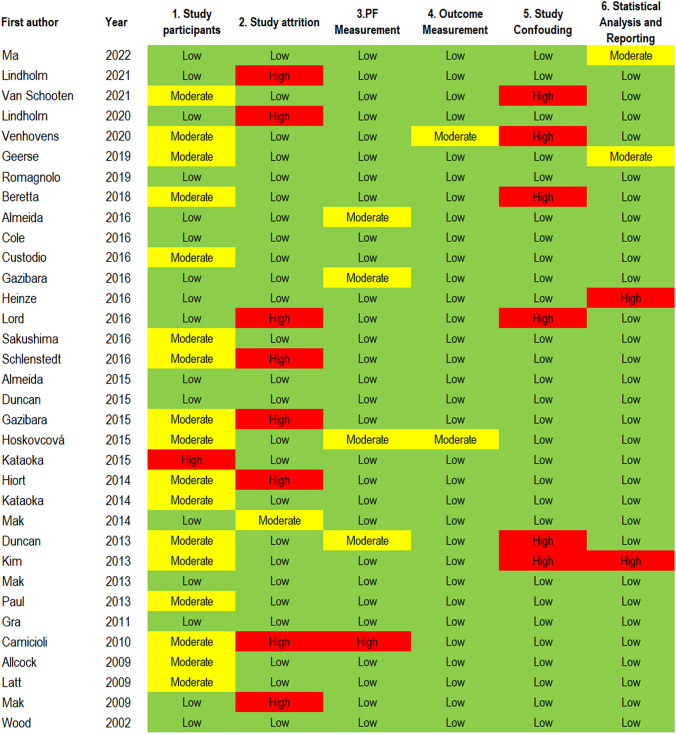
PubMed and Web of Science databases were searched for prospective studies assessing factors associated with falls in ambulatory PD patients across different settings, from inception to August 2023. Data extraction was conducted using CHARMS-PF checklist and risk of bias was assessed with QUIPS tool. PRISMA guidelines were followed.
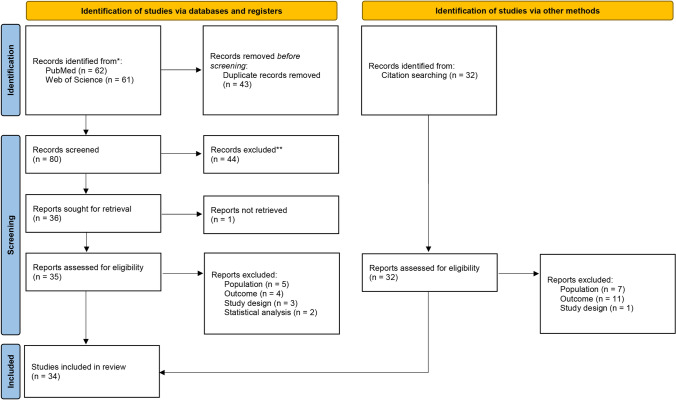
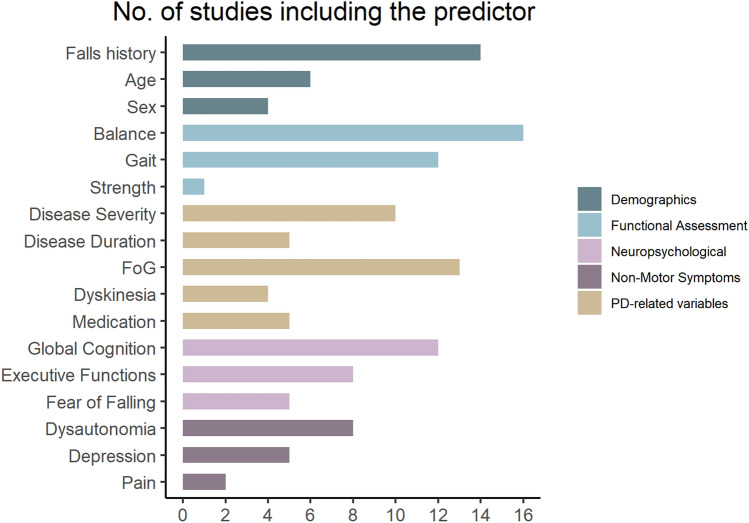
The initial search yielded 155 references. Thirty-four studies, involving a total of 3454 PD patients, were included in the final analysis. The mean pooled age was 67.6 years, and 45.1% were women. PD patients presented mild motor impairment (UPDRS III score 27.8) with mean pooled disease duration of 5.7 years. Gait and balance disorders and history of prior falls emerged as the most consistent predictors of falls across studies. Disease duration, disease severity, dysautonomic symptoms, freezing of gait, frontal cognitive functions, and PD medication dosages yielded inconsistent findings. Conversely, dyskinesias, age, sex, and depression were unrelated to future falls in PD. Logistic regression models were most commonly employed to identify factors significantly associated with falls in PD. Substantial heterogeneity prevailed in the inclusion of confounding factors.
The evidence suggests that previous history of falls, gait disorders, and poor balance are robust prognostic markers for falls in PD.
跌倒在帕金森病(PD)中是一个严重的问题,会增加发病率和降低生活质量。
我们进行了一项系统综述,以评估与 PD 跌倒相关的预后因素,旨在全面了解相关的人口统计学和临床参数,并帮助神经科医生识别最易发生跌倒和相关损伤的 PD 患者亚组。
从建库到 2023 年 8 月,我们在 PubMed 和 Web of Science 数据库中搜索了评估不同环境中 PD 患者跌倒相关因素的前瞻性研究。使用 CHARMS-PF 清单进行数据提取,并使用 QUIPS 工具评估偏倚风险。遵循 PRISMA 指南。
最初的搜索产生了 155 篇参考文献。34 项研究,共涉及 3454 名 PD 患者,纳入了最终分析。平均汇总年龄为 67.6 岁,45.1%为女性。PD 患者表现出轻度运动障碍(UPDRS III 评分 27.8),平均汇总病程为 5.7 年。步态和平衡障碍以及既往跌倒史是各研究中最一致的跌倒预测因素。疾病持续时间、疾病严重程度、自主神经症状、冻结步态、额叶认知功能和 PD 药物剂量的结果不一致。相反,异动症、年龄、性别和抑郁与 PD 患者未来的跌倒无关。逻辑回归模型最常用于识别与 PD 跌倒显著相关的因素。纳入混杂因素的异质性很大。
证据表明,既往跌倒史、步态障碍和平衡不良是 PD 跌倒的可靠预后标志物。