Department of Medicine, University of Washington, Seattle (Y.H., P.M.H., C.T., T.V., K.E.B., J.W.H.).
Centro Grossi Paoletti, Dipartimento di Scienze Farmacologiche e Biomolecolari, Università degli Studi di Milano, Italy (C.P., L.C.).
Circulation. 2024 Mar 5;149(10):774-787. doi: 10.1161/CIRCULATIONAHA.123.065959. Epub 2023 Nov 29.
Cholesterol efflux capacity (CEC) predicts cardiovascular disease independently of high-density lipoprotein (HDL) cholesterol levels. Isolated small HDL particles are potent promoters of macrophage CEC by the ABCA1 (ATP-binding cassette transporter A1) pathway, but the underlying mechanisms are unclear.
We used model system studies of reconstituted HDL and plasma from control and lecithin-cholesterol acyltransferase (LCAT)-deficient subjects to investigate the relationships among the sizes of HDL particles, the structure of APOA1 (apolipoprotein A1) in the different particles, and the CECs of plasma and isolated HDLs.
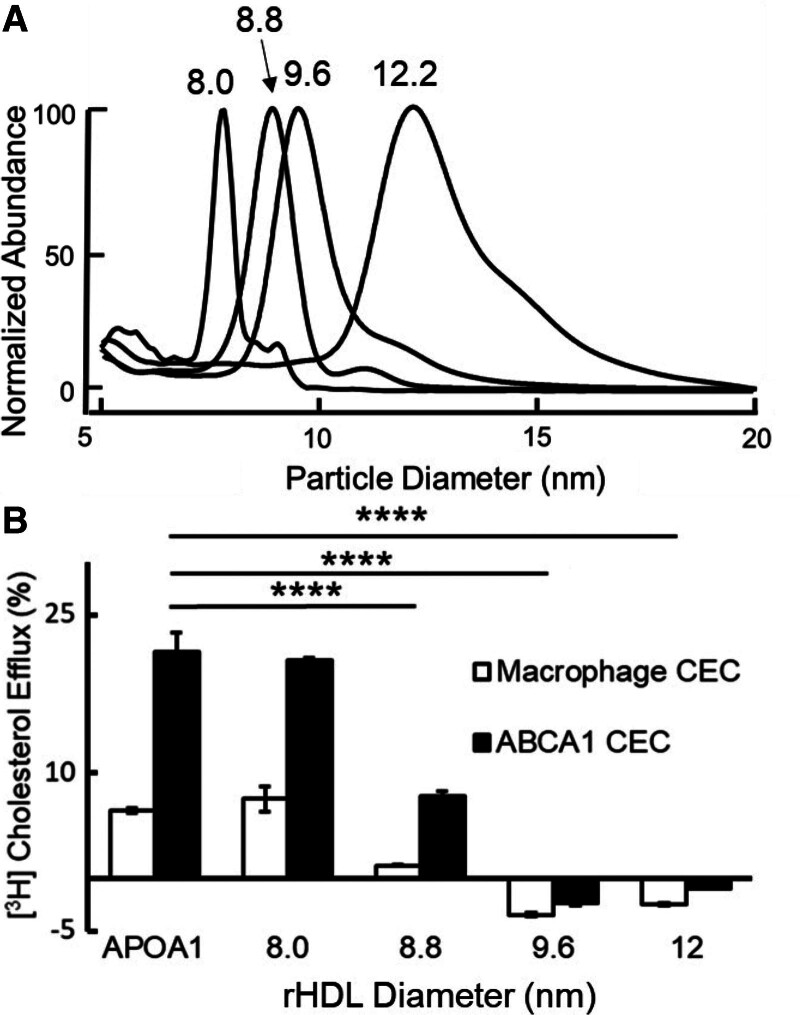
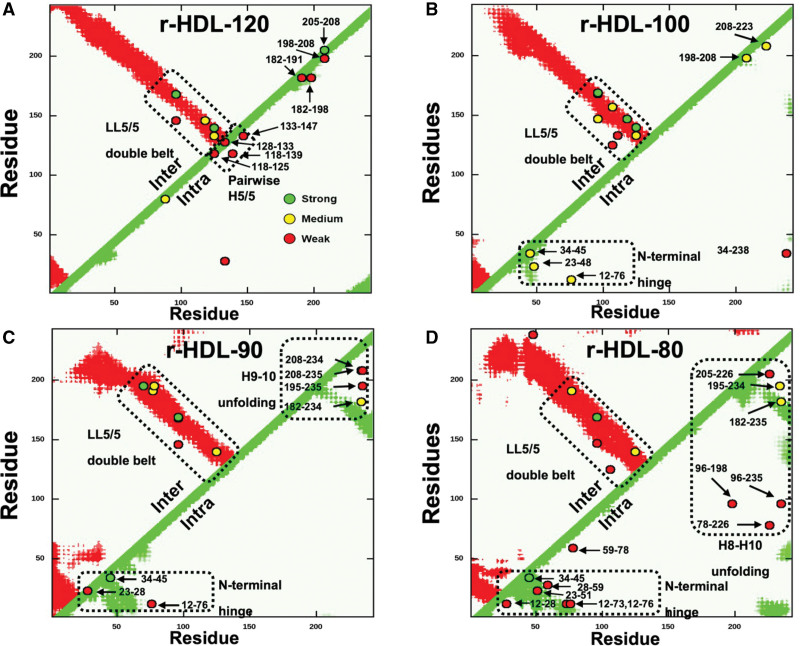
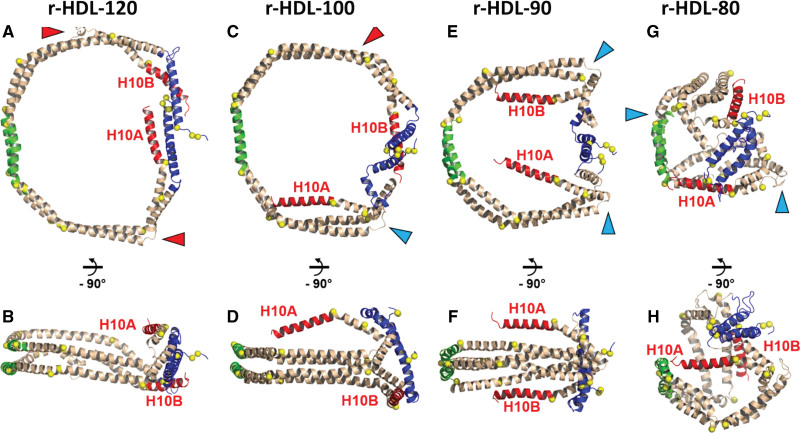
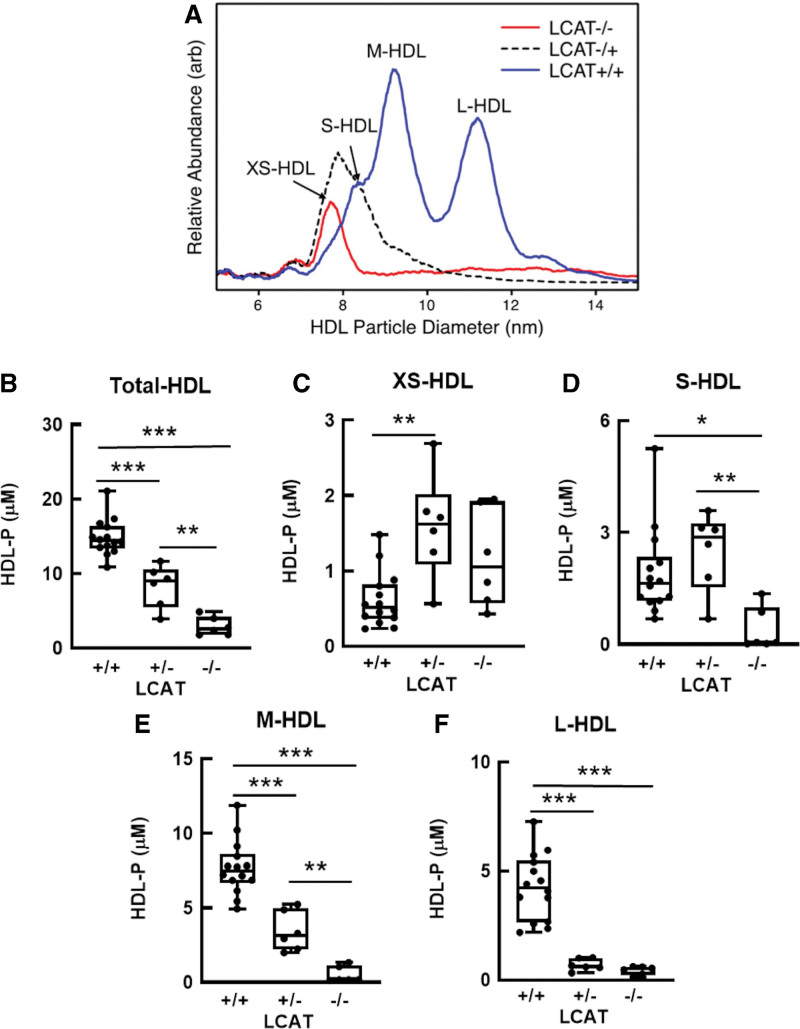
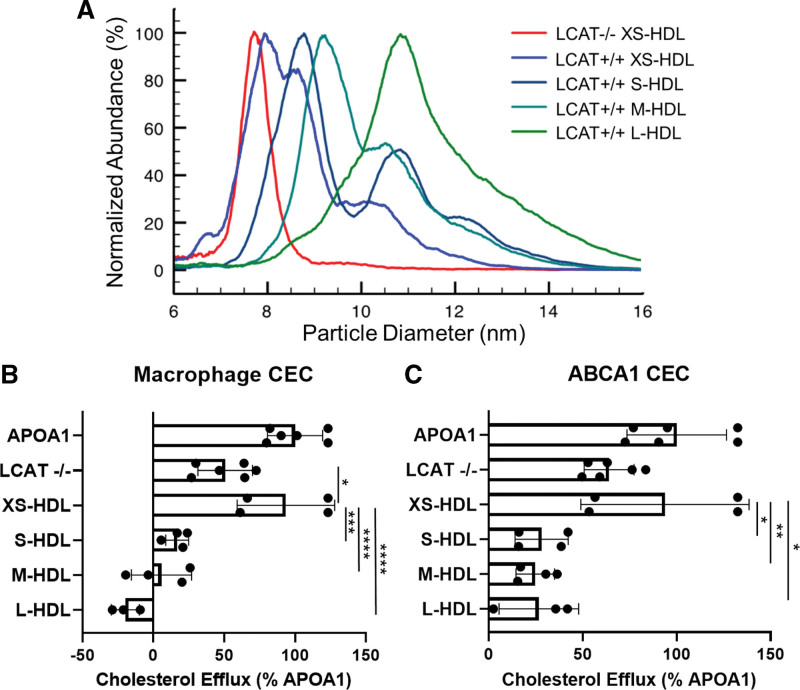
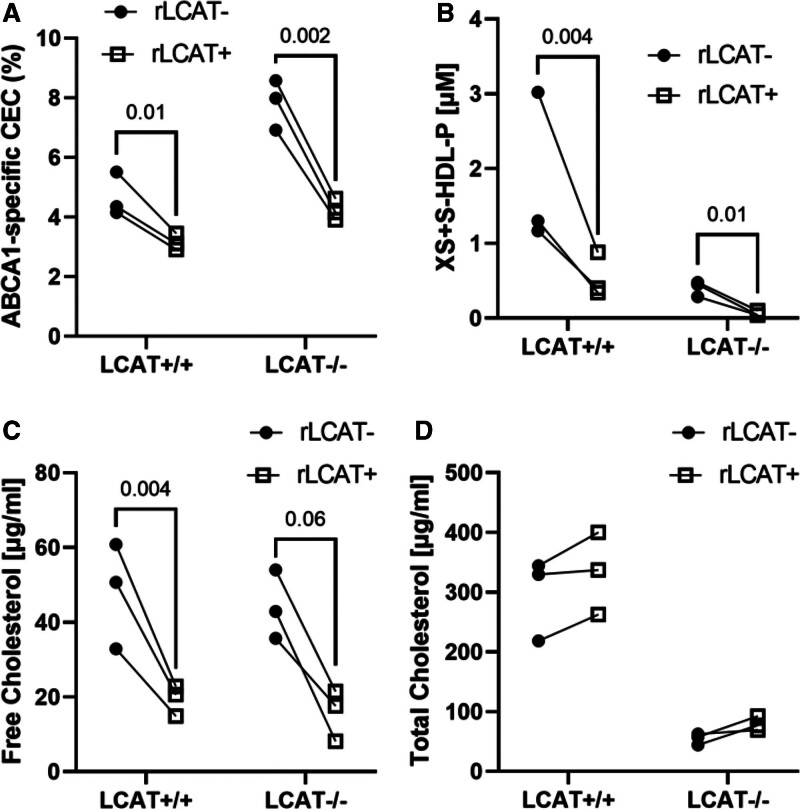
We quantified macrophage and ABCA1 CEC of 4 distinct sizes of reconstituted HDL. CEC increased as particle size decreased. Tandem mass spectrometric analysis of chemically cross-linked peptides and molecular dynamics simulations of APOA1, the major protein of HDL, indicated that the mobility of C-terminus of that protein was markedly higher and flipped off the surface in the smallest particles. To explore the physiological relevance of the model system studies, we isolated HDL from LCAT-deficient subjects, whose small HDLs (like reconstituted HDLs) are discoidal and composed of APOA1, cholesterol, and phospholipid. Despite their very low plasma levels of HDL particles, these subjects had normal CEC. In both the LCAT-deficient subjects and control subjects, the CEC of isolated extra-small HDL (a mixture of extra-small and small HDL by calibrated ion mobility analysis) was 3- to 5-fold greater than that of the larger sizes of isolated HDL. Incubating LCAT-deficient plasma and control plasma with human LCAT converted extra-small and small HDL particles into larger particles, and it markedly inhibited CEC.
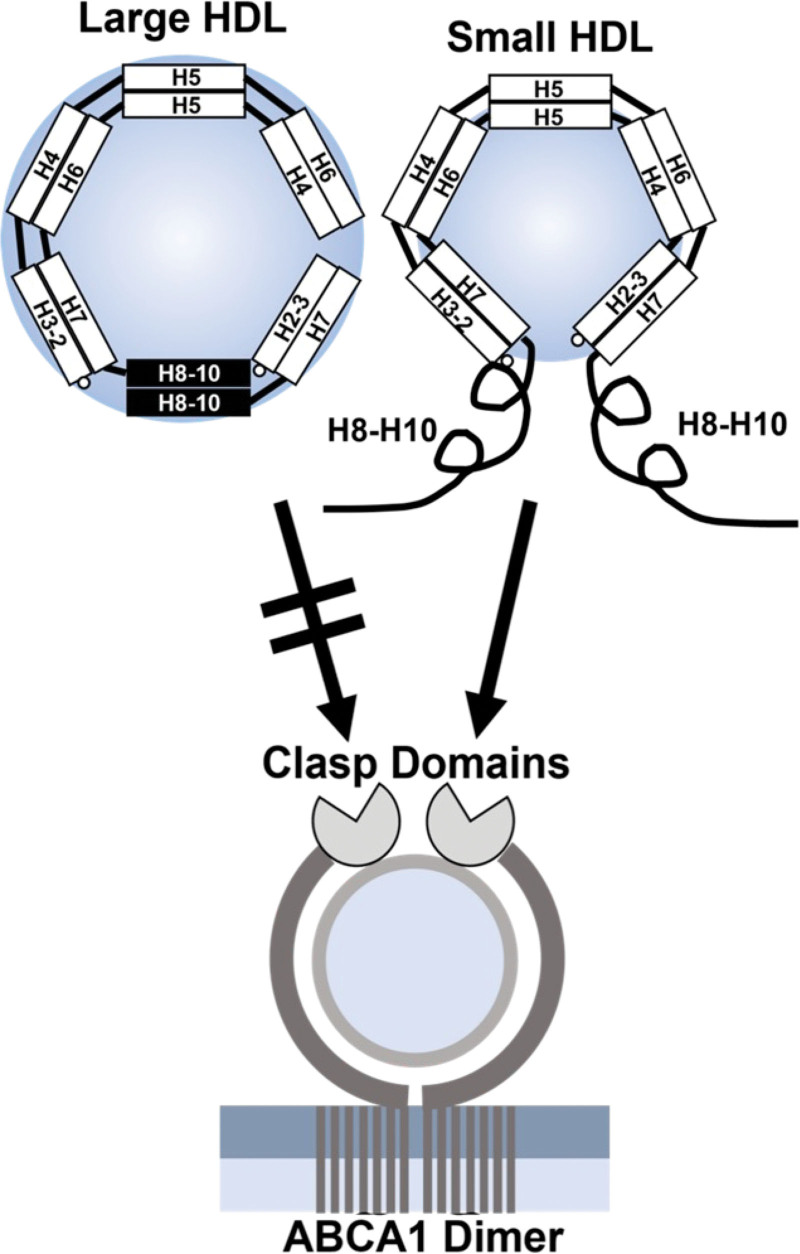
We present a mechanism for the enhanced CEC of small HDLs. In smaller particles, the C-termini of the 2 antiparallel molecules of APOA1 are "flipped" off the lipid surface of HDL. This extended conformation allows them to engage with ABCA1. In contrast, the C-termini of larger HDLs are unable to interact productively with ABCA1 because they form a helical bundle that strongly adheres to the lipid on the particle. Enhanced CEC, as seen with the smaller particles, predicts decreased cardiovascular disease risk. Thus, extra-small and small HDLs may be key mediators and indicators of the cardioprotective effects of HDL.
胆固醇外排能力(CEC)可独立于高密度脂蛋白(HDL)胆固醇水平预测心血管疾病。小而密的 HDL 颗粒通过 ABCA1(ATP 结合盒转运体 A1)途径成为巨噬细胞 CEC 的有效促进剂,但潜在机制尚不清楚。
我们使用重组 HDL 和来自对照和卵磷脂胆固醇酰基转移酶(LCAT)缺陷受试者的血浆的模型系统研究,以研究 HDL 颗粒的大小、不同颗粒中载脂蛋白 A1(apoA1)的结构以及血浆和分离的 HDL 的 CEC 之间的关系。
我们对 4 种不同大小的重组 HDL 进行了巨噬细胞和 ABCA1 CEC 的定量分析。随着颗粒尺寸的减小,CEC 增加。对化学交联肽的串联质谱分析和 HDL 主要蛋白 apoA1 的分子动力学模拟表明,该蛋白的 C 端的迁移率显著更高,并在最小的颗粒中脱离表面。为了探索模型系统研究的生理相关性,我们从 LCAT 缺陷受试者中分离出 HDL,其小 HDL(如重组 HDL)呈盘状,由 apoA1、胆固醇和磷脂组成。尽管这些受试者的 HDL 颗粒血浆水平非常低,但他们的 CEC 正常。在 LCAT 缺陷受试者和对照受试者中,分离的超小 HDL(通过校准离子迁移分析的超小和小 HDL 的混合物)的 CEC 比分离的较大 HDL 的 CEC 高 3-5 倍。用人类 LCAT 孵育 LCAT 缺陷血浆和对照血浆可将超小和小 HDL 颗粒转化为较大颗粒,并显著抑制 CEC。
我们提出了一种小 HDL 增强 CEC 的机制。在较小的颗粒中,apoA1 的 2 个反平行分子的 C 端“翻转”出 HDL 的脂质表面。这种扩展构象使它们能够与 ABCA1 结合。相比之下,较大的 HDL 的 C 端由于形成强烈粘附在颗粒上的脂质的螺旋束而无法与 ABCA1 进行有效相互作用。如较小颗粒所见,增强的 CEC 可降低心血管疾病风险。因此,超小和小 HDL 可能是 HDL 心脏保护作用的关键介质和指标。