Hudson Tristin, Hecht Shaina M, Robbins Cynthia, McHenry Megan S, Byrne Bobbi
Department of Pediatrics, Indiana University School of Medicine, Indianapolis, USA.
Cureus. 2023 Oct 18;15(10):e47279. doi: 10.7759/cureus.47279. eCollection 2023 Oct.
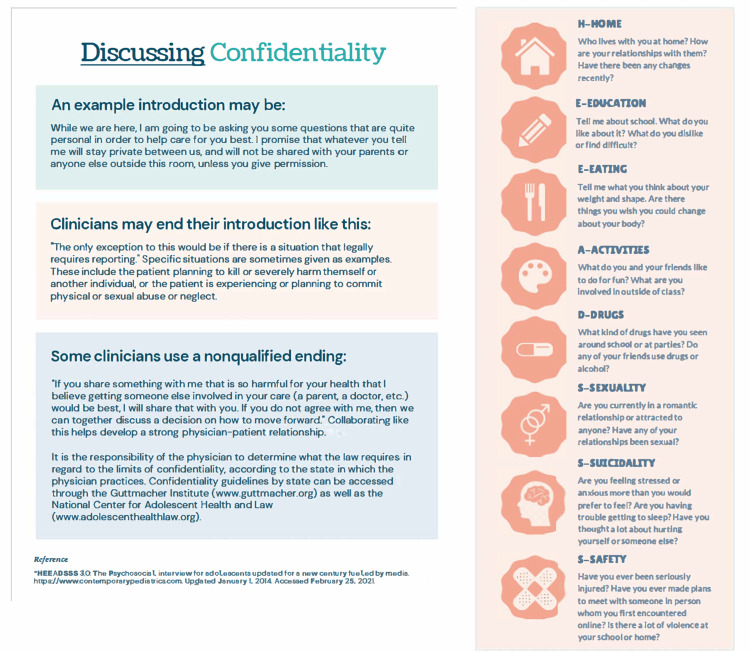
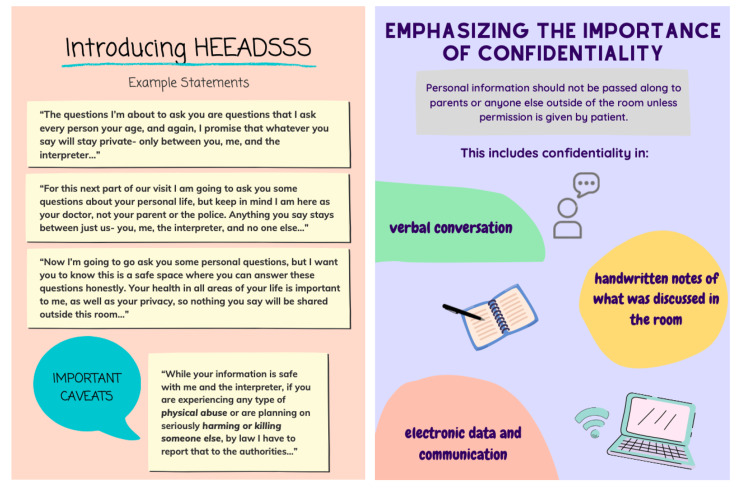
Pediatricians can cultivate a more trusting relationship with their non-English speaking patients by emphasizing the importance of upholding patient confidentiality in the presence of an interpreter. We designed a case for pediatric residents to increase comfort when conducting an adolescent interview using a medical interpreter, emphasizing the importance of upholding patient confidentiality, specifically when discussing sensitive health topics.
We developed a standardized patient encounter (SPE) for pediatric residents at a large academic institution that focused on exploring sensitive health topics with an adolescent, non-English speaking female patient using an interpreter. A validated survey was administered upon completion of the case, prompting participants to reflect on their comfort and skills with specific activities before and after the case, and was analyzed using paired t-tests.
Eighty-nine residents participated; 66 were interns and 23 were in their second year of residency. The mean scores of all paired survey items significantly increased after the case (<0.01), indicating perceived personal growth in all educational objective categories. The majority of the participants (97%, N=86) agreed that they built skills in understanding cultural humility and caring for future patients (mean Likert scores: 4.91 and 5.10, respectively).
Upon completion of the case, residents reported increased comfort and skills using a medical interpreter for non-English speaking patients within the context of patient-centered care, discussing various sensitive health topics, emphasizing the importance of upholding patient confidentiality, and demonstrating skills in adolescent interviewing. Both medical confidentiality and cultural humility education can be integrated into simulation-based medical education to improve the quality of care for diverse patient populations.
儿科医生可以通过强调在有口译员在场时维护患者隐私的重要性,与非英语患者建立更信任的关系。我们设计了一个案例,用于提高儿科住院医师在使用医学口译员进行青少年访谈时的舒适度,强调维护患者隐私的重要性,特别是在讨论敏感健康话题时。
我们为一家大型学术机构的儿科住院医师开发了一个标准化患者诊疗过程(SPE),重点是使用口译员与一名非英语青少年女性患者探讨敏感健康话题。在案例完成后进行了一项经过验证的调查,促使参与者反思他们在案例前后对特定活动的舒适度和技能,并使用配对t检验进行分析。
89名住院医师参与;66名是实习生,23名处于住院医师培训的第二年。案例结束后,所有配对调查项目的平均得分显著提高(<0.01),表明在所有教育目标类别中都有个人成长的感觉。大多数参与者(97%,N = 86)同意他们在理解文化谦逊和照顾未来患者方面培养了技能(平均李克特量表得分分别为4.91和5.10)。
案例完成后,住院医师报告在以患者为中心的护理背景下,使用医学口译员为非英语患者提供服务、讨论各种敏感健康话题、强调维护患者隐私的重要性以及展示青少年访谈技能方面,舒适度和技能有所提高。医疗保密和文化谦逊教育都可以融入基于模拟的医学教育中,以提高对不同患者群体的护理质量。